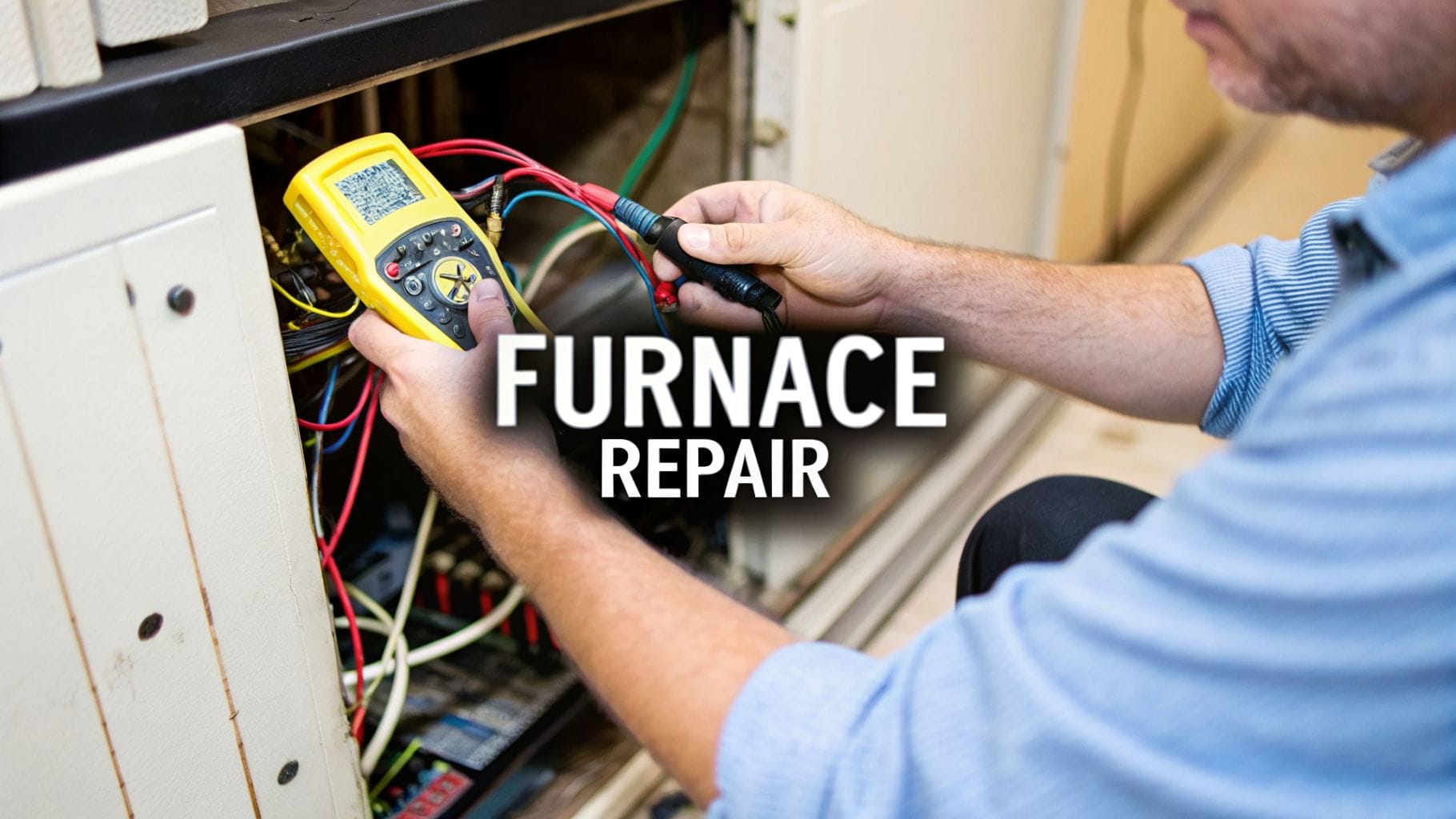
When the heat gives out on a cold Northern Utah night, that sinking feeling in your stomach is all too familiar. An unexpected electric furnace repair is stressful, but before you assume the worst, take a breath. Honestly, many "emergency" calls we receive at Black Rhino Electric are due to simple electrical issues that homeowners can safely check.
Contents
- 1 What to Do When Your Electric Furnace Fails
- 2 Simple Furnace Checks Every Homeowner Should Try First
- 3 When to Call a Licensed Electrician for Furnace Repair
- 4 The Professional Electric Furnace Repair Process
- 5 Preventive Maintenance to Avoid Future Breakdowns
- 6 Frequently Asked Questions About Electric Furnace Repair
What to Do When Your Electric Furnace Fails
This guide is designed to give you a clear, step-by-step plan. We’ll cover the basics, from your thermostat and breaker panel to understanding when it’s truly time to call in a professional. The goal is to help you assess the situation calmly, keep your family safe, and make a confident decision.

Here's the thing: not every furnace failure requires an emergency service call. Sometimes, the fix is simpler and cheaper than you think. Following a few logical diagnostic steps can help you pinpoint the issue, potentially saving you a service fee and preventing a small hiccup from snowballing into a major, costly repair. And if you do need a technician? You’ll be able to provide clear, helpful information, which saves diagnostic time on-site and gets your heat back on faster.
Simple Furnace Checks Every Homeowner Should Try First
Before you schedule that service call, there are a few straightforward checks you can do. These often solve the problem or, at the very least, give a technician valuable clues. Let me explain. We'll start with the easy stuff that requires no tools, then move to a couple more checks that are still perfectly safe for a homeowner.
Double-Check Your Thermostat Settings
It sounds almost too simple, but you’d be surprised how often a thermostat setting is the real culprit. Someone in the family might have bumped it, or a brief power flicker could have reset it to a default mode. Before you do anything else, take a close look at the thermostat.
- Make sure it’s set to "Heat." If it got switched to "Cool" or "Fan," the furnace just won't produce any warmth.
- Turn the temperature up. Try setting it at least 5 degrees higher than the current room temperature to see if that kicks the furnace on.
- Check the batteries. A lot of digital thermostats run on batteries, and when they die, the thermostat can't talk to the furnace.
A non-responsive thermostat is one of the top reasons people call for an electric furnace repair. A quick battery swap or setting adjustment often saves the time and cost of a service visit.
Inspect the Circuit Breaker Panel
If your thermostat is set correctly but the furnace is completely silent—no lights, no sounds, no fan—the next place to check is your home's main electrical panel. An electric furnace is a high-power appliance, so it has its own dedicated circuit breaker.
Find your breaker box, usually in the garage, basement, or a utility closet. The breaker for the furnace should be labeled "Furnace," "Heat," or "HVAC." See if the switch is in the "Off" position or stuck halfway. That means the breaker has tripped.
To safely reset it:
- Push the switch firmly all the way to the "Off" position first.
- Then, flip it back to the "On" position.
If the breaker trips again right away, do not reset it a second time. This points to a more serious electrical issue that needs a professional. If you're dealing with breakers that keep tripping, you can learn more about what's going on by reading our guide on electrical troubleshooting.
Check the Furnace Power Switch and Air Filter
Finally, there are two more quick things to check right at the furnace unit itself.
First, look for a power switch on or near the furnace. Most have what looks like a standard light switch that controls its main power. Make sure it’s in the "On" position. It’s easy for someone to mistake it for a light switch and flip it off by accident.
Second, check the air filter. A badly clogged filter can choke off the airflow, causing the furnace’s high-limit safety switch to trip and shut the whole system down to prevent overheating. Slide the filter out. If you can't see light through it when you hold it up, it’s long overdue for a change.
The need for quick solutions is a huge factor in the HVAC world. In fact, data on market trends and costs shows that about 70% of residential service requests are made within 24 hours of a system failure, driving rapid growth in the repair market.
When to Call a Licensed Electrician for Furnace Repair
Handling a few basic checks is a great first step, but knowing your limits is everything when it comes to your safety. Some furnace problems aren't just inconvenient; they're red flags for serious electrical hazards. For any issue that goes beyond a simple thermostat tweak or a single breaker reset, your next move should be calling a pro.
That furnace cabinet isn’t a place for guesswork. Inside, you've got components like heating elements, sequencers, and transformers carrying a dangerous amount of electricity. One wrong move can lead to severe injury, an electrical fire, or damage that costs way more than the original repair.
Red Flags That Demand an Immediate Professional Call
If you run into any of these signs, stop troubleshooting and pick up the phone. These symptoms point to problems that are flat-out unsafe for a homeowner to tackle.
- Persistent Burning Odors: A little dusty smell when you first fire up the heat for the season? That's normal. A strong, nasty burning smell—especially one that smells like melting plastic or hot wires—is a major warning. This is a classic sign of overheating components or failing wiring.
- Loud or Unusual Noises: Your furnace should be a quiet hum in the background. If you start hearing loud buzzing, humming, or crackling sounds from the unit itself or your electrical panel, something is wrong. It could be a failing transformer, a bad relay, or a serious electrical short.
- Visible Scorch Marks or Soot: This one is an emergency. Any sign of burning, like black or brown marks on or around the furnace or at the breaker panel, is hard evidence of an electrical fault that has already overheated.
- The Breaker Trips Repeatedly: As we mentioned, if the furnace breaker trips right after you reset it, there’s a serious issue. Forcing it on by resetting it over and over again can cause more damage and create a real fire risk. We've put together a helpful resource on diagnosing stubborn problems with breakers and electrical panels if you want to understand more.
This simple flowchart lays out the safe, initial checks every homeowner can perform before deciding it's time to call in a professional.

The key takeaway here is pretty clear: your troubleshooting should stop the moment simple fixes don't work or you spot one of those big warning signs.
DIY Check vs Professional Repair
It's tempting to want to save a few bucks by tackling a repair yourself, but some jobs are strictly for the pros. This table breaks down common furnace symptoms to help you see what’s safe to check versus what requires an expert.
| Symptom | Safe DIY Action | When to Call Black Rhino Electric Immediately |
|---|---|---|
| Furnace not turning on | Check thermostat settings, batteries, and the furnace power switch. | If all settings are correct and the breaker is on, but there is still no power. |
| Breaker trips once | Safely reset the breaker one time. | If the breaker trips again immediately or repeatedly. |
| Weak or no airflow | Inspect and replace the air filter if it's dirty or clogged. | If the filter is clean but the blower motor isn't running or is making loud noises. |
| Smells from vents | Note if the smell is dusty (normal at first) or something else. | If you smell burning plastic, ozone, or a "fishy" electrical odor. |
Tackling a repair like replacing a heating element or a sequencer might look straightforward on a YouTube video, but it can be extremely dangerous. Without the proper training and tools to test voltage and ensure the system is truly de-energized, you risk severe electrical shock.
At Black Rhino Electric, our electricians have the experience and specialized gear to safely diagnose and fix any electric furnace. We know the local electrical codes inside and out for Weber, Davis, and Salt Lake counties, so your repair is not only done right but is also completely safe and compliant.
The Professional Electric Furnace Repair Process
So you've made the call for help—what’s next? Let's pull back the curtain on the entire process, from the moment we arrive to the moment your home is warm again.

At Black Rhino Electric, we don’t guess. We follow a systematic approach to get your repair handled safely, efficiently, and with total clarity. Transparency is everything to us. From the second we arrive, our goal is to keep you in the loop so you feel confident in the work we're doing.
The Initial Diagnostic and Safety Inspection
The very first thing our licensed electrician will do upon arriving at your Northern Utah home is have a quick chat with you. We want to hear exactly what you’ve noticed—any strange noises, weird smells, or a breaker that just won’t stay on. That information is pure gold for us.
After that, we get down to our comprehensive diagnostic and safety inspection. Here’s what that looks like:
- A Thorough Visual Check: We'll scan the entire furnace unit, its wiring, and the connection at your electrical panel. We're looking for the obvious stuff first—scorch marks, loose wires, or visible damage.
- Systematic Component Testing: This is where our expertise really kicks in. We use specialized tools to methodically test the key parts of your electric furnace. No guesswork.
- Safety First Protocol: We always verify the system is properly grounded and that all safety controls, like the high-limit switch, are working as they should.
Our diagnostic process is designed to be exhaustive. We don't just fix the symptom; we find the root cause to prevent you from calling us again for the same problem a week later.
Testing Key Electrical Components
Here’s the thing: an electric furnace is a straightforward but powerful machine. Its reliability all comes down to a few core electrical parts working together. During our diagnostic, we'll put these key components to the test:
- Heating Elements: These are the coils that actually get hot. We measure their electrical resistance to see if they've burned out or have a short.
- Sequencers and Relays: Think of these as traffic cops. They tell the heating elements when to turn on and off in stages to avoid a massive power surge. A bad sequencer is a common reason only half your furnace seems to be working.
- Blower Motor: This is the fan that shoves warm air through your ducts. We check its capacitor and windings to make sure it’s running at the right speed and not hogging too much power.
A faulty part in one area can easily put a strain on another. By testing the whole system, we get a complete picture of your furnace’s health.
Upfront Pricing and Clear Communication
Once we’ve pinpointed the exact cause of the problem, we stop all work. Before we even pick up a tool to start the repair, we’ll sit down with you and explain what we found in plain English. We'll give you a clear, detailed, and upfront cost estimate that breaks down every charge. You will see the cost of any parts needed and the labor to get the job done, which means no hidden fees and no sticker shock on your final bill.
This focus on transparent pricing is a cornerstone of how we operate. We know an unexpected repair can be a major expense, and we make sure you approve the full cost before we move forward.
Realistic Timelines for Your Repair
With your approval, we get to work. Most common repairs—like replacing a heating element, sequencer, or blower motor—can be wrapped up in a single visit. Our service trucks are stocked with the parts we need most often for electric furnaces.
For homes across Weber, Davis, and Salt Lake counties, we can typically get your heat running again within a few hours of arrival. If your furnace needs a non-standard part that has to be ordered, we’ll give you a firm timeline for its arrival and schedule our return visit right then and there.
Preventive Maintenance to Avoid Future Breakdowns
The best electric furnace repair is the one you never have to make. A little attention throughout the year is your single best tool for getting through a Northern Utah winter without a furnace breakdown. By pairing a few simple homeowner habits with an annual professional tune-up, you can dramatically extend your furnace's life and stop your utility bills from creeping up.
Your Year-Round Maintenance Checklist
Think of these as simple chores that keep your furnace healthy. You don't need special tools or technical skills, but they make a huge difference in preventing the most common problems.
- Change Your Air Filter Religiously: A clogged filter is public enemy #1 for any furnace. It suffocates the system, forcing it to work harder, which can lead to overheating and component failure. Check it monthly and replace it at least every 90 days.
- Keep the Area Around the Furnace Clear: Your furnace needs room to breathe. Storing boxes or anything else within three feet of the unit is a bad idea. Good airflow is non-negotiable for both efficiency and safety.
- Visually Inspect Vents and Registers: Once a season, do a quick walk-through of your home. Make sure all your supply and return air vents are open and aren't blocked by furniture or rugs.
The Power of an Annual Professional Tune-Up
While those DIY checks are critical, they can't replace a deep-dive inspection from a licensed electrician. You know what? An annual tune-up is one of the smartest investments you can make in your home. It’s not a quick glance; it’s a comprehensive check-up of your furnace's electrical heart.
An annual professional service call can catch upwards of 80% of potential furnace failures before they turn into a no-heat emergency. It's proactive care that pays for itself in avoided repair costs and better energy bills.
A technician does things you simply can’t, ensuring every electrical component is operating safely and within its specifications. Here’s a quick look at what a true professional tune-up involves versus what a homeowner can do.
| Maintenance Task | Homeowner DIY Check | Professional Tune-Up |
|---|---|---|
| Air Filter | Visually inspect and replace when dirty. | Check filter and also measure static pressure to ensure proper airflow through the system. |
| Electrical Connections | N/A – Do not attempt. | Inspect and tighten all electrical terminals and connections to prevent fire hazards. |
| Component Testing | N/A – Do not attempt. | Measure voltage and amperage on the blower motor, heating elements, and sequencers. |
| Cleaning | Wipe down the exterior of the unit. | Clean the blower assembly, internal components, and evaporator coil to restore efficiency. |
Why This Investment Matters
This professional-level service directly impacts your wallet and your peace of mind. Tightening a single loose wire can prevent a catastrophic failure. Measuring the electrical draw of the motor helps us spot a component that's about to die—before it leaves you in the cold.
If you really want to avoid breakdowns, a professional service plan is the way to go. You can get a good sense of what a thorough approach includes by looking at this definitive HVAC maintenance plan template. This proactive approach is only getting more important. As the industry moves toward higher efficiency standards, the electricians who can service these advanced systems are more valuable than ever. You can learn more about how these industry statistics are shaping the future of home heating.
Frequently Asked Questions About Electric Furnace Repair
When the heat goes out, questions about cost and safety pop up fast. You want straight answers so you can make a smart decision. We hear the same questions from homeowners all over Northern Utah, so we’ve put together the info you need right here.
How Much Does an Electric Furnace Repair Cost?
This is always the first question, and the honest answer is: it really depends on what broke. Let’s walk through the common scenarios. For smaller problems, the cost is usually pretty manageable.
Simple fixes often look like this:
- Thermostat Replacement: If the thermostat itself has failed, swapping it out usually runs between $150 and $350, depending on whether you choose a basic digital model or a new smart thermostat.
- Fuse or Contactor Replacement: Getting a bad fuse or contactor replaced typically falls in the $100 to $300 range.
Then you have the more serious repairs. These involve the furnace's core components, which means more labor and more expensive parts. For a major failure, you might be looking at costs like:
- Heating Element Replacement: Your furnace has several heating elements. When one or more burn out, replacing them can cost anywhere from $300 to $800.
- Blower Motor Replacement: The blower motor is one of the biggest and most expensive parts that can fail. A full replacement will often range from $500 to over $1,200.
Here's the bottom line: you should never get a surprise bill. A reputable electrician will always give you a clear, detailed estimate to approve before they start any work.
Is It Worth Repairing an Old Electric Furnace?
This is a crossroads a lot of homeowners hit. Let me explain the simple math we use to help guide this decision. If your furnace is pushing 15-20 years old, it's getting close to the end of its typical lifespan. We usually suggest thinking about a replacement if the repair cost is more than 30-50% of what a brand-new unit would cost.
For example, if a major repair on your 18-year-old furnace comes in at $1,200, but a new, high-efficiency system would cost $4,000 to install, putting that money toward a new system is almost always the smarter financial move.
Why Does My Breaker Keep Tripping When the Heat Turns On?
Is a breaker tripping over and over? This isn't an annoyance; it's your electrical system screaming for help. This is a critical safety warning you absolutely should not ignore. It’s happening because of a circuit overload (a failing part drawing too much power) or a more dangerous short circuit (frayed wiring creating a fire hazard).
Because a tripping breaker points to a serious electrical fault, you need to stop resetting it immediately and call a licensed electrician. For a deeper dive, you might find it helpful to check out our guide on frequently asked questions about home electrical systems.
This table breaks down the key numbers at a glance.
| Factor | Electric Furnace | Details & Considerations |
|---|---|---|
| Average Lifespan | 20-30 years | With fewer moving parts and no combustion, they often outlast gas furnaces. |
| Minor Repair Cost | $100 – $300 | Includes issues like faulty thermostats, fuses, or contactors. |
| Major Repair Cost | $400 – $1,200+ | Can involve replacing expensive parts like heating elements or the blower motor. |
| Replacement Point | 15-20 years | Consider replacement if repair costs exceed 30% of a new unit's price. |
If you’re staring down a furnace failure and need a team you can trust for an immediate electric furnace repair, our team is here. Give Black Rhino Electric a call at 385-396-7048 or request a free quote online to keep your home warm and safe.