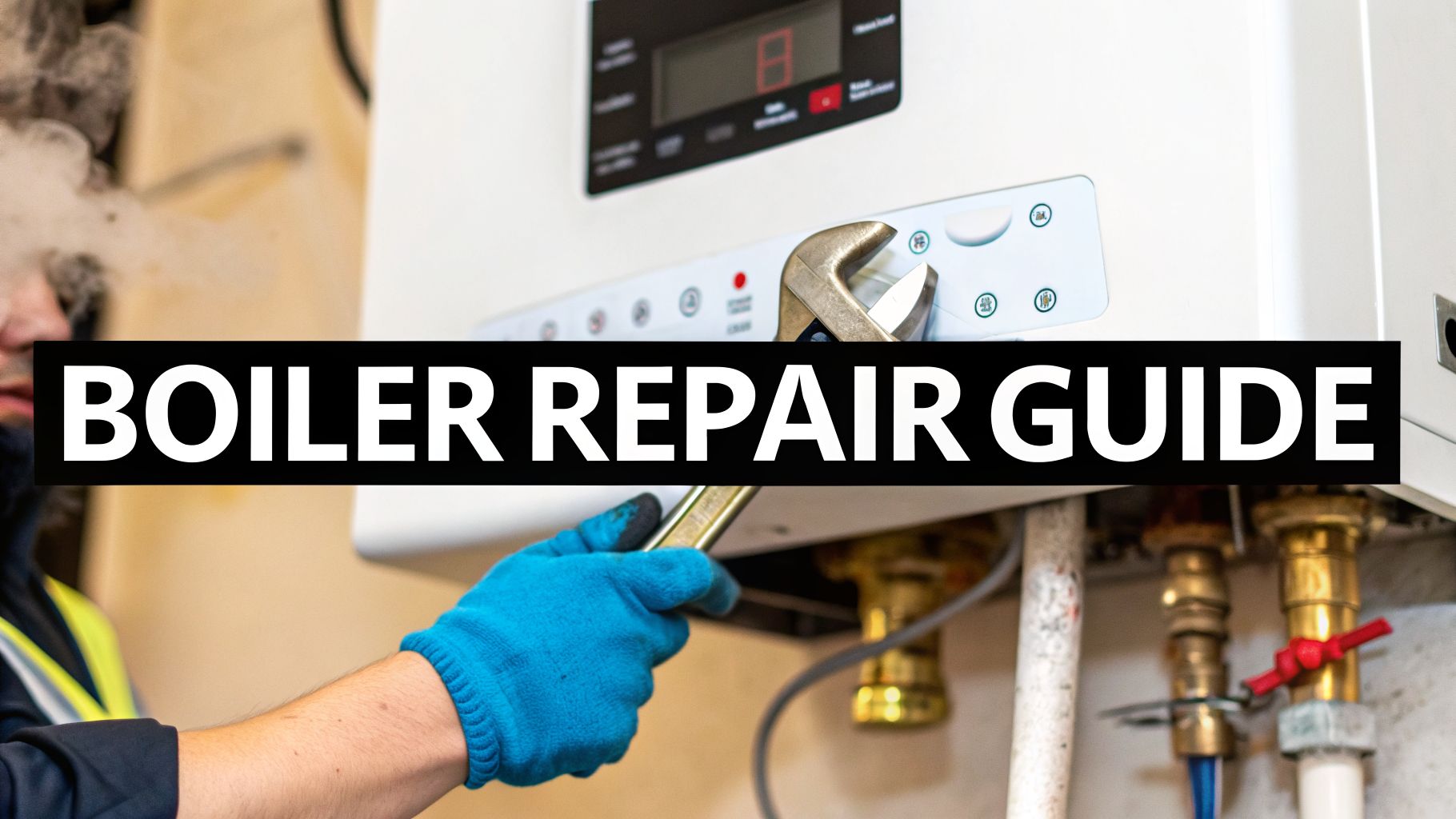
When the house goes cold and the usual hum from your utility room disappears, that silence is more than just unsettling—it’s a real problem. Facing a potential electric boiler repair can feel overwhelming, but you're not in this alone. This guide walks you through everything from the first weird noise to knowing exactly when it's time to call a pro.
Contents
Common Signs Your Electric Boiler Needs Attention

Honestly, your electric boiler will usually give you clues before it completely quits. The trick is knowing what to look for and listening to what it's telling you. Catching these early warnings can be the difference between a simple, inexpensive fix and an emergency replacement on a cold night.
Is your boiler starting to make noises you’ve never heard before? Strange sounds are often the first sign that something is off. You might hear:
- A high-pitched whistle
- A persistent low hum
- Loud clicks and bangs known as "kettling"
These aren't just random annoyances; they're signals. For instance, a humming or vibrating noise could point to an issue with the heating element or the circulator pump—both critical electrical components. Ignoring them is like ignoring the check engine light in your car; it rarely ends well.
Inconsistent Heating and Cold Spots
Have you noticed your home just isn't getting as warm as it used to? Maybe some radiators are piping hot while others stay stubbornly cold. This uneven heating is a classic symptom of a boiler struggling to do its job.
This could be caused by several issues, from air trapped in the system to a failing pump that can't circulate water effectively. It might also signal a faulty thermostat that isn't accurately reading the room temperature or even a problem with the boiler's internal circuit board.
An electric boiler is a wonderfully efficient machine, but it's a team effort. It relies on a whole crew of electrical and mechanical parts working together. When one part starts to lag, the entire system's performance can suffer, leaving you with frustratingly inconsistent heat.
Another tell-tale sign is a mysterious spike in your energy bills. If your habits haven't changed but your monthly costs are climbing, your boiler might be working overtime to compensate for an internal fault. That kind of inefficiency often points toward a problem that needs an expert electric boiler repair.
Visual Clues and Error Codes
Sometimes, the most obvious signs are the ones you can see. Take a quick look around your boiler. Do you see any leaks or drips? Water pooling around the unit is a major red flag that needs immediate attention.
Modern electric boilers also have a built-in brain. Pay attention to the display panel:
- Error Codes: Many units will show specific fault codes when a problem pops up. Your user manual can help you translate them, but many codes point to internal electrical faults that require a professional.
- Flashing Lights: A light that's usually solid but is now blinking can indicate anything from a loss of pressure to a component failure.
With the residential electric boiler market growing at a projected 11.1% CAGR, more Utah homes are relying on this technology. This also means issues like faulty heating elements, thermostat glitches, and wiring problems are becoming more common. Repairs can range from $150 to $900, depending on what's wrong. You can find more boiler repair cost details on Angi.com for a broader overview.
To help you figure out what might be happening with your unit, we've put together a quick cheat sheet. This table breaks down common symptoms, their likely causes, and whether it's a potential DIY check or a clear signal to call a professional electrician.
| Symptom | Potential Cause | DIY Check or Pro Call? | Average Repair Cost Range |
|---|---|---|---|
| Whistling or Kettling Noises | Limescale buildup on the heating element | Pro Call: Requires descaling internal components. | $200 – $500 |
| No Hot Water | Tripped circuit breaker, faulty heating element, or thermostat failure. | DIY Check: Inspect breaker. Pro Call: For element/thermostat testing. | $150 – $900 |
| Leaking Water | A failed seal, corroded pipe, or a crack in the internal tank. | Pro Call: Immediately. Water and electricity are a dangerous mix. | $250 – $1,000+ |
| Spiking Energy Bills | Failing component causing inefficiency, or faulty thermostat. | Pro Call: Needs professional diagnosis to find the electrical fault. | $150 – $600 |
Troubleshooting Steps You Can Take Safely
When the familiar quiet of your electric boiler is suddenly too quiet, it's easy to jump to the worst-case scenario. But before you start budgeting for a major electric boiler repair, hold on. Sometimes, the fix is something you can handle yourself in just a few minutes.
This quick diagnostic guide will help you figure out if you've got a simple DIY fix or if it's time to bring in a professional.

As you can see, things like weird noises or leaks are a clear sign to call an expert. But a simple lack of heat? That's where you can start with a few safe checks.
Start with the Thermostat
Here’s the thing: the thermostat is the brain of your heating system, and it's the number one culprit in a ton of "no heat" calls. It’s an easy thing to overlook, so let's start there.
- Check the Settings: Make sure it’s actually set to “Heat” and the target temperature is a few degrees higher than what the room is now.
- Inspect the Power: If the screen is blank, it might just need new batteries. This two-minute swap can bring your entire system back to life.
- Confirm It's Communicating: For smart thermostats, open the app and see if it's connected to your Wi-Fi and talking to the boiler. A lost connection can shut everything down.
If the thermostat looks good but the boiler still isn't firing up, the problem might be with the power supply itself.
Inspect Your Circuit Breaker
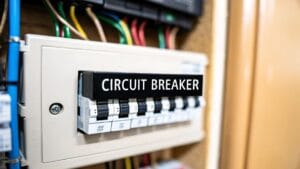
The next logical step is to check the power at the source. An electric boiler is a power-hungry appliance, so it has its own dedicated circuit in your main electrical panel.
A tripped breaker is your home’s built-in safety mechanism. It’s designed to shut off power when it detects an overload or a fault, protecting your appliance and preventing a potential fire hazard. It's often not a sign of a major failure, but rather a momentary surge.
Head to your electrical panel and look for a breaker switch that's flipped to "off" or stuck in the middle. Push it firmly to the "off" position first, then flip it back to "on." If it trips again right away, do not reset it a second time. That’s a clear signal of a deeper electrical issue that needs a professional diagnosis. If you're dealing with frequent trips, our guide on electrical troubleshooting for homeowners might shed some more light on the subject.
Check the Boiler's Pressure Gauge
Your boiler works on a closed loop of water, and it needs the right amount of pressure to circulate heat through your home. Low pressure is one of the most common reasons a boiler will shut itself down.
Find the pressure gauge on the front of your unit—it’s usually a dial with green and red zones. When the system is cold, that needle should be in the green, typically between 1 and 1.5 bar. If it’s dropped into the red, the boiler’s safety sensors have likely shut it down to prevent damage. You can often repressurize it yourself with the filling loop, but always check your boiler's manual first.
While these steps handle the basics, sometimes the problem is an internal part. If your boiler isn't heating water correctly, a more advanced step is learning how to test a hot water element, which can tell you if this vital component has failed. But this task involves live electricity and should only be done if you are completely comfortable and knowledgeable about the risks involved.
For your safety, there’s a hard line between DIY checks and professional work. Never open the boiler’s main casing or touch any of the internal wiring. That work is strictly for a licensed electrician. Period.
When to Call a Professional for Your Repair

Knowing your limits is the most important part of home maintenance. While checking a thermostat is pretty straightforward, trying to diagnose a fried circuit board or a dead heating element is a job for an expert. This is where your confidence as a DIYer has to meet the hard line of professional safety.
Attempting a complex electric boiler repair without the right training isn’t just risky—it’s a gamble with your home's safety and the boiler’s lifespan. You need to know the clear red flags that mean "stop." These are the moments when picking up the phone is the smartest—and safest—move you can make.
Absolute "Call an Electrician" Scenarios
Some boiler symptoms aren’t suggestions; they’re demands for immediate professional help. If you run into any of these, your troubleshooting should end right there, and a call to a licensed electrician needs to be your next step. These signs point to serious electrical faults or component failures that are just plain dangerous for anyone who isn't trained.
These are the non-negotiable red flags:
- Any Sign of Water Leakage: Water and high-voltage electricity are a lethal mix. Even a small drip near the boiler's casing can create a nasty shock hazard or short out the whole unit. Don’t mess with it.
- Burning Smells or Scorch Marks: A whiff of burning plastic, a sharp ozone smell, or scorched metal is a critical warning. It means wires or components are overheating—a major fire risk that needs to be addressed immediately.
- Repeatedly Tripping Breaker: A single trip might just be a fluke. But a breaker that trips again right after you reset it is screaming that there’s a serious overload or short circuit inside the boiler. Our guide to breaker panels and common electrical issues gives more context on why this is a big deal.
- Error Codes for Internal Faults: Modern boilers show fault codes for a reason. While some might be simple pressure issues, many point to failures in the main circuit board, sensors, or heating elements. These aren't parts you can diagnose or fix without professional tools and knowledge.
The Hidden Dangers of DIY Electrical Work
The idea of saving a few bucks by tackling a repair yourself is tempting, but the potential costs are much, much higher. Let me explain. Working on an electric boiler isn't like fixing a leaky faucet; you’re dealing with a high-amperage system that can cause severe injury or even death if you make one wrong move.
Beyond the immediate danger to you, there are other big risks.
An improper repair can cause even more damage to the boiler, but it can also void your manufacturer's warranty and, in some cases, your homeowner's insurance policy. Insurers can—and do—deny claims for damage caused by uncertified electrical work.
A professional is trained to work safely and get the job done right the first time, without putting you or your boiler’s future at risk.
Understanding Professional Repair Costs
When you do call a pro, it helps to have a realistic idea of what to expect. With tightening environmental regulations, electric boilers are getting more popular, so understanding repair costs is key to making them last. Boiler repairs typically average between $150 and $750. For electric models, common fixes like thermostats or pressure relief valves often land in the $200 to $450 range.
Here in Northern Utah, a good chunk of our calls are for no-hot-water or low-pressure problems, which are bread-and-butter issues for electric boilers. To get a more granular look at how these costs break down, you can explore detailed boiler repair pricing on HomeAdvisor.com.
This table cuts to the chase: here’s when your job ends and a professional’s begins.
| Problem | Safe DIY Check | When to Immediately Call a Professional |
|---|---|---|
| No Heat or Hot Water | Check thermostat settings and batteries. Reset the circuit breaker (once). | If the breaker trips again, or if the thermostat and power are fine but the boiler still won't run. |
| Persistent Low Pressure | Try to repressurize the system once using the filling loop (follow your manual). | If the pressure drops again quickly after refilling, hinting at a hidden leak in the system or unit. |
| Strange Noises | Make a note of the noise (hissing, banging, humming) to tell the electrician. | For any loud banging, persistent humming, or high-pitched whistling that suggests internal problems. |
| Visible Issues | Visually inspect the unit for obvious damage from a safe distance. | If you see any leaks, scorch marks, or damaged wiring. Do not touch the unit. |
At the end of the day, your safety is what matters most. Recognizing these boundaries protects you, your family, and your home from the very real dangers of amateur electrical work.
Understanding Electric Boiler Repair Costs in Utah
Let's talk numbers. When your electric boiler quits, the first question on your mind is, "What's this going to set me back?" Nobody likes an unexpected repair bill, but getting a handle on the potential costs for an electric boiler repair here in Northern Utah helps you budget and cuts out the surprises.
We believe in transparency, not intimidation. The final cost isn't some number pulled out of a hat. It’s a lot like a car repair—the price comes down to what part failed, how tough it is to get to, and what the replacement costs.
What Goes into a Repair Quote
When a licensed electrician from Black Rhino Electric gives you a quote, it’s based on a hard look at the actual problem. We don’t guess. The cost is driven by two main things: the technician's labor and the price of the parts.
Here in Utah, the hourly rate for a qualified, licensed electrician reflects their training, insurance, and the expensive, specialized tools needed to do the job right. You're not just paying for time; you're paying for years of experience and the peace of mind that comes with a safe, code-compliant repair.
Several things can make that final price move up or down:
- The Complexity of the Job: Swapping out a thermostat is a world away from tracking down a short on the main circuit board. One is quick; the other takes time and deep diagnostic work.
- Boiler Brand and Model: Just like with cars, some brands use parts that are more expensive or harder to track down.
- Boiler Age: On an older unit, parts might be discontinued and tough to source. Sometimes, fixing one thing uncovers another age-related issue that needs attention.
- Accessibility: If your boiler is crammed into a tight closet or a nasty crawlspace, that extra time and effort will be reflected in the labor cost.
Average Costs for Common Electric Boiler Repairs
While every single job is different, we can give you some realistic price ranges for common fixes based on what we see in the field. One of the big pluses of electric boilers is that their routine maintenance can be up to 50% lower than old-school fuel-fired boilers. While a major repair could run from $200 to over $1,000, many of the most common electrical faults are surprisingly reasonable to fix. You can get a broader overview of boiler repair costs on Modernize.com to see how things stack up.
It's important to remember these are just estimates. The only way to get a firm, accurate quote is to have a pro from a company like Black Rhino Electric diagnose the specific problem with your unit.
This table breaks down a few common repair scenarios for homeowners in the Weber, Davis, and Salt Lake County areas.
| Common Repair Job | Description of the Problem | Typical Cost Range (Parts & Labor) |
|---|---|---|
| Heating Element Replacement | This is one of the most frequent failures. The boiler has power, but the water just isn't getting hot. | $350 – $900 |
| Circuit Board (PCB) Repair | The "brain" of the boiler is on the fritz, throwing error codes, causing shutdowns, or just acting erratically. | $300 – $900 |
| Circulator Pump Swap | The pump that pushes hot water through your system is dead. You'll have heat near the boiler but cold radiators elsewhere. | $350 – $900 |
| Pressure Relief Valve (PRV) | The main safety valve is leaking, dripping constantly, and causing the system to lose pressure. | $150 – $400 |
| Wiring & Connection Fixes | A loose connection or burnt wire is tripping the breaker or making the unit lose power intermittently. | $150 – $900 |
At the end of the day, paying for a professional repair is an investment in your home's safety and your boiler's efficiency. At Black Rhino Electric, we lay out clear, upfront pricing so you can make a decision you feel good about.
Why Choose Black Rhino Electric for Your Repair
When your electric boiler quits, especially in the middle of a Utah winter, you need more than a quick fix. You need a repair you can trust, done by someone who knows exactly what they’re looking at. Getting the heat back on is just the start; doing it safely and correctly is what really matters.
Here’s why Black Rhino Electric is the right call for homeowners in Weber, Davis, and Salt Lake counties. We’re not a jack-of-all-trades crew. We are a dedicated, licensed, and insured electrical company. That focus on electricity is our core strength, and it makes all the difference with a finicky boiler.
Expertise in Electrical Systems First
You know what? An electric boiler is, first and foremost, a high-powered electrical appliance. While plenty of HVAC companies are great with gas furnaces, the heart of your boiler is all wires, circuits, and high-amperage components. That’s our home turf.
Our electricians see problems from an electrical standpoint. We trace issues back to the source, whether it’s a tired relay, a failing circuit board, or an improper connection that’s been a problem waiting to happen. This electrical-first mindset is crucial. We can spot potential fire hazards or wiring issues that a generalist might miss, ensuring the fix is not just effective but genuinely safe for the long haul.
It’s our job to know how a tiny wiring fault can look exactly like a major component failure. That experience has saved homeowners from spending hundreds on parts they didn’t actually need. We find the real problem, not just the most obvious one.
We've seen it all, and that experience means we diagnose things faster and more accurately. It's the difference between replacing a whole control unit and simply fixing a loose wire.
Our Safety-First Workmanship Guarantee
For us, safety isn't just a bullet point on a checklist—it’s the foundation of every job we do. Working on an electric boiler means dealing directly with your home's high-voltage system. There is absolutely no room for shortcuts or guesswork.
Our commitment to keeping you and your property safe is built into our process:
- Licensed and Insured Pros: Every technician who walks into your home is fully licensed and insured. It's basic protection for you, and we wouldn't have it any other way.
- Code-Compliant Every Time: We follow the National Electrical Code (NEC) and all local Utah rules to the letter. This ensures your repair is not only done right but is also 100% legal and up to modern safety standards.
- Thorough System Checks: We don't just fix the problem and run. After the repair, we test the entire system to make sure every part is working together correctly and drawing the right amount of power.
This focus on quality and safety is why so many of your neighbors trust us. If you want to know more about the folks behind the work, feel free to read about our company's mission and values.
Transparent Pricing and Customer Commitment
We think you have a right to know what a job will cost before we even pick up a tool. That’s why we provide clear, upfront pricing. No surprises, no hidden fees, and no last-minute changes. We’ll walk you through the problem, explain the solution, and give you a firm quote so you can make a decision with confidence.
When looking for any trade professional, a company's clarity is a good sign of their integrity. For instance, the principles behind strategic website design for electricians show that clear communication and transparency build trust from the very first click. We apply that same thinking to our pricing and our service. Our work is backed by a satisfaction guarantee because the job isn't finished until your home is warm and you’re completely happy with the results.
Frequently Asked Questions About Electric Boiler Repair
When your boiler acts up, questions pop up fast. Getting straight answers to common worries about repair costs, lifespan, and safety is the first step. Here are the honest answers to the questions we hear most often from homeowners.
How Long Do Electric Boilers Typically Last?
A well-cared-for electric boiler should give you 10 to 15 years of reliable service. They have fewer moving parts than their gas counterparts, which often means they last longer and have fewer big-ticket breakdowns.
But here’s the thing: that lifespan isn't guaranteed. The single most important factor is regular annual servicing. A yearly check-up is what pushes a boiler toward that 15-year mark and sometimes even beyond.
Is It Worth Repairing an Old Electric Boiler?
That’s the million-dollar question, isn't it? It really boils down to two things: the boiler's age and how much the repair will cost.
Here's a straightforward way to look at it:
- Under 10 years old: Unless the damage is truly catastrophic, a repair is almost always the smart financial move.
- Over 10 years old: This is where you have to do some math. If a repair quote comes in at more than 50% of the cost of a new unit, it’s time to seriously consider a replacement. A modern, more efficient model will start paying you back with lower energy bills right away.
Can I Repair My Electric Boiler Myself?
Safety has to be the top priority, full stop. Sure, you can handle basic troubleshooting—checking the thermostat settings or resetting a tripped circuit breaker is perfectly fine.
But any repair that requires you to open the boiler's main casing is a job for a professional. No exceptions.
Attempting to work on internal wiring, heating elements, or control boards without proper training is incredibly dangerous. You're risking serious electric shock, creating a potential fire hazard, and you could easily cause more damage to the unit, voiding its warranty in the process.
When it comes to the electrical guts of your boiler, the safest move is always to call a licensed electrician. When your home's warmth and your family's safety are on the line, don't leave it to guesswork.
If you’re in Weber, Davis, or Salt Lake County and need an expert eye on your electric boiler repair, the team at Black Rhino Electric is ready to help. We’re electricians first. That means we bring dedicated electrical know-how to every boiler job, making sure the fix is done right—and safely—the first time. Don't let a heating hiccup turn into a major headache. For a reliable and transparent fix, give Black Rhino Electric a call at 385-396-7048 or request a free quote online to get your heating system back in top shape.