Contents
Why Your Kitchen Electrical Remodel Deserves Top Priority
A kitchen electrical remodel is one of the most important—and most overlooked—parts of any kitchen renovation, yet it’s the foundation that keeps your entire space running safely and efficiently. You know what? Most homeowners get so excited about countertops and backsplashes that they forget the wiring behind the walls until something goes wrong. Here’s the thing: nearly half of all home structure fires start in the kitchen, and outdated or overloaded electrical systems are often to blame.

Quick answer for planning your kitchen electrical remodel:
- Minimum 7 dedicated circuits required for modern kitchens (8 for new construction)
- GFCI outlets must be within 6 feet of sinks and spaced no more than 4 feet apart
- Dedicated 240V circuits needed for electric ranges (50A) and some high-power appliances
- 20-amp circuits required for refrigerator, microwave, and at least two small-appliance circuits
- 15-amp circuits typical for dishwasher, garbage disposal, and lighting
- Professional electrician consultation essential for code compliance and safety
Let me explain why this matters so much. If your home is more than 30 years old, it probably has a 100-amp electrical service that wasn’t designed for today’s smart refrigerators, induction cooktops, and multiple countertop appliances running simultaneously. Older kitchens might have all outlets on a single 15-amp circuit—a recipe for constant breaker trips and potential fire hazards.
Modern electrical codes exist for good reason. The National Electrical Code (NEC) requires GFCI protection for all countertop receptacles to prevent electrocution near water sources. It mandates tamper-resistant outlets in remodels to protect children. And it specifies that no point on your countertop should be more than 24 inches from an outlet, so you’re not stretching cords across your workspace or relying on dangerous extension cords.
Honestly, the best kitchen remodels start with electrical planning—not as an afterthought. Whether you’re keeping the same footprint or reconfiguring your entire layout, pulling a permit triggers current code requirements. That beautiful island you’re planning? It needs its own outlets. Those under-cabinet LED lights? They need proper circuits and switches. Even unchanged layouts often require electrical updates once an inspector gets involved.
The good news is that planning ahead prevents costly surprises. When you consult an electrician early—before ordering cabinets or finalizing designs—you can integrate electrical needs seamlessly into your layout. You’ll know exactly where outlets, switches, and appliances can go, and you’ll avoid the heartbreak of discovering your dream design won’t pass inspection.
Planning a kitchen electrical remodel is about more than just picking out shiny new appliances; it’s about ensuring your home’s heartbeat can handle the modern load. Honestly, without a solid electrical plan, even the most beautiful kitchen can become a source of frustration and safety hazards. Let me explain how to power your dream space without getting zapped by poor planning.
The Blueprint for a Modern Kitchen Electrical Remodel
When we sit down to draft a blueprint for a kitchen electrical remodel, we aren’t just looking at where the toaster goes. We are looking at “load calculations.” You see, a modern kitchen is the most electrically demanding room in your home. To keep things running without the lights flickering every time the fridge kicks on, you need a specific set of circuits.
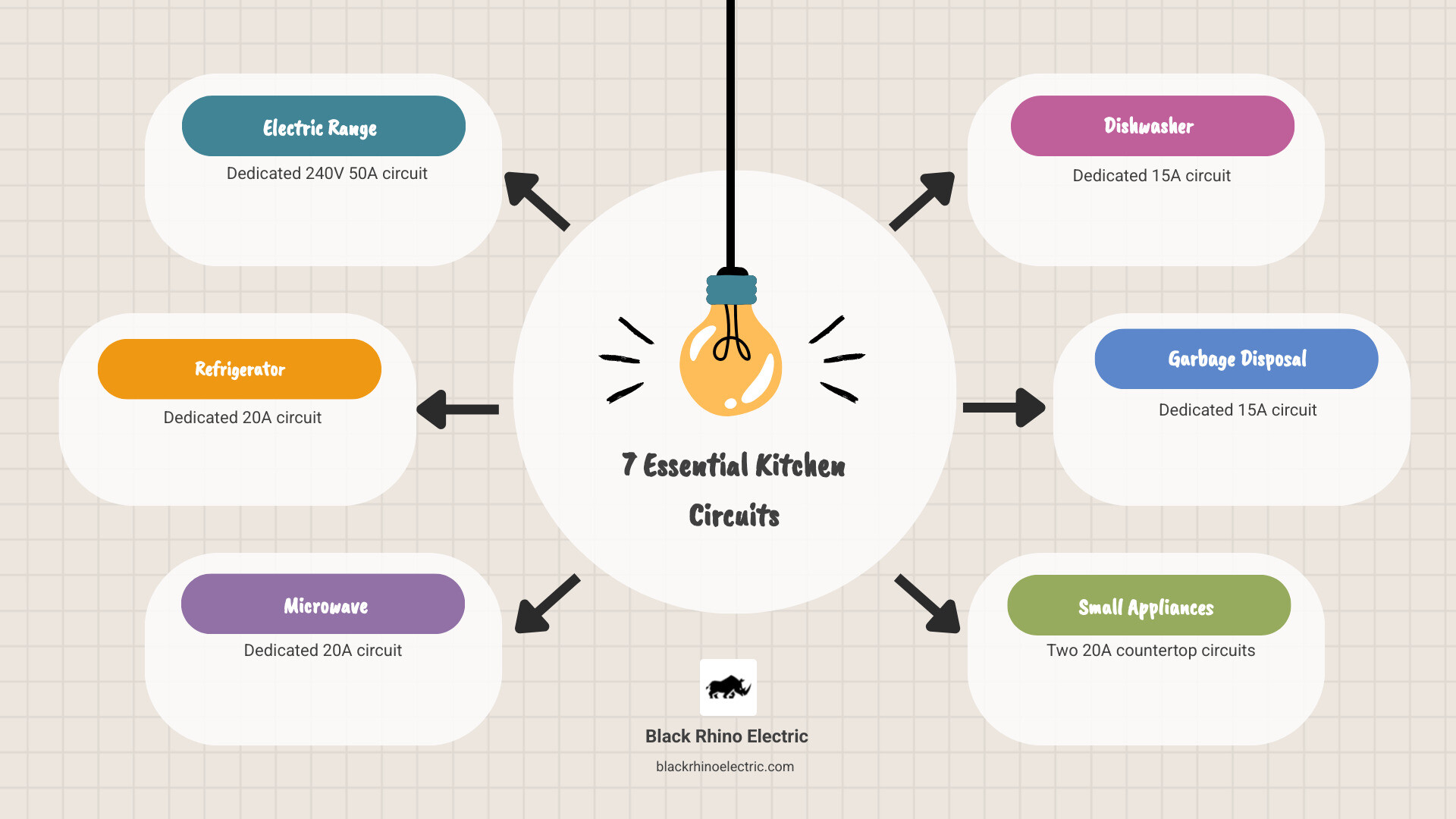
Industry standards and the National Electrical Code (NEC) generally mandate a minimum of seven circuits for a functional kitchen. If you’re building from scratch or doing a total “to-the-studs” renovation, that number often jumps to eight. This ensures that high-power motors and heating elements don’t share “juice” with your delicate LED lighting.
To stay organized, many homeowners use a Kitchen remodel checklist to track these requirements. Here is a breakdown of how those circuits are usually distributed:
Appliance Voltage and Amperage Requirements
| Appliance | Circuit Type | Amperage | Voltage |
|---|---|---|---|
| Electric Range/Oven | Dedicated | 50 Amps | 240 Volts |
| Refrigerator | Dedicated | 20 Amps | 120 Volts |
| Microwave (Built-in) | Dedicated | 20 Amps | 120 Volts |
| Dishwasher | Dedicated | 15-20 Amps | 120 Volts |
| Garbage Disposal | Dedicated | 15 Amps | 120 Volts |
| Small Appliances (Counter) | Two Circuits | 20 Amps Each | 120 Volts |
| Lighting | General | 15-20 Amps | 120 Volts |
Essential Circuits and Dedicated Appliance Needs
Let’s talk about “dedicated circuits.” In a Remodeling Electrician, a dedicated circuit means one breaker for one appliance. Why? Because appliances with motors (like your fridge) or heavy heating elements (like your dishwasher) pull a lot of “startup” power. If they share a circuit, they’ll trip the breaker faster than you can say “burnt toast.”
- The Refrigerator: While some old-school setups lumped the fridge in with other outlets, modern code and best practices call for a dedicated 20-amp circuit. This prevents your food from spoiling because a blender tripped the breaker.
- The Electric Range: This is the big kahuna. It requires a heavy-duty 50-amp, 240-volt circuit. If you’re switching from gas to electric (or induction), this is a major part of your kitchen electrical remodel that requires pulling heavy-gauge wire.
- Microwave and Disposal: Honestly, it’s best to keep these separate. While some local codes allow them to share if the load is low, we always recommend separate 20-amp and 15-amp circuits respectively to avoid overloads.
- Small Appliance Branch Circuits: The NEC requires at least two 20-amp circuits just for your countertop outlets. These power your coffee maker, air fryer, and stand mixer.
Safety isn’t just a suggestion; it’s the law. When you’re kitchen wiring is up to code, you’re protecting your family from shocks and fires.
- GFCI (Ground Fault Circuit Interrupter): These are the outlets with the “Test” and “Reset” buttons. They are required for all countertop outlets and any outlet within 6 feet of a sink. They monitor the flow of electricity and cut power in milliseconds if they detect a leak (like if a toaster falls into a full sink).
- AFCI (Arc Fault Circuit Interrupter): While GFCIs protect people from shocks, AFCIs protect your house from fires. They detect “arcing”—dangerous sparking caused by frayed wires or loose connections—and shut down the circuit.
- Tamper-Resistant (TR) Outlets: If you have kids (or grandkids visiting), these are a lifesaver. They feature internal shutters that prevent anything other than a two-pronged plug from being inserted.
Here’s the thing: you must pull permits for a kitchen electrical remodel. A permit ensures that a city inspector verifies the work. This isn’t just red tape; it’s your proof that the home is safe, which is vital for insurance and future home sales.
Strategic Layout and Lighting for Your Kitchen electrical remodel
Now for the fun part—placement! A great electrical plan follows the “workflow” of the cook. You don’t want to be dragging a crockpot cord across the stove because there isn’t an outlet nearby.
Countertop Spacing and Island Integration
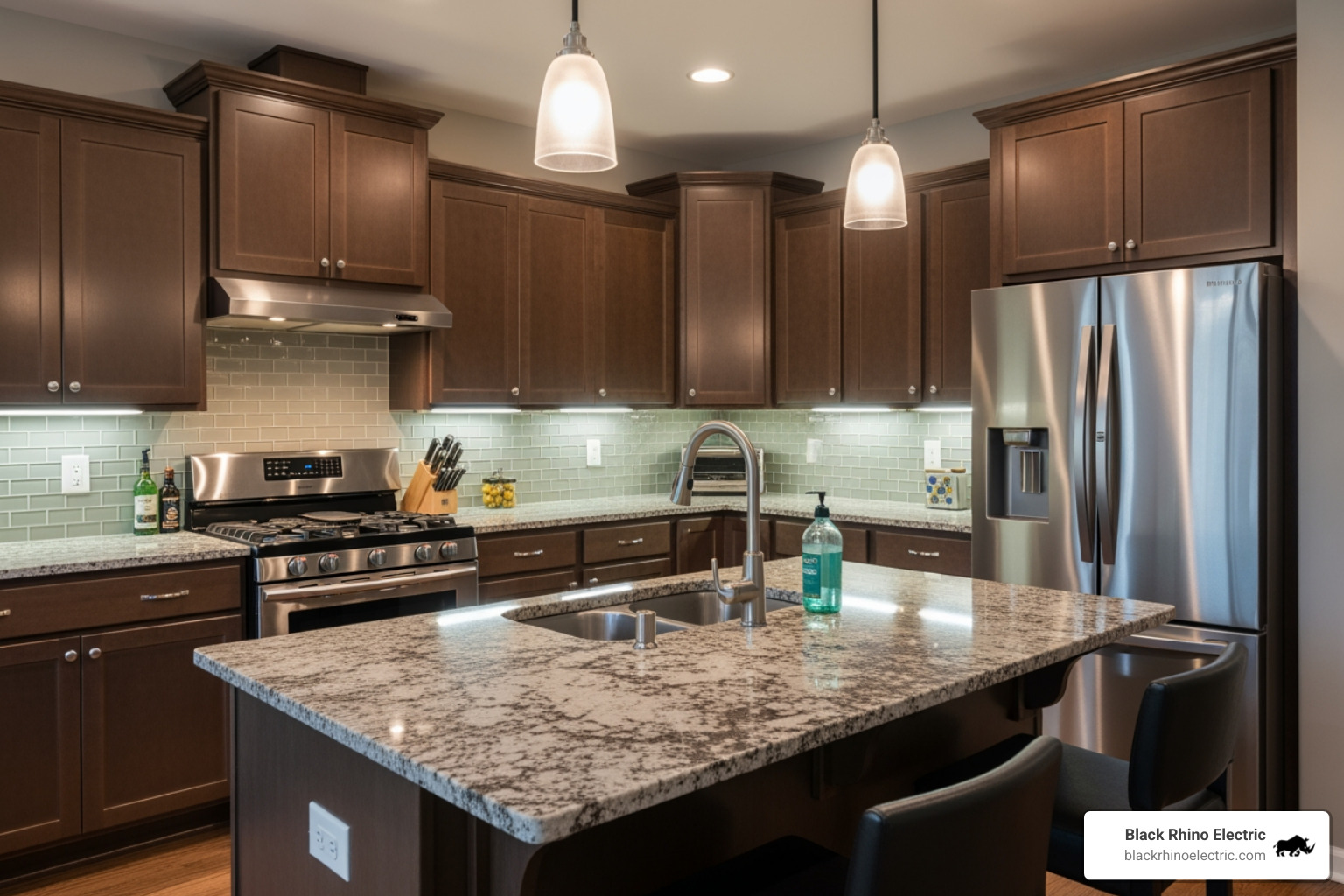
The “4-foot rule” is your best friend here. According to the NEC, no point along the kitchen wall line should be more than 24 inches from a receptacle. This means you should have an outlet every 4 feet. Honestly, we often suggest spacing them even closer—every 2 to 3 feet—in high-prep areas.
Don’t forget the Island! If you are adding an island or peninsula, it must have electricity. Modern codes require at least one outlet on islands (and often more depending on the square footage).
- Pop-up Receptacles: These are great for islands where you don’t want to cut into beautiful waterfall stone end-caps.
- USB Outlets: We highly recommend installing “smart” outlets with built-in USB-C ports. It turns your kitchen island into a charging hub for tablets and phones without hogging the plug needed for the electric griddle.
- Internal Cabinet Outlets: Want to hide the toaster or the charging station for the vacuum? A Home Improvement Electrician can install outlets inside your “appliance garage” cabinets to keep your counters clutter-free.
Layered Lighting and Energy Efficiency
Lighting is what makes a kitchen go from “functional” to “fabulous.” We always recommend a “layered” approach. As a Lighting Electrician, we break it down into three types:
- Ambient Lighting: This is your general overhead light. Recessed LED “can” lights are the gold standard here.
- Task Lighting: This is crucial for safety. Under-cabinet LED strips illuminate your chopping blocks so you aren’t working in your own shadow.
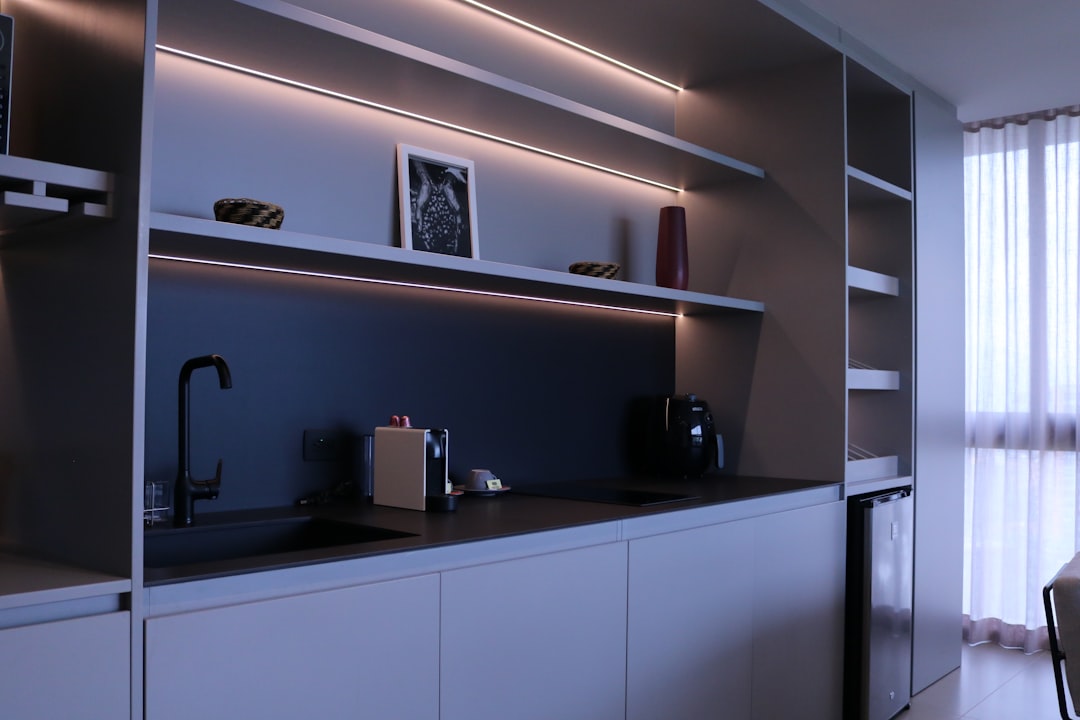
- Accent Lighting: Think pendant lights over the island or “toe-kick” lighting that glows at the floor level. It adds drama and acts as a great nightlight for those midnight snack runs.
Energy Efficiency Tip: Residential LED lighting uses at least 75% less energy and lasts up to 25 times longer than incandescent bulbs. Plus, they stay cool to the touch, which is a huge plus in a hot kitchen. Integrating dimmer switches for all these layers allows you to adjust the mood and save even more on your power bill.
Future-Proofing and Professional Planning
One of the biggest mistakes we see in a kitchen electrical remodel is failing to look ahead. You might not have a smart fridge or an induction cooktop today, but will you in five years?
Signs You Need a Panel Upgrade
Before you add all these new circuits, we need to make sure your “brain box” (the electrical panel) can handle it. If your home was built over 30 years ago, it likely has a 100-amp service. For a modern kitchen and the rest of a busy household, upgrading to a 200-amp service is often a wise investment.
You should definitely consider a Breakers & Panels Electrician if you notice:
- Flickering lights when the microwave or dishwasher starts.
- Buzzing or crackling sounds coming from the panel or outlets.
- Warm outlet covers or a faint “fishy” burning smell.
- Frequent breaker trips that interrupt your cooking.
Upgrading your panel ensures you have enough “spaces” for all the new dedicated circuits required by code. For more details on what this involves, check out our guide on the Cost to Upgrade Electrical Panel.
Smart Integration and Future-Proofing Your Kitchen electrical remodel
At Black Rhino Electric, we love helping Weber County families future-proof their homes. “Future-proofing” means running a few extra wires or choosing “smart” tech now so you don’t have to tear up your walls later.
- Smart Appliances: Many new ENERGY STAR refrigerators and ovens require Wi-Fi connectivity for remote monitoring. Ensuring your kitchen has a strong signal and stable power is key.
- Voice Control: We can integrate smart switches that allow you to say, “Alexa, turn on the prep lights,” when your hands are covered in flour.
- EV Ready: Since we are already working on your panel for the kitchen, it’s the perfect time to discuss adding an EV charger in the garage. It’s much cheaper to do both at once!
Whether you’re in Ogden, North Ogden, or Roy, our team of Residential Electricians understands the local climate and specific building quirks of Utah homes. We specialize in Electrical Services that range from simple outlet swaps to whole-home rewiring.
You know what? Taking the time to map out your electrical needs now prevents expensive “oops” moments later. Whether you’re in Ogden or anywhere in Weber County, the team at Black Rhino Electric is ready to turn your high-voltage dreams into a safe, functional reality. Contact us today at 801-810-4292 or Request a Free Quote to get started on your project!