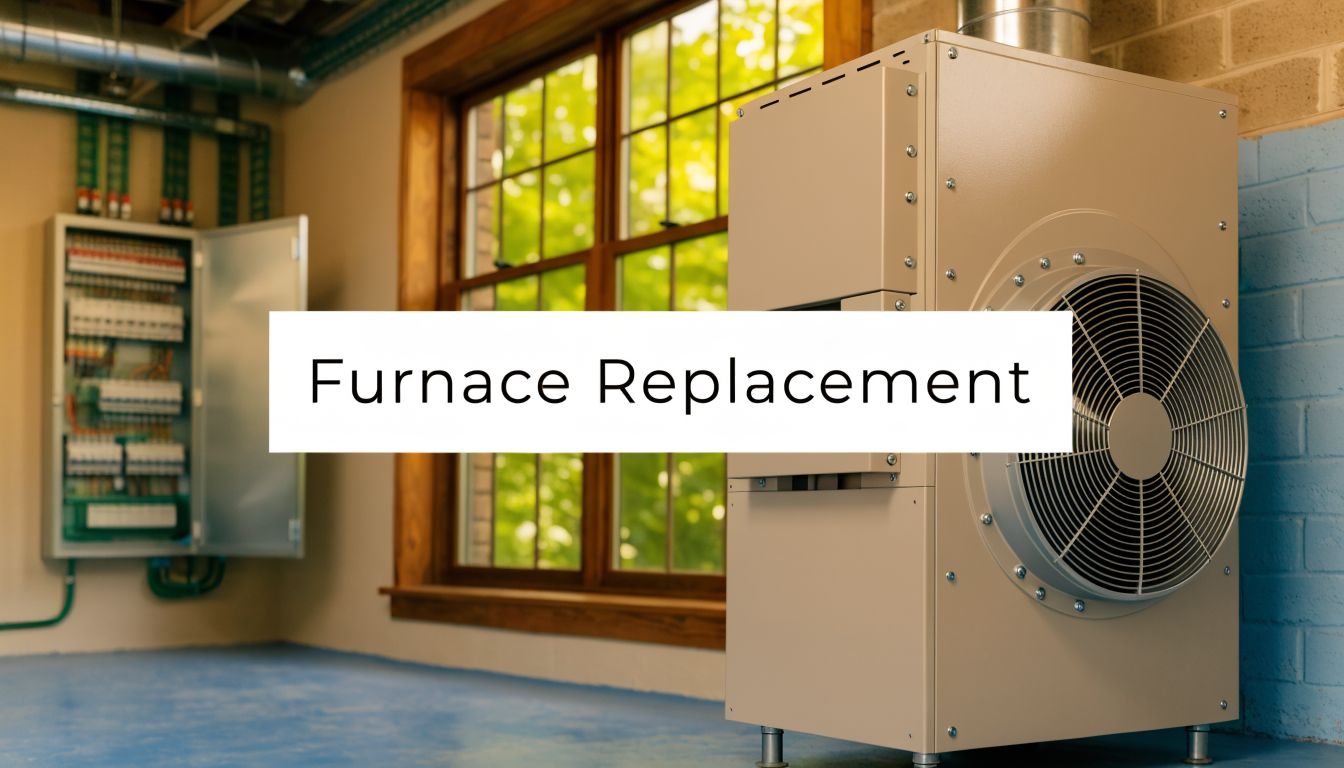
If your furnace has been groaning through another Utah cold snap, you're probably asking the same question many homeowners ask every winter. furnace replacement salt lake city ut isn't just about picking a new unit. It's about making sure your home's wiring, panel, permits, and installation are ready for it.
Is It Time for a New Furnace The Telltale Signs
A furnace usually gives plenty of warning before it quits for good. The trouble is that homeowners often get used to the warning signs. A room that never warms up. A blower that sounds rough on startup. A repair visit that fixes one problem but seems to reveal the next.
In Salt Lake City, furnace lifespan typically falls between 15 to 20 years with regular maintenance, but Utah's harsh winters and dry air can speed up wear, according to local furnace replacement guidance for Salt Lake City homeowners. That's why the age of the equipment matters so much. Once a furnace reaches that range, every repair deserves a harder look.

Signs that point toward replacement
Some clues are obvious. Others are more subtle and show up in comfort, noise, and monthly operating costs.
- Frequent repair calls mean the system is no longer giving you reliable service. One isolated igniter issue is one thing. Repeated breakdowns are another.
- Uneven heating often means the furnace is struggling to deliver steady output, or the blower and control system aren't keeping up anymore.
- New noises like banging, rattling, squealing, or hard starts usually mean moving parts are wearing out.
- Climbing utility bills can signal declining efficiency, even if the furnace still turns on every day.
- Age past the practical window matters. A furnace that's older may still run, but “still runs” and “still worth investing in” are not the same decision.
The 50 percent rule that helps you decide
A solid field rule is the 50% rule. If a repair starts to approach or exceed 50% of replacement cost, replacement is usually the smarter financial move, based on the same Salt Lake City guidance above.
Practical rule: Don't judge a furnace only by whether it can be repaired. Judge it by whether the repair buys you reliable service for a reasonable amount of time.
That's where homeowners often get stuck. They approve one more repair because it feels cheaper today. Then another issue appears a few weeks later, and now they're pouring money into an aging machine during the worst time of year to lose heat.
If you want a good outside perspective on when to upgrade your home heating system, that resource is worth reading because it frames the choice the way homeowners face it. Not as a sales pitch, but as a timing decision.
Budgeting for Your New Furnace in SLC
Cost is where most furnace decisions get real. People can live with some noise. They can tolerate one cold bedroom for a while. But once the conversation turns to replacement pricing, they want to know what's normal, what's optional, and what might get added later.
In Salt Lake City, an installed 80% AFUE furnace can run $2,000 to $5,000, while 98% AFUE systems can range from $8,000 to $14,000+, according to Salt Lake City furnace installation pricing information. That same source notes the required mechanical permit adds $50 to $200.
What changes the final price
The quote on paper is shaped by more than the furnace cabinet itself.
Some of the biggest cost drivers are:
- Efficiency level. Higher AFUE equipment costs more up front, but the design is built to waste less heat.
- Unit size and blower setup. A furnace has to match the heating demand of the house and the airflow requirements of the duct system.
- Brand and controls. Basic single-stage equipment costs less than premium variable-speed systems with more advanced controls.
- Accessory work. Humidifiers, thermostat upgrades, filter cabinets, and duct modifications can all move the total upward.
- Site conditions. Tight utility rooms, older venting, and difficult access make labor more involved.
2026 Salt Lake City Furnace Replacement Cost Estimates
| Furnace Tier | Estimated Total Cost | Potential Annual Energy Savings |
|---|---|---|
| Basic 80% AFUE installed system | $2,000 to $5,000 | Qualitatively lower than older equipment, depending on existing system condition |
| Mid-range replacement | $5,000 to $7,000 | Qualitative savings improve with better efficiency and proper installation |
| High-efficiency 98% AFUE variable-speed system | $8,000 to $14,000+ | Higher-efficiency units may deliver stronger utility savings over time |
A table like this is useful, but don't treat it like the whole story. A cheap quote can leave out the work around the furnace. That's where homeowners get surprised.
Costs that often get missed
A furnace replacement can expose issues that weren't obvious while the old unit was limping along.
Watch for these line items:
- Permit handling so the city inspection process is covered properly.
- Duct transitions or repairs if the new cabinet dimensions don't line up cleanly with existing ductwork.
- Thermostat and control wiring when old low-voltage wiring is brittle, undersized, or poorly routed.
- Electrical upgrades if the furnace needs a dedicated circuit, panel space, or correction of older wiring issues.
A low bid isn't always a bargain. Sometimes it just means the contractor hasn't included the parts of the job that are hardest to see on day one.
If financing will be part of the decision, it helps to review how contractors typically structure payment options before you start comparing local bids. Even an out-of-market example like these Arizona HVAC financing options can help you understand the kinds of plans and terms homeowners usually ask about.
Permits are where a lot of bad installations get exposed. They're also where good contractors separate themselves from the guys who just want to swap equipment fast and disappear.
Salt Lake City requires a mechanical permit for furnace replacement work. That permit isn't just paperwork. It creates a review and inspection path that helps catch installation problems before they become safety problems.
Why the permit matters to you
A legal replacement should protect more than comfort. It should protect your family, your home value, and your ability to show the work was done properly if you ever sell the property or file an insurance claim.
A proper permit process helps verify things like:
- Correct venting so combustion gases are handled safely
- Mechanical code compliance for the replacement itself
- Inspection of the finished work before the job is considered complete
- Documented approval tied to the property
You know what? For a homeowner, that final inspection is often the only independent set of eyes on the project.
Questions worth asking before work starts
A legitimate contractor shouldn't get defensive when you ask basic permit questions.
Ask these directly:
- Who is pulling the permit
- Whether inspection is included in the quoted scope
- What happens if the inspector flags a correction
- Whether related electrical deficiencies will be fixed before final approval
If your home already has known electrical issues, it also helps to understand how code violation repairs for unsafe or non-compliant electrical work are typically handled before a major mechanical replacement moves forward.
If a contractor tells you a permit is optional for a furnace replacement, treat that as a warning sign, not a shortcut.
The Critical Electrical Work Most Homeowners Miss
Many homeowners view furnace replacement as an HVAC task with minor electrical work attached. That perspective is backward. A modern furnace relies on solid electrical infrastructure to provide the efficiency, control, and reliability you paid for.
That matters even more in older Salt Lake Valley homes. An aging system may have kept running on tired wiring, an overstuffed panel, or a shared circuit that should have been corrected years ago. The old furnace tolerated it poorly. A new furnace may not tolerate it at all.

Why a new furnace can expose an old electrical problem
Modern high-efficiency furnaces can require dedicated circuits and support for smart controls, and older blower motors can draw 15% to 30% more current on startup, which puts added stress on aging electrical systems, according to this furnace replacement electrical guide. That startup stress is where nuisance trips, weak connections, and undersized wiring show up fast.
I see homeowners assume that if the old furnace had power, the new one will too. That's not always true. New equipment often includes better electronics, more sensitive controls, and different blower behavior. If the circuit is shared, the breaker is wrong, or the grounding is poor, the system may short-cycle, trip, or fail inspection.
Electrical items that deserve a close look
When a furnace is being replaced, these are the electrical checkpoints that matter most:
- Dedicated branch circuit. The furnace should have the proper circuit arrangement for the equipment being installed.
- Breaker capacity and panel space. An overcrowded panel can turn a clean install into a compromised one.
- Wire condition and size. Older conductors, brittle insulation, or undersized wiring should never be ignored.
- Disconnect and service access. The equipment needs a safe means of disconnect for service and maintenance.
- Thermostat and control wiring. Multi-stage and smart-control systems depend on clean, correct low-voltage wiring.
What goes wrong when this part gets skipped
A furnace can be installed mechanically and still be a bad job overall. That happens when the electrical side gets treated like an afterthought.
Common failures include:
| Electrical issue | What the homeowner notices |
|---|---|
| Shared or overloaded circuit | Breakers trip when the furnace starts or while other equipment runs |
| Loose terminations | Intermittent shutdowns, heat loss, or hard-to-diagnose faults |
| Improper low-voltage wiring | Thermostat problems, staging issues, or poor blower response |
| Weak panel capacity | Delays, failed inspections, or last-minute upgrade costs |
One of the most useful homeowner resources on this point is a clear explanation of breaker and panel services for residential electrical systems. If your house is older, that's the part of the project you don't want guessed at.
A furnace can only run as well as the power feeding it. Good HVAC equipment can't overcome bad electrical work.
What proper prep looks like
A serious pre-install review should include the panel, the branch circuit feeding the furnace, visible wiring condition, grounding path, and thermostat/control setup. It should also identify whether any electrical correction needs to happen before the HVAC crew sets the new unit.
Let me explain why this matters so much. If the electrical work is handled before install day, the replacement tends to move cleanly. If it's discovered after the equipment is in place, the homeowner pays in delays, change orders, and frustration.
Choosing Your Team and Getting Accurate Bids
You don't need one contractor who “does a little of everything.” You need the right trades doing the right parts of the work.
The HVAC contractor handles equipment selection, venting, gas connections, airflow setup, and startup. The electrical contractor handles safe power delivery, code-compliant wiring, panel evaluation, and corrections that keep the system from becoming a breaker-tripping headache.
Why bids often don't match
Two furnace quotes can look similar at first glance and be nothing alike in real scope. One may include permit handling, electrical review, and cleanup. Another may only cover the bare equipment swap.
National data shows 25% to 30% of HVAC installations in older homes require unexpected post-install electrical upgrades costing $1,500 to $3,000, and a proactive electrical audit helps prevent those surprises, according to this furnace replacement overview focused on hidden electrical issues. That's why the best bid is usually the one that accounts for the whole job, not just the furnace box.

What to ask every contractor
Use this checklist when you're comparing bids:
- License and insurance. Ask for proof, not just a verbal yes.
- Itemized scope. Make them separate equipment, labor, permit handling, and any allowance for electrical correction.
- Electrical review. Ask whether anyone has evaluated the panel, circuit, and control wiring before installation day.
- Inspection responsibility. Confirm who meets the inspector and who handles corrections if something fails.
- Startup and testing. Ask what final performance checks are included before the crew leaves.
Red flags that should slow you down
Not every bad contractor is obviously careless. Some just rush the sales process and leave details vague.
Pay attention if you hear things like:
- “We'll figure it out on install day.”
- “You probably don't need a permit.”
- “If the old one worked, the electrical is fine.”
- “That price doesn't include anything unexpected.”
“Unexpected” is exactly what older homes are famous for.
If you want to compare scopes carefully before signing anything, asking for a written estimate through a detailed electrical quote request process is a smart way to understand what an electrical contractor will inspect and price.
The right bid is detailed enough to reveal problems before the truck is in your driveway, not after the old furnace is already out.
The Installation and Beyond What to Expect
Once the contract is signed and the permit is in motion, installation day should feel organized, not chaotic. A well-run furnace replacement follows a sequence. Old equipment comes out cleanly, the new unit is set, venting and duct connections are adjusted as needed, electrical connections are completed properly, and the system is tested before anyone calls the job done.
For many homes, the work is straightforward. For older homes, installation can pause while the crew addresses wiring concerns, thermostat issues, or panel limitations that were identified ahead of time. That's why pre-install coordination matters so much. It keeps the replacement from turning into a scramble.
What to look for before the crew leaves
Homeowners don't need to inspect like a tradesperson, but they should absolutely verify the basics.
Use a simple checklist:
- Thermostat response. Raise the temperature and confirm the furnace starts and responds normally.
- Airflow at registers. Walk room to room and make sure heat is being delivered where it should be.
- Clean work area. The mechanical area should be orderly, not left with loose wire scraps, hardware, or debris.
- Permit and inspection follow-up. Make sure you know whether final inspection is still pending.
- Maintenance instructions. Ask how often the filter should be changed and what service schedule the manufacturer expects.
What helps the new system last
A new furnace performs best when the whole support system is healthy. That means consistent filter changes, clear return airflow, proper thermostat use, and electrical service that remains stable over time. If lights dim, breakers trip, or the thermostat starts acting erratically after the install, don't ignore it. Those are signs the electrical side still needs attention.
The best furnace replacement results come from treating the project as a full system upgrade, not just a box swap. Heating equipment, controls, wiring, permits, and inspection all have to work together if you want safe, efficient heat through a Salt Lake City winter.
If you're planning a furnace replacement and want the electrical side handled correctly from the start, contact Black Rhino Electric. Call 385-396-7048 or request a free quote.