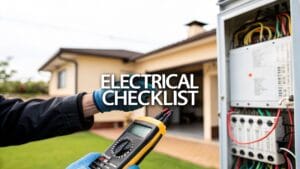

If you're searching for electricians in utah county, you're probably dealing with one of two things right now. Something already isn't working, or you're trying to upgrade a home or building without getting burned by bad wiring, failed inspections, or vague answers.
Why Choosing the Right Electrician Matters in Utah County
Utah County isn't one kind of electrical market. Provo has older neighborhoods with aging panels, older branch wiring, and remodel surprises hiding behind drywall. Lehi, Saratoga Springs, and Eagle Mountain have newer homes and commercial spaces, but those properties often carry heavier electrical demands from home offices, EV charging, larger HVAC systems, and smart devices.
Ever wonder why your neighbor's new build has a completely different electrical setup than your classic rambler? Let me explain. A house built decades ago was designed around a very different load profile than a house where someone charges a vehicle overnight, runs multiple screens for remote work, and expects reliable power for garage equipment, AC, and kitchen appliances all at once.

Local conditions change the job
Electrical work along the Wasatch Front isn't just about making the lights turn on. It has to hold up through winter heating demand, summer cooling demand, remodel waves, basement finishes, and expanding commercial use.
That matters because the wrong contractor tends to treat every job like a simple parts swap. Replace the breaker. Swap the outlet. Install the fixture. Done. But many electrical problems in Utah County are tied to the whole system, not one device.
A few examples make that clear:
- Older homes need diagnosis, not guesses. A tripping breaker in an older Provo home might point to a shared neutral issue, a worn breaker, or wiring that was fine for an earlier era but isn't appropriate for today's load.
- Newer homes still run into capacity questions. A newer home in Lehi may look modern, yet still need a careful panel review before adding a hot tub, Tesla Wall Connector, or workshop circuit.
- Commercial spaces need planning. Tenant improvements, office buildouts, and retail changes often require code-conscious layout decisions, not just moving a few outlets.
Growth raises the stakes
Utah's electrical market is busy. In 2026, Utah's electricians industry supports 3,772 businesses and 25,461 employees, with business growth averaging 5.6% annually from 2021 to 2026 according to IBISWorld's Utah electricians industry data. More contractors in the market gives property owners options, but it also means you need to sort experienced professionals from people who bid low and fix problems later.
Practical rule: Electrical work should solve today's issue and leave room for tomorrow's load.
What the right electrician actually protects
Choosing well isn't just about price. It's about avoiding the kind of mistakes that follow a property for years.
The right electrician helps protect:
- Safety at the panel and branch circuit level. Loose terminations, undersized circuits, and improper grounding don't always announce themselves right away.
- Inspection results. Small remodels often trigger code corrections that homeowners didn't see coming.
- Property value. Buyers, appraisers, insurers, and tenants all pay attention to electrical condition.
- Future flexibility. If a home may need a basement finish, EV charger, hot tub hookup, or service upgrade later, the work should anticipate that.
A good electrical contractor doesn't make the system feel mysterious. They make it understandable. That's especially important in Utah County, where one neighborhood may need careful old-work troubleshooting and the next may need forward-looking power planning.
Common Electrical Problems Utah County Residents Face
Most calls don't start with a dramatic failure. They start with irritation. Lights flicker when the microwave runs. A bathroom outlet stops working. A breaker trips every time someone uses the space heater and hair dryer together. Then the homeowner wonders if it's a small fix or the start of something bigger.
In Utah County, those symptoms often come from a mix of aging infrastructure and modern usage. An older home may still have outdated receptacles, questionable splices, or circuits that were never meant to support current appliance demands. A remodeled home may look updated on the surface while hiding old wiring paths in walls and attic spaces.
Problems people notice first
The warning signs are usually familiar:
- Frequent breaker trips. This can signal overload, a failing breaker, a short, or a circuit serving more than it should.
- Flickering or dimming lights. Sometimes it's a fixture issue. Sometimes it's a loose connection upstream, which is far more serious.
- Warm outlets or switches. That points to resistance, loose terminations, or improper device installation.
- Two-prong outlets. These often show up in older homes and usually mean the space lacks modern grounding protection.
- Dead outlets with no obvious cause. A tripped GFCI elsewhere, a failed backstab connection, or a hidden wiring fault may be behind it.
The symptom people notice is often the least important part of the job. The actual work is finding out why it happened.
An electrical issue is often a symptom, not the root problem. Our job is to trace that symptom back to its source to ensure a safe, permanent fix.
Homes built long ago can carry wiring methods and equipment that need a closer look during repairs or remodeling. Knob-and-tube remnants, older aluminum branch wiring, ungrounded circuits, and obsolete panels all change how a repair should be handled.
This gets especially important when someone updates a kitchen, finishes a basement, or replaces a panel. The project starts as a simple improvement, then inspection reveals missing AFCI or GFCI protection, grounding problems, or circuits that need to be brought up to current standards.
Recent data from Utah County's Building Department shows 28% of residential electrical permits were flagged for violations, a 15% increase from 2025, according to this Utah County electrician licensing and permit overview. That's a practical reminder that code issues aren't rare edge cases. They're part of everyday residential electrical work here.
Panels deserve more attention than they get
A lot of homeowners focus on outlets, lights, or fixtures. Fair enough. That's what they use every day. But the panel often tells the complete story.
If you've never looked into older or problematic electrical panel brands, this overview of Zinsco panel issues for Florida homes is useful because it explains why obsolete equipment can fail in ways that don't always look obvious at first. The climate and local code context differ, but the lesson carries over. Some panels create risk because of their design and age.
For homes showing overload symptoms, visible corrosion, double-tapped breakers, or expansion needs, a closer look at breaker and panel upgrade work often makes more sense than chasing the same nuisance problem over and over.
What works and what doesn't
What works is a methodical diagnosis. Test the circuit. Check the terminations. Review the panel. Verify load. Trace the wiring path if needed.
What doesn't work is replacing devices until the problem seems to disappear. Sometimes that gives a homeowner a few quiet weeks. Then the same issue comes back with more damage behind it.
When electrical systems start talking, even in small ways, it's smart to listen early.
Decoding Electrical Services and Project Timelines
A lot of calls start the same way. The lights dim when the microwave kicks on, the garage breaker trips when a heater and a saw run together, or a remodel stalls because the inspector flagged something behind the walls.
Those problems do not belong in the same bucket, and that is why pricing and timelines can feel all over the map. In Utah County, the difference usually comes down to three things: how hard the problem is to access, whether the system has enough capacity, and whether permit or code correction work is part of the job.
Small repairs and troubleshooting calls
This category covers the jobs that start with a symptom, not a full project plan. A dead outlet, a switch that quit, a warm receptacle, a breaker that trips without a clear pattern, or a light that flickers often enough to be annoying but not often enough to be predictable.
Some of these calls are quick. A failed device, a bad connection, or a tripped GFCI upstream can often be found and corrected in one visit.
Others take real diagnostic work. We may need to trace the circuit through several boxes, isolate shared loads, test terminations under load, or confirm whether the issue is in the device, the branch wiring, or the panel. That is the trade-off homeowners do not always see at first. The repair itself may be simple. Finding the actual cause may not be.
Typical work in this range includes:
- Outlet and switch repairs for loose, dead, cracked, or heat-damaged devices
- Lighting troubleshooting for flicker, intermittent failure, or fixtures that burn through lamps too fast
- Breaker diagnostics when a circuit trips repeatedly and the cause is not obvious
- GFCI and AFCI corrections after remodels, nuisance tripping, or inspection write-ups
A careful diagnosis saves money. Guessing does the opposite.
Installation work and functional upgrades
Planned electrical upgrades usually sound straightforward on the phone. Add a ceiling fan. Install recessed lights. Run power to the garage. Wire a bathroom fan. Add a dedicated circuit for a microwave, freezer, or office equipment.
The catch is that the visible part of the job is only part of the work. The wiring path matters. The available capacity in the panel matters. Box fill, support, circuit protection, and current code requirements matter too.
For example, adding a fan where a light used to be may require a properly rated fan box, not just a fixture swap. A new garage circuit may be easy in an unfinished space and much slower in a finished basement with limited routing options. Smoke and CO detector work can look minor until you account for interconnection and required placement.
Before any of that starts, a solid plan answers three questions:
- What load the new equipment adds
- Whether the existing circuit and panel can handle it
- Whether permit and inspection apply
That is how a job stays clean, serviceable, and safe after the drywall dust settles.
Larger projects that change system capacity
Such projects lead to schedules stretching and costs widening. Panel upgrades, service changes, rewires, major remodel wiring, and tenant improvement work affect the backbone of the electrical system.
A panel upgrade is not just a bigger box with more breaker spaces. It can involve load calculations, grounding and bonding corrections, service equipment changes, utility coordination, permit scheduling, and cleanup of older wiring methods inside the existing panel. In older Utah County homes, one correction often reveals another. That is normal. It is also why a quote with no stated assumptions should be treated carefully.
Rewiring has its own trade-offs. An occupied home may need the work phased room by room to keep the house usable. A vacant property moves faster. Finished walls and ceilings slow everything down because access drives labor.
Below is a practical planning table for the jobs people ask us about most often.
| Service | Estimated Cost Range | Typical Timeline |
|---|---|---|
| Troubleshooting and minor repairs | Varies by issue and access | Often completed in one visit |
| Outlet or switch replacement | Varies by device type and condition of existing wiring | Often completed in one visit |
| Light fixture or ceiling fan installation | Varies by fixture weight, box support, and existing wiring | Often completed in one visit |
| Dedicated circuit installation | Varies by distance to panel, access, and load requirement | Usually a short project, sometimes longer if access is limited |
| Panel upgrade | Varies based on service configuration, grounding needs, utility coordination, and permit scope | Commonly scheduled over one or more workdays depending on complexity |
| EV charger installation | Costs vary with charger size, panel capacity, circuit length, and whether service or panel corrections are needed first | Usually a short scheduled project, though panel work or permit timing can extend it |
| Code violation corrections | Varies widely depending on the number and severity of issues found | Can be quick for isolated corrections or span several days when older wiring is involved |
| Partial or full rewiring | Varies significantly based on house size, finish access, and whether the home is occupied | Often phased over multiple days |
Why timelines vary so much
Two homes can ask for the same upgrade and get very different timelines.
A dedicated circuit to a garage is a good example. In one house, the panel is close, attic or crawl access is open, and the cable route is clean. In another, the route crosses finished areas, insulation is dense, and the panel is already crowded. The scope on paper looks similar. The field conditions are not.
Panel work follows the same pattern. One replacement goes smoothly because the service is in decent shape and the grounding is already correct. Another turns into a longer project because the existing setup has corrosion, poor labeling, mixed neutrals and grounds where they should not be mixed, or other conditions that need to be corrected before inspection.
How to get a realistic quote
The best estimates come after someone has seen the job. Good photos help. Clear panel photos help more. A site visit is best, especially for older homes, basement finishes, service upgrades, and anything involving added load.
A useful quote should spell out:
- What is included
- What assumptions the price is based on
- What permit or inspection steps are expected
- What hidden conditions could change the scope once work begins
That last point matters in Utah County’s older housing stock. A home can look fine at the device level and still have issues in the panel, attic, crawlspace, or junction boxes.
At Black Rhino Electric, the goal is simple. Give people a quote that matches the actual job, not the easy version of it. That is the only way to set honest expectations on cost, scheduling, and how much disruption the work will involve.
The Black Rhino Guide to Vetting and Hiring Your Electrician
Hiring an electrician shouldn't feel like a gamble. It should feel like checking credentials, confirming scope, and making sure the person touching your wiring is qualified to do the work safely.
You know what? This is the part often skipped until after something goes wrong. A clean truck and a fast estimate don't tell you whether the work will pass inspection, hold up under load, or be covered if something goes sideways.

Start with licensing, not promises
In Utah, licensing isn't a formality. It reflects training and verified experience. For a Utah Journeyman Electrician license, candidates must complete 4,000 hours of supervised work and pass three separate exams covering code, theory, and practical skill, as outlined in this Utah electrician license requirements guide.
That matters because it separates supervised, tested electricians from people who know basic wiring. Panel upgrades, hard-wired equipment, remodel corrections, and EV charger installations all require judgment, not just hand tools.
A smart hiring process starts with one step. Verify the contractor's license through Utah DOPL before you schedule the work.
What to confirm before you hire
Use a checklist that goes beyond price.
- License status. Confirm the business and the qualifying electrician are active and appropriate for the work being proposed.
- Insurance coverage. Ask whether they carry liability coverage and workers' compensation. If they don't, you're taking on risk that isn't yours to carry.
- Permit handling. Ask who pulls the permit, who meets the inspector, and how corrections are handled if the city asks for changes.
- Relevant project experience. A contractor who mainly swaps fixtures may not be the right fit for a service upgrade, meter work, or a complicated remodel.
- Written scope. Make sure the bid says what is included, what is excluded, and what conditions could create a change order.
Ask a contractor to explain the job in plain language. If they can't explain it clearly before the work starts, they probably won't communicate clearly once the walls are open.
Questions worth asking on the estimate
Some questions reveal a lot very quickly:
| Question | Why it matters |
|---|---|
| Have you handled this type of project before? | Experience on similar work reduces surprises. |
| Will this job require a permit? | Good contractors don't dodge this question. |
| What could change the price once work starts? | This shows whether they've thought through access and hidden conditions. |
| Who will actually perform the work? | You want to know whether licensed supervision is built into the job. |
| What happens if inspection calls for a correction? | Their answer tells you how they stand behind the work. |
Red flags that deserve caution
You don't need to overcomplicate the hiring process, but you also shouldn't ignore obvious warning signs.
Watch out for:
- Vague bids with little detail
- Cash-only pressure
- No mention of permits on clearly permit-worthy work
- Big promises without a site visit
- Dismissive answers to safety or code questions
A solid electrician doesn't need to oversell. They answer directly, explain trade-offs, and document the work clearly. That's usually the contractor who causes fewer problems after the invoice is paid.
Specialty Electrical Services for Modern Utah Lifestyles
A lot of Utah County electrical work starts the same way. Someone buys an EV, adds a hot tub, finishes a basement office, or wants cameras and Wi-Fi that work in every room. Then the key question shows up. Can the existing electrical system handle it safely, cleanly, and without turning a straightforward upgrade into a patchwork fix six months later?

EV chargers need more than an empty breaker space
EV charger installation gets underestimated all the time. Homeowners see a garage wall, a panel nearby, and a charger for sale online. The job looks simple until you run the load calculation and find out the service is already carrying a heavy air conditioner, electric range, dryer, and a finished basement added years after the house was built.
The first step is figuring out whether the home can support a new continuous 240-volt load. A charger is not just another plug. It can pull power for hours at a time, which changes how the circuit, breaker, wire size, and panel capacity need to be evaluated.
The main decision points usually come down to these:
- Level 1 vs. Level 2. Level 1 is slower and often works for low-mileage driving. Level 2 is the practical choice for most daily charging.
- Equipment type. Tesla Wall Connectors, J1772 chargers, and hardwired versus plug-in units each affect the installation details.
- Panel capacity. A panel may have physical space for a breaker and still be the wrong fit for the added load.
- Cable route. A charger mounted back-to-back with the panel costs less to install than one that requires a long run through finished walls or attic space.
For homeowners comparing options, Black Rhino Electric handles EV charger installation for Utah County homes with the panel and load review done first. That order matters. Mounting the charger first and asking capacity questions later is how projects get delayed or repriced.
Panel upgrades and load planning
A service panel works like the traffic control point for the whole property. If too many large loads are trying to move through old equipment or a crowded service, problems show up fast. Breaker trips, overheating, poor circuit layout, or no room to add what the home now needs.
In Utah County, this comes up often in older homes and in newer homes that were built before electric vehicles, basement kitchenettes, home offices, and garage workshops became common. A panel upgrade may be the right move if the project includes EV charging, a remodel, a spa circuit, or replacement of outdated equipment that has already reached the point where repairs stop making financial sense.
Some owners ask about smart panels and monitoring features. Those can be useful, especially for homes trying to manage EV charging and other large loads without oversizing every part of the system. The right choice depends on budget, service condition, and whether the goal is basic added capacity or more active load management.
Hot tubs, spas, and outdoor power
These installations deserve more planning than people expect.
A hot tub or spa needs a dedicated circuit, the right GFCI protection, correct disconnect placement, and equipment rated for the environment. The work also has to account for clearances, bonding, grounding, and the path from the panel to the equipment pad. A nearby subpanel helps sometimes. It does not automatically make the installation simple or inexpensive.
Outdoor projects across the Wasatch Front bring their own trade-offs. Trenching may be easy in one yard and difficult in another because of hardscape, mature landscaping, or access limits. A shed feeder, patio heater, exterior lighting plan, or outdoor kitchen often looks like a small add-on from the homeowner side, but reliability depends on wire sizing, voltage drop, weather-rated devices, and a layout that can be serviced later without tearing everything apart.
Smart homes need low-voltage planning too
Smart homes are not just app-controlled switches. Good planning usually includes data cabling, camera locations, wireless access point placement, doorbells, network equipment power, and clean pathways for future upgrades.
That work goes better when it is planned before drywall is closed or finish surfaces are completed. A useful concept reference is this smart home wiring guide for Wisconsin, which shows the kinds of decisions that are easier to make early. Utah rules and local installation details still apply, but the planning logic carries over.
The best results come from treating line-voltage and low-voltage systems as part of the same project. That is how homeowners avoid dead Wi-Fi zones, exposed patch cables, awkward camera placement, and power supplies stuffed into random closets after a remodel is already done.
Emergency Electrical Response Across Utah County
Some electrical problems can wait for a scheduled visit. Others can't. If a panel is buzzing, an outlet smells hot, part of the home has lost power unexpectedly, or a critical circuit feeding heat, refrigeration, or business equipment goes down, the right move is to treat it like an urgent safety issue.
In practical terms, an emergency usually involves one of three things. Immediate fire risk, loss of essential power, or equipment behavior that suggests arcing, overheating, or failure under load. A single dead bedroom receptacle may be inconvenient. A smoking receptacle or a tripping main breaker is not.
What counts as an emergency
These are the calls that usually deserve immediate attention:
- Smoking, sparking, or burning odor from outlets, switches, or panels
- Sudden loss of power to critical equipment or major sections of the property
- Buzzing panels or breakers
- Water exposure affecting energized equipment
- Repeated tripping that escalates or affects major appliances
By contrast, a fixture replacement, one noncritical outlet not working, or a planned installation can usually be scheduled during normal hours.
Why response capacity matters
Emergency service only works if the company has enough qualified people to cover real demand without cutting corners. Utah employed 11,350 electricians in 2023, according to BLS occupational employment data for electricians. For homeowners and property managers, that high workforce density supports the kind of team depth established contractors need for reliable after-hours response.
That matters in Utah County because electrical emergencies often hit at bad times. Winter nights. Weekend tenant calls. Early-morning business opening problems. A contractor needs enough bench strength to send someone capable, not just someone available.
If you ever smell burning or hear active buzzing from electrical equipment, shut off power if you can do it safely and call for urgent help. Don't keep testing the circuit to see if it "fixes itself."
What good emergency service looks like
A dependable emergency response process should be simple:
- Triage the hazard by phone
- Give clear safety instructions before arrival
- Send a qualified electrician
- Stabilize the immediate hazard first
- Explain what failed and what happens next
That last part matters. People are already stressed during an emergency call. Clear communication lowers risk and prevents rushed decisions.
Your Questions Answered About Utah Electrical Work
A lot of good questions come up after homeowners start comparing bids or planning a remodel. The answers below deal with the issues that tend to affect decisions most.
| Question | Answer |
|---|---|
| Do I need an electrician for a small remodel if I'm only moving a few outlets? | Usually, yes. Even small changes can affect circuit layout, device protection, box fill, and inspection requirements. Remodel work often uncovers older wiring conditions that need correction before the job can be closed properly. |
| Is a flickering light always a fixture problem? | No. A bad fixture is one possibility, but flicker can also come from a loose connection, an overloaded circuit, a failing dimmer, or trouble at the panel. The safe approach is to diagnose the circuit instead of just replacing parts. |
| Should I replace two-prong outlets with three-prong outlets myself? | Not without confirming the grounding and protection method. A three-prong receptacle suggests grounded protection, and that should never be faked. The right solution depends on how the circuit was originally wired and what code-compliant upgrade path applies. |
| When does a panel upgrade make sense? | Usually when the existing equipment is obsolete, damaged, overcrowded, or no longer supports planned loads like EV charging, a hot tub, a large remodel, or added appliance demand. It can also make sense when repeated troubleshooting points back to panel condition or capacity limits. |
| Can an electrician help me fix failed inspection items instead of redoing the whole project? | Yes, in many cases. Some projects only need targeted corrections. Others uncover system-wide problems that make broader repairs smarter. A field review usually shows whether selective fixes are realistic or whether patching the issue will create more cost later. |
| How should I compare quotes from electricians in utah county? | Compare scope clarity first. Look for permit handling, included materials, exclusions, supervision, and how hidden conditions are addressed. A low number with vague language often leads to change orders or unfinished correction work. |
| What's the best way to prepare for an estimate? | Clear access to the panel, any affected rooms, attic or basement access if relevant, and a written list of symptoms or goals. Photos of the panel, existing equipment, and any inspection notice can also help the electrician assess the work faster. |
| Are smart home upgrades mostly low-voltage, or do they need a licensed electrician too? | Many systems involve both. The controls, data, and device communication may be low-voltage, but the circuits feeding lighting, receptacles, garage equipment, or hard-wired devices still require proper electrical work. Coordinating both sides early usually gives the cleanest result. |
Partner with Utah County's Trusted Electrical Experts
Safe electrical work comes down to clear diagnosis, solid workmanship, and no confusion about what's being done. If you need help with troubleshooting, code corrections, panel work, EV charging, remodel wiring, or commercial electrical service, learn more about Black Rhino Electric and our service approach.
If you want a straightforward answer and safe, code-conscious work, contact Black Rhino Electric. You can call 385-396-7048 or request a free quote.