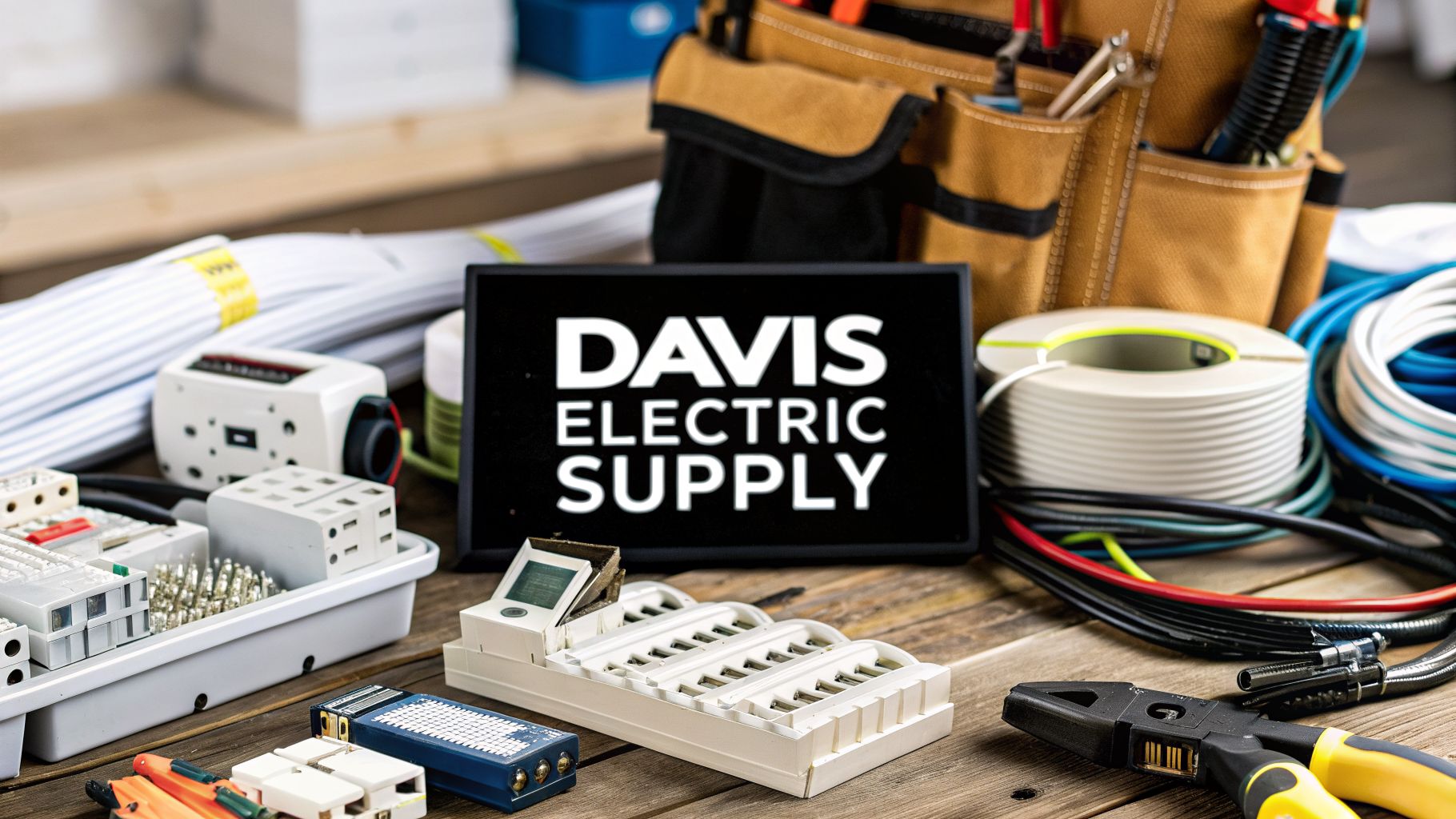
Searching for a reliable davis electric supply can feel daunting, whether you're a seasoned contractor or a homeowner with a weekend project. You need the right parts, and you need to be sure they're high-quality and safe for your home or job site. This guide will help you understand where to find top-notch electrical supplies in and around Davis County and, more importantly, when to tackle a project yourself versus calling in a professional.
What Does 'Davis Electric Supply' Actually Mean?

So, you searched for davis electric supply and the results were… a little confusing, right? You’re not alone. It’s one of those search terms that feels like it should point to a single storefront, but it doesn’t.
Honestly, it’s not a specific company. It's a general term people use when looking for any electrical supplier that serves Davis County, Utah. Think of it less like a brand name and more like searching for “local burger joints”—it describes a type of business in a specific area, not one particular place.
This isn’t unique to our corner of Utah. Here’s the thing: a lot of service industries historically used family or geographical names. That tradition creates a pretty interesting echo when you look at the history of the electrical industry itself, which is full of pioneers whose names became synonymous with innovation.
A Legacy of Local Service
For example, there's the story of Davis Derby, a family business that got its start in the UK way back in 1779. They started out making scientific instruments but quickly pivoted to electrical power.
By the 1890s, they were supplying electricity to local shops and even installed the first-ever underground electrical system in a mine in 1885—a huge leap forward for industrial safety. You can dive into more of this history and see the parallels to modern services on their historical archive.
That history of local service and hands-on innovation is mirrored in today’s electrical supply chain. The mission is the same: get the essential parts—from basic wiring and panels to sophisticated EV chargers—that power our communities safely. Just like Davis Derby served its local shops, modern suppliers serve local contractors and homeowners today.
The term 'Davis Electric Supply' is really just a signpost. It points you toward the network of local and national distributors that form the backbone of our area's construction and maintenance industries. It’s your starting point for finding the right parts.
Once you get that, the initial confusion clears up. You can shift your focus from hunting for a single company to finding the best local resources for your project. Whether you're a seasoned contractor or a homeowner tackling a weekend fix, knowing you're looking for a type of business is the first step.
Where to Find Electrical Supply Houses Near Davis County

Alright, now that we’ve cleared up that “davis electric supply” is a general term, where do you actually go to buy the parts? Good question. You won’t find a single shop with that exact name, but you will find several fantastic electrical supply houses serving Northern Utah, from Ogden and Layton down through Bountiful and Salt Lake City.
These distributors are the lifeblood for local electricians. They’re also often open to the public, offering a much better selection and higher quality of products than you'll ever find at a big-box home improvement store. Think of them as the professional’s pantry for all things electrical.
Major Electrical Suppliers Serving the Area
When you need professional-grade gear—the stuff that goes behind the walls—you go where the pros go. Several major national and regional distributors have branches that are easy to get to for anyone in Davis County.
- Consolidated Electrical Distributors (CED): With locations in Salt Lake City and Ogden, CED is part of a massive national network. That means they have a seriously deep inventory.
- Graybar: Another industry giant, Graybar has a big footprint in Salt Lake City and is a primary source for contractors across the Wasatch Front.
- Codale Electric Supply: As part of the Sonepar group, Codale has multiple locations, including one right in Ogden, making it super accessible for projects in Northern Davis County.
These are the places to source specific breakers, panels, conduit, and specialized wire. They mostly cater to electricians, but they can be a great resource for a homeowner who knows exactly what they need.
And here’s a little inside baseball for you. That network is a huge deal. For instance, Davis Wholesale Electric, a major player in California since 1963, was acquired by CED back in 2013. This move shows how the big distributors give their local branches access to a vast, nationwide inventory—a critical edge for contractors. You can discover more insights about how these industry trends help get parts where they need to go.
Local and Contractor-Focused Options
Beyond the national chains, you'll find some great local and specialized suppliers. These businesses often give you a more personal level of service and can be a goldmine for unique needs.
| Supplier Type | Best For | Typical Customer |
|---|---|---|
| National Distributors | Bulk purchases, specialized parts, and large-scale projects. | Licensed Contractors |
| Local Specialists | Unique lighting fixtures, smart home devices, and project advice. | Contractors & DIYers |
| Big-Box Retailers | Basic components like outlets, switches, and simple fixtures. | Homeowners & DIYers |
Whether you’re in Layton, Kaysville, or Farmington, a solid supply house is just a short drive away. Knowing where to look saves you time and, more importantly, ensures you get the right materials for the job.
When it comes to something as critical as your home’s electrical system, starting with professional-grade parts isn’t just a good idea—it’s non-negotiable.
What You'll Actually Find at an Electrical Supply Store
Walking into an electrical supply house for the first time can be a bit much. Aisles are crammed with parts that all look vaguely important and confusingly similar. You know what? It doesn't have to feel that way.
Once you know the main product categories, you can walk in with confidence, find what you need for a project, and understand what you're looking at. These stores are where the pros shop for a reason—they stock high-quality, durable components built to meet strict building codes. Let's break down what's on the shelves.
The Core of Any Electrical System
At the heart of every home's power system are the panels, breakers, and wiring. Think of these as the foundation. They’re the non-negotiable pieces that move power safely from the street to your outlets.
- Electrical Panels (Breaker Boxes): This is the main hub for every circuit in your home. Supply houses carry a whole range, from big main service panels to smaller sub-panels perfect for a new garage, workshop, or basement finish.
- Circuit Breakers: These are the little safety switches inside the panel. They do one job: trip and cut the power when they sense a dangerous overload or short circuit. You'll find standard breakers alongside specialized ones like AFCIs (for fire prevention) and GFCIs (for shock prevention).
- Wiring and Cable: These are the arteries of the system. Different jobs demand different wires. You might need heavy-duty 6-gauge wire for a new hot tub or standard 12-gauge Romex for the outlets in a new bedroom.
Getting these basics right is critical. If you’re thinking about a panel upgrade, our guide on choosing the right breakers and panels dives even deeper into the details.
Safety Gear, Fixtures, and Modern Tech
Beyond the core system, these stores are stocked with everything else needed to finish a job safely and add modern touches. This includes all the safety devices required by code, like GFCI outlets that prevent shocks in kitchens, bathrooms, and outdoor areas. You’ll also find a huge selection of switches, dimmers, light fixtures, and the conduit needed to protect wiring.
And yes, these stores have kept up with the times. It's now totally normal to find a whole section dedicated to smart home gear—things like smart switches, thermostats, and integrated lighting. The same goes for Electric Vehicle (EV) chargers. With EV adoption on the rise, the demand for reliable, professional-grade home charging solutions is booming.
An electrical supply house is more than a parts store; it’s a resource hub for building safe, compliant, and modern electrical systems from the ground up.
Finally, remember that a solid installation needs more than just the big-ticket items. You'll also find all the essential fasteners and fittings needed to securely mount boxes, conduit, and panels. These small parts are just as critical for a safe, clean job.
Essential Electrical Supplies and Their Uses
| Component Category | Common Items | Primary Use | Example Project |
|---|---|---|---|
| Power Distribution | Panels, Sub-panels, Breakers | Managing and distributing power safely. | Upgrading a home's main service panel. |
| Wiring & Conduit | Romex, THHN Wire, EMT, PVC | Carrying current and protecting wires. | Running a new circuit for a home office. |
| Safety Devices | GFCI/AFCI Outlets, Surge Protectors | Protecting against shock and fire hazards. | Updating kitchen and bathroom outlets. |
| Modern Technology | Smart Switches, EV Chargers | Adding convenience and future-proofing. | Installing a Level 2 EV charger in a garage. |
Seeing it all laid out like this helps connect the dots between a specific part on the shelf and the actual job you're trying to do.
DIY Project or Professional Job? A Critical Decision
Just because you can buy the parts after a quick search for davis electric supply doesn't mean you should always be the one to install them. Here’s the thing: making the wrong call on an electrical project can have serious consequences, from stubborn code violations and voided insurance to fire hazards or personal injury.
Knowing the difference between a manageable DIY task and a job that absolutely requires a licensed professional is one of the most important decisions you can make as a homeowner.
This simple decision tree can help you visualize whether your project is a minor fix or requires a pro's expertise.

As you can see, small tasks might seem straightforward, but anything involving new circuits, your main panel, or high-power appliances is firmly in professional territory.
When DIY Is Okay and When It’s a Hazard
Let me explain. Some small-scale electrical tasks are well within reach for a careful and handy DIYer. Swapping out a light fixture, replacing a standard outlet, or installing a new dimmer switch can often be done safely—if you turn off the power at the breaker first and you genuinely know what you’re doing.
However, the risks skyrocket when the project gets more complex. Any work that involves opening your main electrical panel, running new wiring through walls, or installing a big-ticket item like an EV charger or a hot tub legally and safely requires a licensed electrician.
Mistakes here aren’t just inconvenient. They can lead to code violations that cause trouble when you sell your home or, much worse, cause an electrical fire. The balance between the pro and DIY markets has always been a big deal, and for good reason—safety is the bottom line.
DIY vs. Professional Electrician: Which is Right for Your Project?
To make it even clearer, let's break down some common jobs. This table provides a quick reference to help you decide whether to tackle a project yourself or call in an expert.
| Electrical Task | Recommended for DIY? | Why a Professional Is Recommended |
|---|---|---|
| Changing a Light Fixture | Yes, with caution. | N/A, as long as you kill the power and follow safety steps. |
| Replacing an Outlet | Yes, for skilled DIYers. | Professionals are needed for GFCI/AFCI upgrades or troubleshooting. |
| Installing a New Circuit | No, never. | This requires permits, knowledge of the electrical code, and work inside the main panel. |
| Panel Upgrade or Replacement | No, absolutely not. | Extremely dangerous and legally requires a licensed electrician for utility coordination and permitting. |
| Wiring a Hot Tub | No. | This is a high-voltage job that involves specific GFCI protection, permits, and bonding requirements. |
| Installing an EV Charger | No. | Requires a dedicated high-amperage circuit and a professional load calculation to ensure your home's service can handle it. |
Ultimately, choosing an experienced and licensed contractor isn't just about convenience. It’s an investment in your home’s safety, your family’s peace of mind, and the simple confidence that the job was done right.
Partnering with a Pro for Safe Electrical Work

Grabbing the right parts from a local davis electric supply is a great start, but it’s only half the job. For anything more involved than swapping out a light fixture—think panel upgrades, EV charger installs, or rewiring an older home—bringing in a licensed and insured professional isn't just a good idea. It’s non-negotiable.
Why Real Expertise Matters
Have you ever wondered what makes a professional electrician so valuable? The true value of an electrician isn't just their tool belt; it's their up-to-the-minute knowledge of the National Electrical Code (NEC). These standards are constantly evolving for one reason: to make homes safer. A pro’s work is built on that solid foundation.
Whether you're a hardcore DIYer or a hands-off homeowner, safety has to be the top priority. Diving into documents like the NFPA 70E Electrical Safety Guidance shows just how complex the rules are for working with electricity safely. This is exactly why letting an expert handle the permitting and inspections is so critical.
A licensed electrician transforms a project from a potential liability into a documented asset. It’s about getting code-compliant work that protects your investment and, more importantly, your family.
Here at Black Rhino Electric, we have years of hands-on experience providing top-tier electrical services across Weber, Davis, and Salt Lake counties, with every job grounded in safety-first workmanship. Our expertise means we've seen it all, from troubleshooting century-old wiring to installing the latest smart home technology. This level of experience ensures we can anticipate problems before they arise, guaranteeing your project is completed safely and efficiently.
Common Questions About Electrical Supplies
So you’re planning a project and find yourself staring at a wall of electrical parts at the supply house. It’s a common spot to be in, and a few questions always come up, especially for homeowners in Davis County tackling a davis electric supply project. Let’s clear up a couple of the big ones.
Can I Buy the Same Parts as a Licensed Electrician?
Short answer? Yes, for the most part. The big supply houses that contractors use are often open to the public. You can walk in and buy the same pro-grade panels, breakers, and wire that we use on our trucks.
But here's the thing: the real question isn't whether you can buy the part, but if you know which part to buy and how to install it. An experienced electrician brings years of knowledge about load calculations, specific county code requirements, and the safest installation methods—that’s the expertise you can’t pick up in aisle five.
Is It Cheaper to Buy My Own Supplies for a Project?
It feels like it should save you money, but it almost never does. Let me explain. Electricians buy parts in volume, which means we get trade pricing that isn't available to the public. Often, that discount gets passed right on to you.
More importantly, when your contractor supplies the materials, they own the responsibility. If a breaker is faulty out of the box or the wrong size panel arrives, they handle the exchange and any project delays. If you buy the part, that headache—and the time lost running back to the store—is all yours. Honestly, letting your electrician source the parts is just a smoother, more efficient way to get things done. If you have other questions about project planning, our extensive FAQ page has more answers.
Key Takeaway: While you can buy professional-grade parts, electricians often get better pricing and are responsible for ensuring every component is correct for the job, saving you time, hassle, and potential mistakes.
Ultimately, having the right parts is only one piece of the puzzle. Safe, code-compliant installation is what truly protects your home and family.
For any electrical project, from simple repairs to complex installations, trust the experts at Black Rhino Electric. To ensure your project is done right, give our team a call at 385-396-7048 or request a free quote online.