Planning your backyard oasis is exciting, but you can’t overlook the technical side of your Hot tub power supply. Honestly, getting the wiring wrong doesn’t just ruin the vibe—it can be downright dangerous. Let me explain what you need to know to keep the bubbles flowing safely and efficiently.
Introduction
When you imagine your new hot tub, you’re likely thinking about the relaxation, the warm water, and the hydrotherapy jets. You’re probably not thinking about voltage drops, amperage ratings, or the National Electrical Code (NEC). However, the Hot tub power supply is the heart of your installation. Without the right setup, your tub won’t heat properly, your jets will feel weak, and you could even face serious safety risks like electrical shocks or fires.
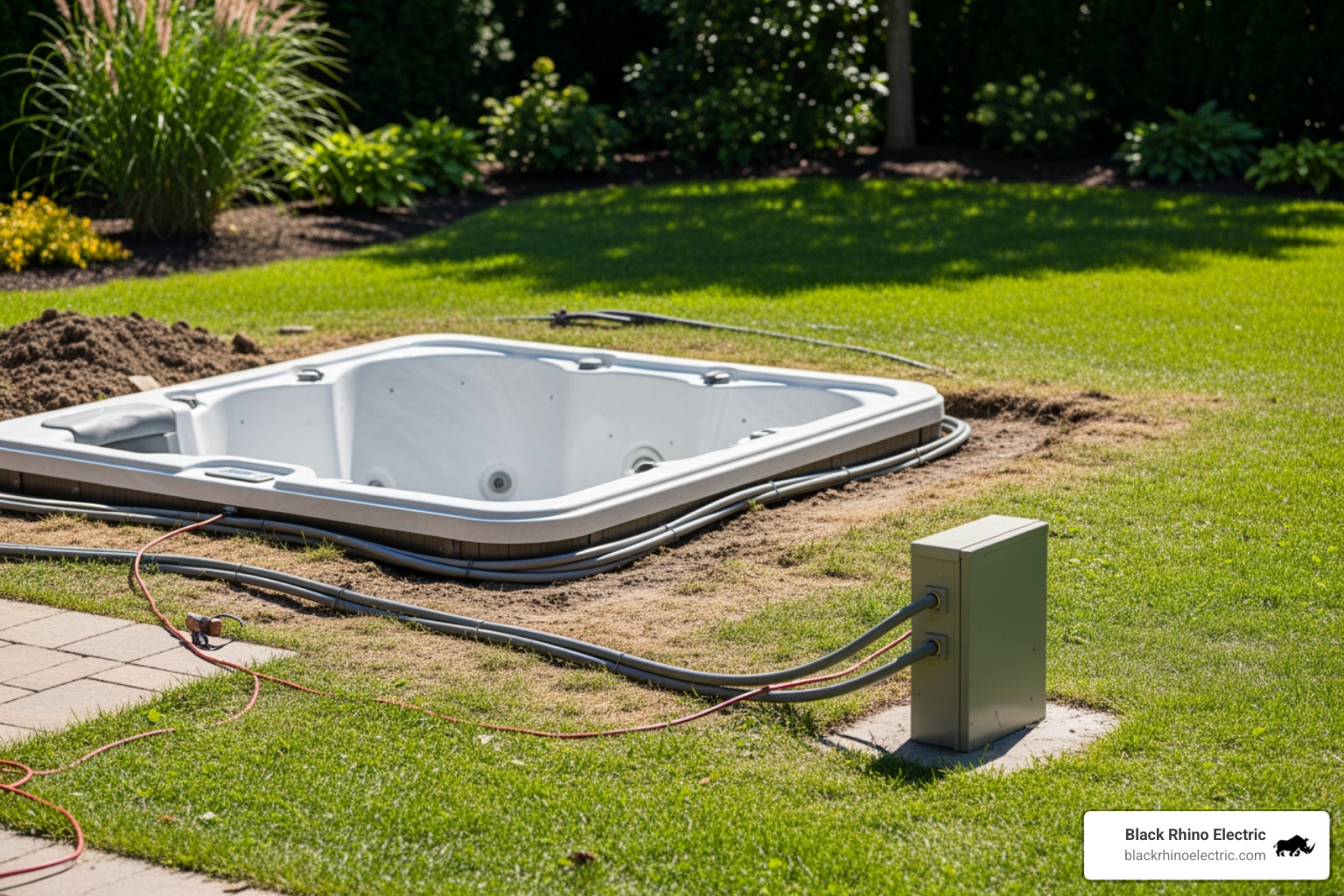
In North America, and specifically here in Utah, most hot tubs operate on either 120 volts or 240 volts. While “plug-and-play” models offer a quick start, most full-sized spas require a robust 240V connection to handle the massive energy demands of heating thousands of gallons of water while simultaneously powering high-speed pumps. Understanding these basics is the first step toward a safe backyard retreat.
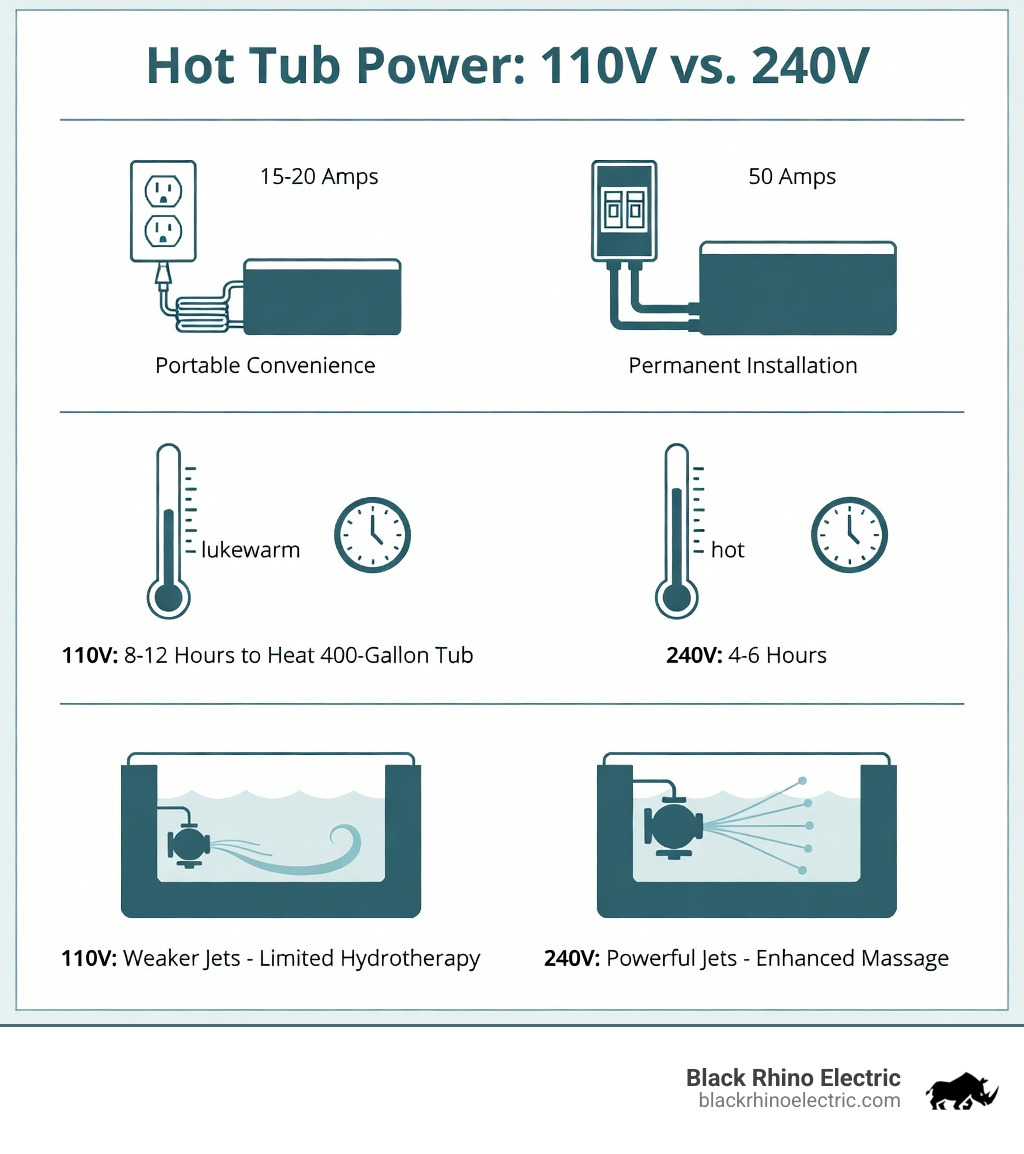
Choosing the Right Hot tub power supply: 110V vs. 240V
Have you ever wondered why some hot tubs take days to heat up while others are ready in hours? The answer lies in your choice of voltage. This decision dictates everything from how fast your water heats up to how much your electrician will charge for the installation.
| Feature | 110V (Plug-and-Play) | 240V (Hardwired) |
|---|---|---|
| Connection Type | Standard 3-pin dedicated outlet | Hardwired to a dedicated circuit |
| Heating Speed | 1kW (Slow: ~1-2 degrees per hour) | 4kW – 6kW (Fast: ~3-6 degrees per hour) |
| Jet Power | Limited (usually one pump) | High (multiple pumps possible) |
| Simultaneous Use | Heater turns off when jets are on high | Heater and jets run together |
| Installation Cost | Lower ($150 – $450) | Higher ($750 – $1,200+) |
| Winter Performance | Struggles in Utah winters | Maintains heat easily |
For more detailed context on our local standards, check out this guide on Utah hot tub requirements.
The Performance Gap in Your Hot tub power supply
There is a massive performance gap between these two systems. A 110V spa typically uses a 1kW heater. In a cold Clinton or Roy winter, that heater might struggle just to keep the water at 100°F if you have the cover off. It’s frustrating to settle into a soak only to have the water turn lukewarm, right? Here’s the thing: 110V models usually cannot run the heater and the jet pump on high speed at the same time. The moment you turn on the bubbles, the water starts cooling down.
On the other hand, a 240V Hot tub power supply boosts that heating power to 4kW or even 6kW. This allows the tub to heat up significantly faster—recovering from a refill in hours rather than days. More importantly, it can keep the heater running while you’re enjoying the massage jets, ensuring your soak stays hot from start to finish. This is why we almost always recommend 240V for our neighbors in North Ogden and Bountiful who want to use their tubs year-round. Safety is also paramount; you can read more about GFCI safety research to see why these protections are non-negotiable.
Essential Components of a Hot tub power supply Setup
To handle the 30 to 60 amps required by a high-end spa, you can’t just use any old wire. A standard 240V installation requires a dedicated circuit—meaning nothing else in your home is drawing power from that breaker.
- Wire Gauge: We typically use 6 AWG copper wire. Using thinner wire can cause “nuisance tripping” or, worse, become a fire hazard due to overheating.
- Conduit: Wiring must be protected in outdoor-rated conduit, such as THWN-2, especially where it is exposed or buried.
- Breaker Size: Most full-sized tubs require a 50-amp or 60-amp breaker in your main panel.
- Grounding and Bonding: This ensures that any stray current is safely diverted, protecting you from “stray voltage” while you’re in the water.
Properly sizing these components is a job for a professional. You can learn more about why you need a hot tub electrician to ensure these technical specs are met perfectly.
Mandatory GFCI Protection and Disconnects
Safety isn’t just a suggestion; it’s the law. The National Electrical Code (NEC) requires every hot tub to be protected by a Ground Fault Circuit Interrupter (GFCI). This device acts like a super-fast kill switch, cutting power in milliseconds if it detects that electricity is flowing through the water (or a person) instead of the wires.
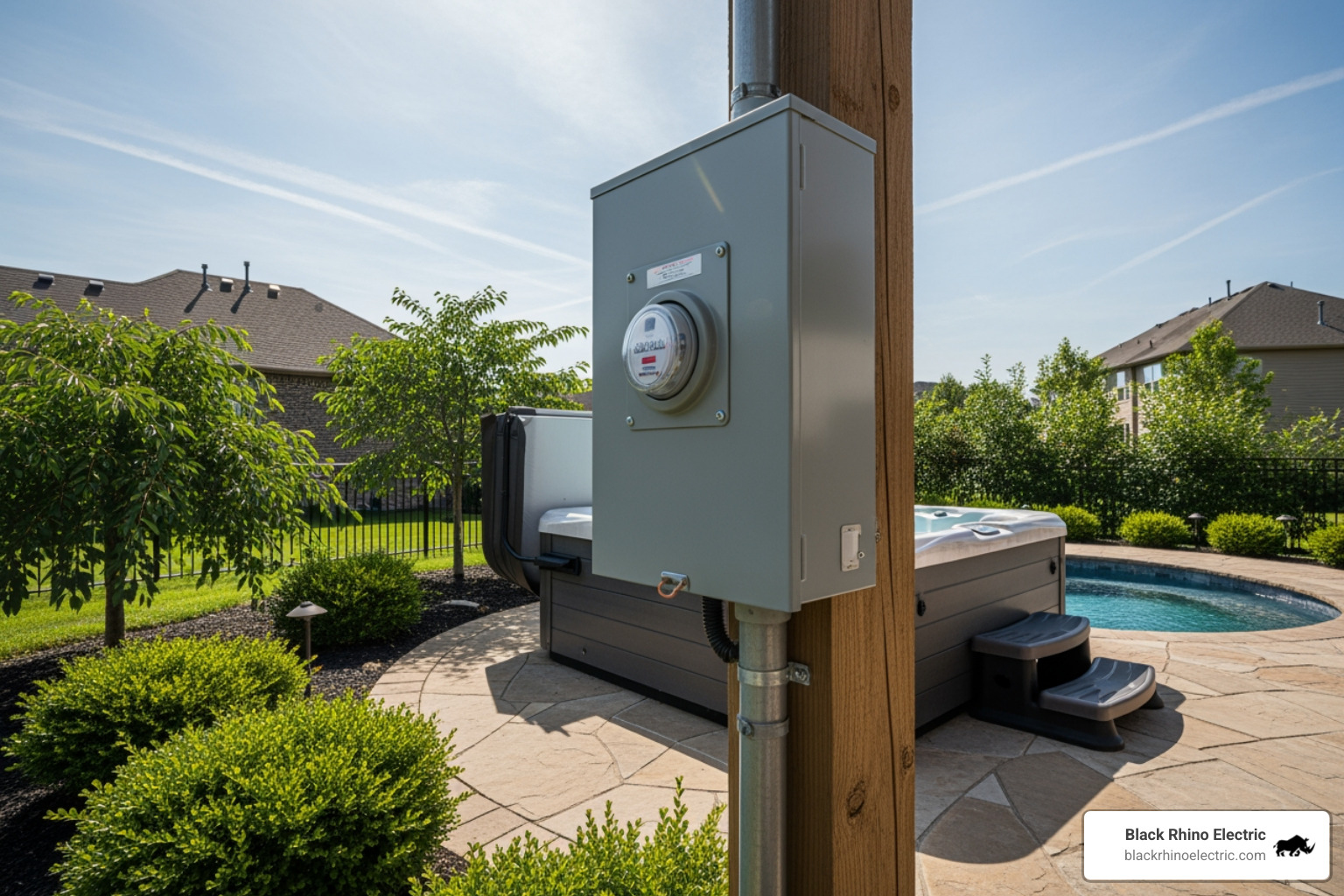
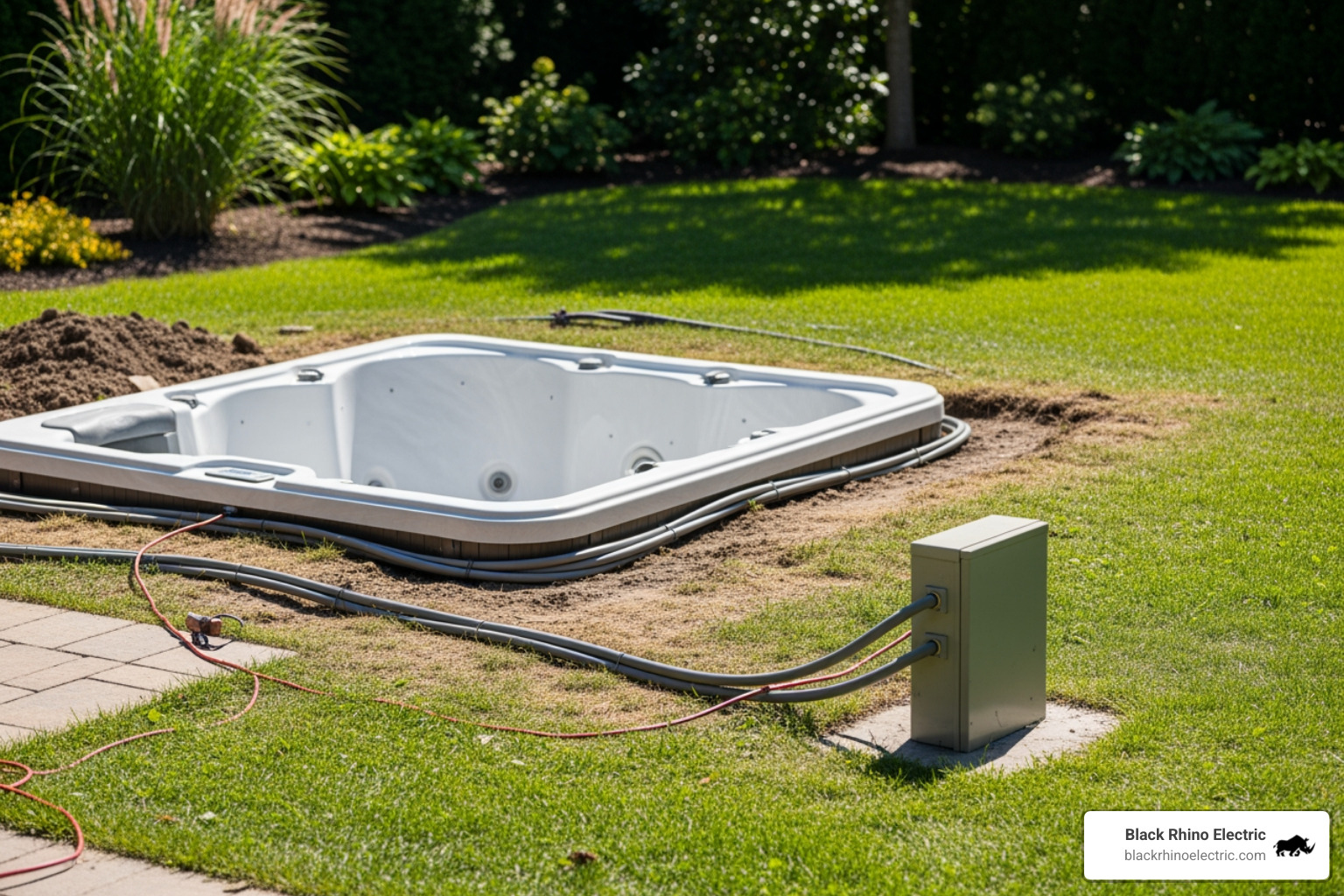
The 5-Foot Rule: You must have a “maintenance disconnect” (a service box) located at least 5 feet away from the water’s edge but no further than 15 feet. It must also be within sight of the hot tub. Why? If someone in the tub is in trouble, you need to be able to shut off the power quickly without reaching over the water. Honestly, it’s one of the most critical safety features we install. For a deeper dive into how these outlets work, see this research on GFCI outlets.
Safety Standards and Professional Installation
In Utah, we follow strict building codes (including NEC sections 422-20 and 680-42) to ensure outdoor electrical work survives our varied climate. Whether you’re in Layton or Kaysville, your Hot tub power supply installation must meet these standards:
- Burial Depth: If we are running wires under your lawn, they must be buried at least 18 inches (approx. 500mm) deep if in conduit.
- Route Marker Tape: We lay a bright warning tape about 6 inches above the buried cable. This prevents future gardening projects from turning into electrical disasters.
- Permits and Inspections: Most cities in Weber and Davis County require a permit for 240V hot tub wiring. This ensures a third-party inspector verifies the work is safe.
Choosing the right professional is key to navigating these regulations. Check out our tips on how to choose the best hot tub electrician near you.
Preparing Your Home for Delivery
Before the delivery truck arrives at your home in South Ogden or Syracuse, you need to make sure your home’s electrical system can actually handle the new guest.
You know what? Many homeowners are surprised to find their main electrical panel is already full. A hot tub adds a significant “load” to your house. We perform a Panel Capacity Audit to see if your current service (usually 100 or 200 amps) has enough “room” left. If not, we may need to perform a panel upgrade or install a subpanel to support the spa.
Additionally, ensure your site is level and has proper drainage. Water and electricity don’t mix, so you don’t want your electrical conduit sitting in a puddle every time it rains. For more preparation advice, see these expert tips from a certified electrician.
Common Wiring Issues to Avoid
Even with the best equipment, things can go wrong if the installation isn’t handled with precision. Here are the most common “gremlins” we see in the field:
- Nuisance Tripping: Often caused by using the wrong wire gauge or a faulty GFCI breaker.
- Corrosion: Utah’s salt and moisture can eat away at connections. We use weatherproof enclosures and anti-corrosion paste on terminals.
- Loose Connections: Vibrations from the hot tub pumps can loosen wires over time, leading to arcing and heat damage.
- Overloaded Circuits: Never try to “piggyback” a hot tub onto an existing circuit that powers your patio lights or garage tools.
Why Professional Expertise Matters
At Black Rhino Electric, we’ve seen it all—from DIY “extension cord” nightmares to masterfully integrated backyard systems. We are fully licensed and insured, specializing in the complex wiring needs of Weber County residents. Whether you’re in Ogden, Roy, or West Haven, we prioritize code compliance and long-term reliability.
We don’t just “hook it up”; we future-proof your installation. We ensure that your warranty remains valid by following every manufacturer’s specification to the letter. When it comes to water and high-voltage electricity, “good enough” is never enough. We bring the E-E-A-T (Experience, Expertise, Authoritativeness, and Trustworthiness) standards to every backyard we step into. For more information on our specific services, visit our hot tub electrician service page.
Isn’t your peace of mind worth it? For expert assistance in Ogden and throughout Weber County, call us at 801-810-4292 or Request a Free Quote today.