Tired of seeing those menacing icicles hanging from your roof every winter? The threat of ice dams forcing water back into your attic and walls is a serious concern for any Utah homeowner, often leading them to search for heat tape installers near me. If that sounds familiar, you're taking the right step toward a real, long-term solution.
Why Your Utah Home Needs Professional Heat Tape Installation

Let's cut through the noise and talk about what heat tape actually is, how it works, and why having a licensed electrician from a trusted company like Black Rhino Electric install it is the only way to go. We’ll cover everything from safety to performance so you can make a smart choice for your home.
What Is Heat Tape and How Does It Prevent Ice Dams
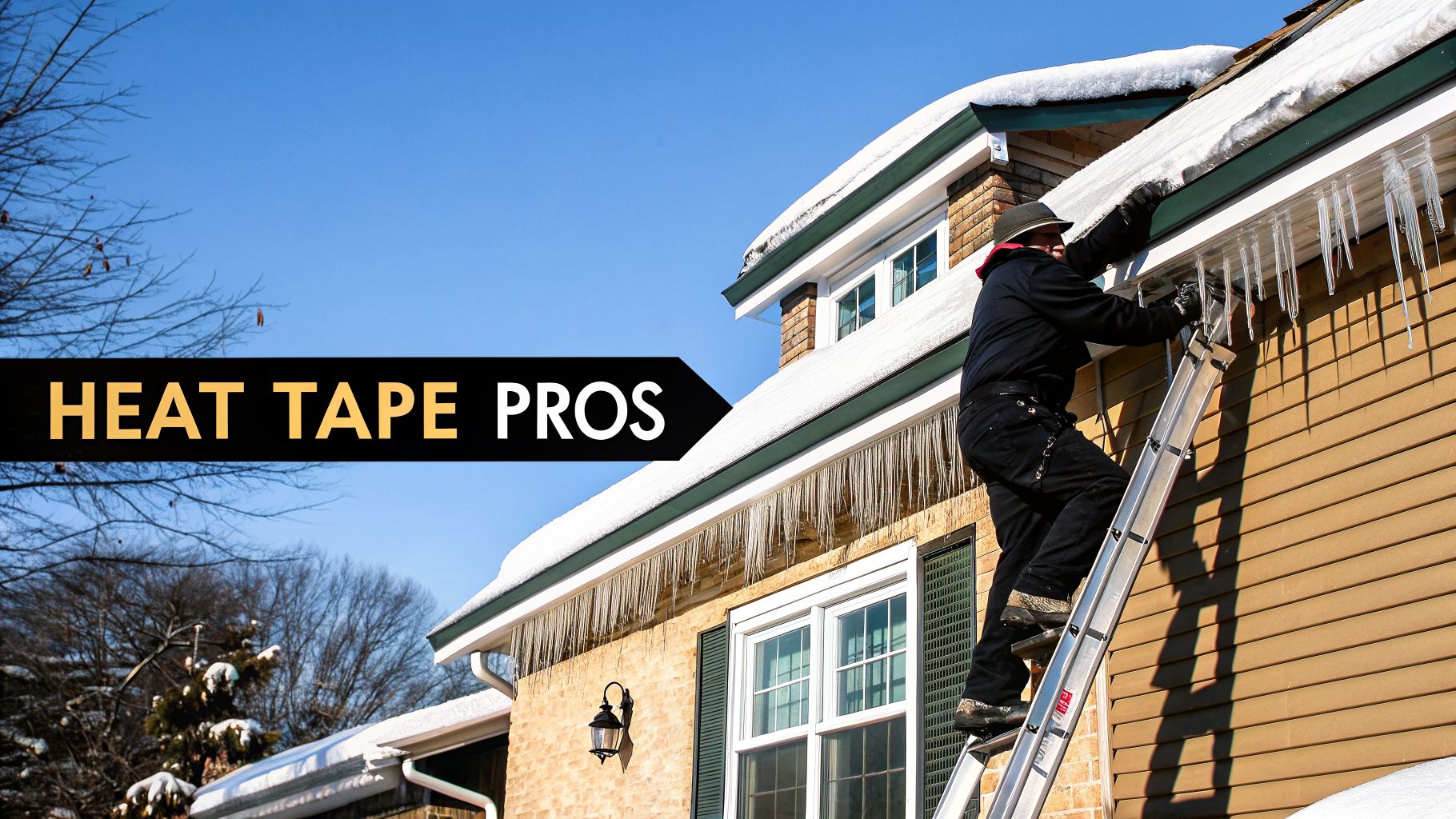
Your search for heat tape installers near me probably started with a familiar winter scene: heavy, destructive ice clinging to the edge of your roof. Heat tape, which is really a specialized electrical cable, is designed to solve that exact problem head-on. We install it strategically in a zig-zag pattern along your roof's eaves and run it through your gutters to create heated channels for meltwater to escape.
Think of it as creating a clear, free-flowing path through a frozen landscape. When snow on your roof melts and the water runs down to the cold edges, it often refreezes, creating an ice dam. This dam acts like a plug, blocking water from draining. That trapped water has to go somewhere—and it usually forces its way backward, under your shingles, where it can cause rot, mold, and serious water damage to your attic and walls.
Heat tape generates just enough warmth to keep those crucial drainage paths open, preventing the dam from ever forming in the first place.
Telltale Signs Your Home Is at Risk
So, how do you know if your home is a prime candidate for an ice dam disaster? The signs are usually hiding in plain sight. Keep an eye out for these red flags during the winter months:
- Massive Icicles: While small icicles are normal, large, thick clusters hanging from your gutters or roof edge are a classic sign that water is refreezing instead of draining properly.
- Ice Buildup in Gutters: If your gutters are choked with solid ice, they can't do their job. This is a clear indicator that meltwater has nowhere to go.
- Water Stains: Look for damp spots or discoloration on interior ceilings and walls, especially near the exterior walls of your home. This often means water has already breached your roof.
- Ice Behind Your Gutters: If you can see ice forming on the fascia board behind the gutter, it’s a strong signal that water is overflowing and backing up.
An ice dam is more than a cosmetic issue; it's a symptom of a larger problem where heat from your home melts snow on the upper roof, which then refreezes at the colder eaves. A professionally installed heat tape system directly counters this cycle where it matters most.
Here’s the thing: heat tape is a proactive defense. It doesn't just treat the symptom (the icicles); it prevents the root cause of the damage by ensuring water keeps moving off your roof. While heat tape is a powerful solution, it's beneficial to understand all the ways to tackle this winter nuisance. You can explore a broader guide on how to prevent ice dams on your roof for good.
By creating consistent melt channels, the system safeguards your home’s structural integrity all winter long.
Self-Regulating vs. Constant Wattage Heat Tape
When you’re looking at heat tape to protect your roof from those brutal Utah ice dams, it’s easy to think all cables are basically the same. They’re not. The choice between the two main types—constant wattage and self-regulating—is one of the most important decisions you’ll make for safety, your power bill, and how often you’ll have to replace the system.
Honestly, this isn't a complicated choice. While you’ll see constant wattage cables in big box stores, they’re the source of almost every heat tape headache we see. It’s why professionals, including our team at Black Rhino Electric, exclusively install the superior technology: self-regulating cable. Let me explain why.
The Problem With Constant Wattage Cables
Constant wattage heat tape is pretty simple technology. It puts out the same amount of heat across its entire length, no matter how cold or warm it is outside. Think of it like a toaster element that's stuck on one setting—always on, always hot.
This "always on" design sounds straightforward, but it creates some serious problems:
- Overheating Risk: Because the cable can't adjust its temperature, it gets dangerously hot where it overlaps or gets covered by leaves and pine needles. This is a real fire hazard.
- Energy Waste: On a milder winter day, you only need a little heat to keep water flowing. This cable doesn't care; it runs at full blast, driving up your electricity bill for no good reason.
- Short Lifespan: Being constantly subjected to high heat causes these cables to wear out and fail fast, often in just a few seasons. You end up paying to replace them over and over.
This diagram cuts right to the chase, showing how ice dams form and how a proper heating cable solves the problem by keeping a path clear for water to drain.

It’s all about creating a channel for meltwater to escape before it can refreeze at the edge of your roof and cause damage.
Why Self-Regulating Cable Is The Professional Standard
Self-regulating cable is the smart, modern solution. It’s designed with a special conductive core that automatically adjusts its heat output inch by inch, based on the temperature right at that spot. It works harder in icy patches and powers down where the sun is hitting the roof. It’s intelligent.
This is a game-changer. It’s why this is the system professionals install. Here’s a shocking statistic: while constant-wattage cable makes up about 90% of residential installations (mostly DIY or handyman jobs), it’s responsible for nearly 100% of all complaints. In fact, data shows that roughly 60% of heat tape jobs in some areas are just to rip out and replace these old, failed systems. You can read more about these heat tape findings and see the data for yourself.
The bottom line is this: a self-regulating system delivers heat exactly where it’s needed, when it's needed. It maximizes safety and energy savings while actually preventing the damage it's designed to stop.
Constant Wattage vs. Self-Regulating Heat Tape Comparison
Choosing the right cable has a direct impact on everything from your monthly utility bills to your home's long-term safety. To make it crystal clear, here’s a side-by-side look at how they stack up.
| Feature | Constant Wattage Cable | Self-Regulating Cable |
|---|---|---|
| Safety | Higher risk of overheating and fire, especially when overlapped or covered by debris. | Virtually eliminates overheating risk; cable can be overlapped safely. |
| Energy Efficiency | Wastes significant energy by running at full power regardless of temperature. | Highly efficient; automatically reduces power output as temperatures rise, saving money. |
| Lifespan | Shorter, often failing within 3-5 years due to constant thermal stress. | Much longer, typically lasting 10-20 years due to lower operating stress. |
| Performance | Inconsistent; may not provide enough heat in extreme cold or too much in mild weather. | Reliable and consistent; provides targeted heat exactly where it is needed most. |
The difference is pretty stark. For any homeowner here in Northern Utah who wants a reliable, safe, and cost-effective solution, self-regulating heat tape is the only choice that makes sense. It’s an investment in performance and peace of mind that pays for itself over its long lifespan.
The Professional Heat Tape Installation Process
So, what does a professional job look like when you hire an expert for heat tape? Let’s just say it’s a whole lot more than just tacking a cable to your roof. A proper, safe, and effective installation is a multi-step process, and it absolutely needs the precision of a licensed electrician.

You know what? This is where the difference between a quick DIY attempt and professional work becomes night and day. It’s all about safety, how long the system lasts, and whether it actually works when a Wasatch Front storm hits.
The whole thing starts not on a ladder, but with a good, hard look at your home. We don't just guess where ice dams might pop up; we inspect your roofline, valleys, and gutters to find the real problem spots. This initial plan dictates the entire layout to make sure you get the most effective system possible.
Step 1: Detailed Roof and Gutter Assessment
Before a single foot of cable is unrolled, our electricians figure out your home’s specific needs. We’re looking for more than just the roof’s edge.
- Pinpointing Vulnerable Areas: We find the exact spots where ice has built up before. This includes tricky roof valleys, dormers, and those low-slope sections that are notorious for damming.
- Measuring for Precision: We take exact measurements of every roof edge, gutter, and downspout. This guarantees we use the correct length of cable—no wasted material, no cold spots—for an efficient system.
- Checking Your Gutters: We make sure your gutters are clean and in good shape. A clogged gutter will stop even the best heat tape system from doing its job.
This planning phase is critical. A sloppy layout will leave cold spots where ice can still get a foothold, defeating the whole purpose of the installation.
Step 2: Safe Cable Layout and Securing
Once we have a blueprint, we start laying out the self-regulating cable. This is done with extreme care to protect your roof. We use specialized, non-damaging clips and hangers made for your specific roofing, whether it’s asphalt shingles, metal, or tile.
Crucially, we never use staples or nails that would punch holes in your shingles. This is a common DIY mistake that literally opens the door for water to get in, leading to expensive roof repairs down the road.
The cable is installed in a precise zig-zag pattern along the eaves, reaching far enough up the roof to stop ice from forming behind the heated zone. We also run it through the gutters and downspouts to ensure there's a clear path for meltwater to drain completely away from your foundation.
Step 3: Critical Electrical Connections and Testing
Here’s the thing: this is the most important step and exactly why a licensed electrician is non-negotiable. Bad wiring is a serious fire hazard. The electric heating cable market has known safety challenges, with overheating and fire being a primary concern. You can discover more insights about electric heat tracing safety and see why professional skill is so vital.
We make sure your system is powered correctly and safely by:
- Installing a Dedicated Circuit: Heat tape needs its own circuit. This prevents overloading your home's main electrical system, which can cause constant breaker trips.
- Using a GFCI Outlet: Every installation is wired to a Ground Fault Circuit Interrupter (GFCI) outlet for shock protection. This isn’t just a good idea—it’s a mandatory safety code requirement.
- Final System Test: After everything is connected, we power up the system and test its full length. We make sure it’s heating correctly from end to end and that all connections are solid.
This careful approach ensures your heat tape system is not only a beast against ice dams but also completely safe for your home and family. To learn more about the importance of professional electrical work, you can read about our other services for home improvement projects.
Understanding Heat Tape Installation Costs in Utah
When you’re thinking about protecting your home from Utah’s brutal winters, the first question is almost always about the budget. So let's talk numbers, because knowing the potential investment is how you make a smart decision when you're searching for heat tape installers near me.
The total cost isn’t some flat fee you can pull off a shelf. It’s a mix of factors unique to your home, your roof, and what it takes to do the job right. A professional installation isn't just an expense; it's an investment in avoiding thousands of dollars in future repairs.
Key Factors Influencing Your Quote
No two roofs are the same, especially here along the Wasatch Front, so no two quotes will be identical. The main things that will shape the final price for your heat tape system are pretty straightforward.
- Roof Size and Complexity: A long, straight roofline on a simple ranch home is less work than a complex roof with multiple gables, valleys, and dormers. More linear feet of roof edge and more tricky corners simply mean more materials and labor.
- Cable Type: Like we've covered, professional-grade self-regulating cable costs more upfront than the cheap constant-wattage stuff you find at a big-box store. But its safety, longer lifespan, and energy efficiency give you far better value in the long run.
- Accessibility: Is your roof steep or multiple stories high? Getting to those hard-to-reach areas safely requires extra equipment and time, and that will be reflected in the labor costs.
- Electrical Needs: If your home doesn't already have a dedicated, GFCI-protected outdoor outlet near the roofline, we'll need to install one. This isn't optional—it's a critical step for safety and code compliance.
It’s crucial to see heat tape installation as an investment in prevention. The cost to install a system is a fraction of what you’d pay for water damage restoration, mold remediation, and structural repairs after a nasty ice dam gets its way.
The national average to install roof heating cables can hit $1,400, with most folks spending between $900 and $1,800. With labor averaging $75 to $150 per hour, this is an investment that stands between you and some seriously expensive damage. Don't just take our word for it—data shows that major insurers like State Farm processed over 32,000 claims for water damage and frozen pipes in a single year, which shows you the very real financial risk. You can learn more about the costs of installing heat tape to see how it stacks up against potential repairs.
To get a precise idea of what a system would cost for your property, the only real way is a custom quote. A detailed look at your home gives you a clear, accurate price tailored to your specific needs, with no guesswork.
How To Choose the Right Heat Tape Installer
Your Google search for heat tape installers near me is going to give you a mixed bag of roofers, handymen, and electricians. Choosing the right pro is the single most important decision you’ll make for a safe, effective system that actually lasts. Let me explain how to tell the real experts from the rest.

This isn’t just about getting someone up on a ladder; it’s about hiring a qualified expert who understands the entire system, from the roof clips all the way back to your circuit breaker. Getting this wrong can lead to a system that fails, damages your roof, or—worst-case scenario—creates a serious fire hazard.
Your Contractor Vetting Checklist
When you start getting quotes, don't just look at the price tag. You need to ask sharp questions that reveal a contractor’s real expertise. A solid grounding in how to hire contractors for any home project is a great place to start.
Before you make a decision, arm yourself with these questions:
- "Are you a licensed and insured electrical contractor?" This one is non-negotiable. Only a licensed electrician can legally and safely handle the wiring, install a dedicated GFCI circuit, and make sure everything is up to code.
- "What type of heat tape do you install and why?" The only good answer is self-regulating cable. If they mention constant wattage cable or don’t have a strong opinion, it’s a massive red flag about their expertise.
- "Can you describe your installation process?" They should talk about using non-damaging roof clips (never nails or staples), properly running the cable through gutters and downspouts, and doing a full system test before they leave.
- "Do you offer a warranty on both materials and workmanship?" A reputable company will stand behind its work, period. This shows they’re confident in both the products they use and the quality of their installation.
A handyman might be able to physically clip a cable to your roof, but they don't have the electrical qualifications to power it safely. That distinction is everything when it comes to protecting your home and your investment.
Why a Licensed Electrician Is Essential
The most critical—and most dangerous—part of any heat tape installation is the electrical connection. A system that isn't powered correctly is just a disaster waiting to happen.
| Task | Why It Demands an Electrician |
|---|---|
| Dedicated Circuit | Heat tape needs its own circuit to keep from overloading your home's electrical panel. An electrician ensures this is done safely and to code. |
| GFCI Protection | A Ground Fault Circuit Interrupter (GFCI) outlet is a mandatory safety device that protects against electrical shock from moisture. It's not optional. |
| Code Compliance | All outdoor electrical work has to meet strict local and national codes. A licensed electrician is your guarantee of full compliance. |
At Black Rhino Electric, we aren't just installers; we are career electricians serving Weber, Davis, and Salt Lake counties. We understand the complete electrical system behind the heat tape, ensuring it not only melts ice but also operates with absolute safety for years.
As you look at your options for heat tape installers near me, remember that expertise is everything. Choosing a qualified electrical contractor like Black Rhino Electric means the job gets done right—from the rooftop all the way back to the panel.
Frequently Asked Questions About Heat Tape
When you’re thinking about a new system for your home, it’s only natural to have a few questions. You're not just searching online for heat tape installers near me; you're looking for clear, honest answers. Here are some of the most common questions we hear from homeowners right here in Northern Utah.
Can I Install Heat Tape Myself?
I get it. The DIY kits at the hardware store look tempting. But let me be direct: we strongly advise against self-installation.
Here’s why. A proper install means working up on a ladder or roof, often in tricky conditions. More importantly, it involves complex electrical connections that, for both safety and code compliance, absolutely require a licensed electrician.
A heat tape system has to be on its own dedicated, GFCI-protected circuit. This isn’t just a recommendation; it’s a critical safety measure to prevent overloads and protect against shock. Improper wiring is a serious fire hazard and could even give your homeowner's insurance a reason to deny a claim. It’s a risk that’s just not worth taking.
How Much Electricity Does Heat Tape Use?
The energy use can vary dramatically, and it really comes down to the quality of the system you choose. A professional-grade, self-regulating cable is far more efficient. It’s smart enough to automatically dial back its power output as the roof warms up, only drawing significant energy when it's cold enough for ice to actually form.
A professionally installed system that includes a smart controller—one that detects both temperature and moisture—will always give you the lowest operating cost. It only kicks on when it's truly needed to stop ice in its tracks, which can save a surprising amount on your winter power bills.
How Long Does Professional Heat Tape Last?
A system's lifespan is a direct reflection of two things: product quality and installation expertise.
When installed correctly by an experienced electrician, professional-grade, self-regulating heat tape is built to last 10 to 20 years. In stark contrast, the cheaper constant wattage cables you find in big-box stores often burn out after just a few seasons. They’re always on at full power, and that constant thermal stress just wears them out.
For a durable, safe, and efficient solution to ice dams, trust the experts at Black Rhino Electric. If you're ready to protect your home this winter, give us a call at 385-396-7048 or request a free quote to talk through your project.