
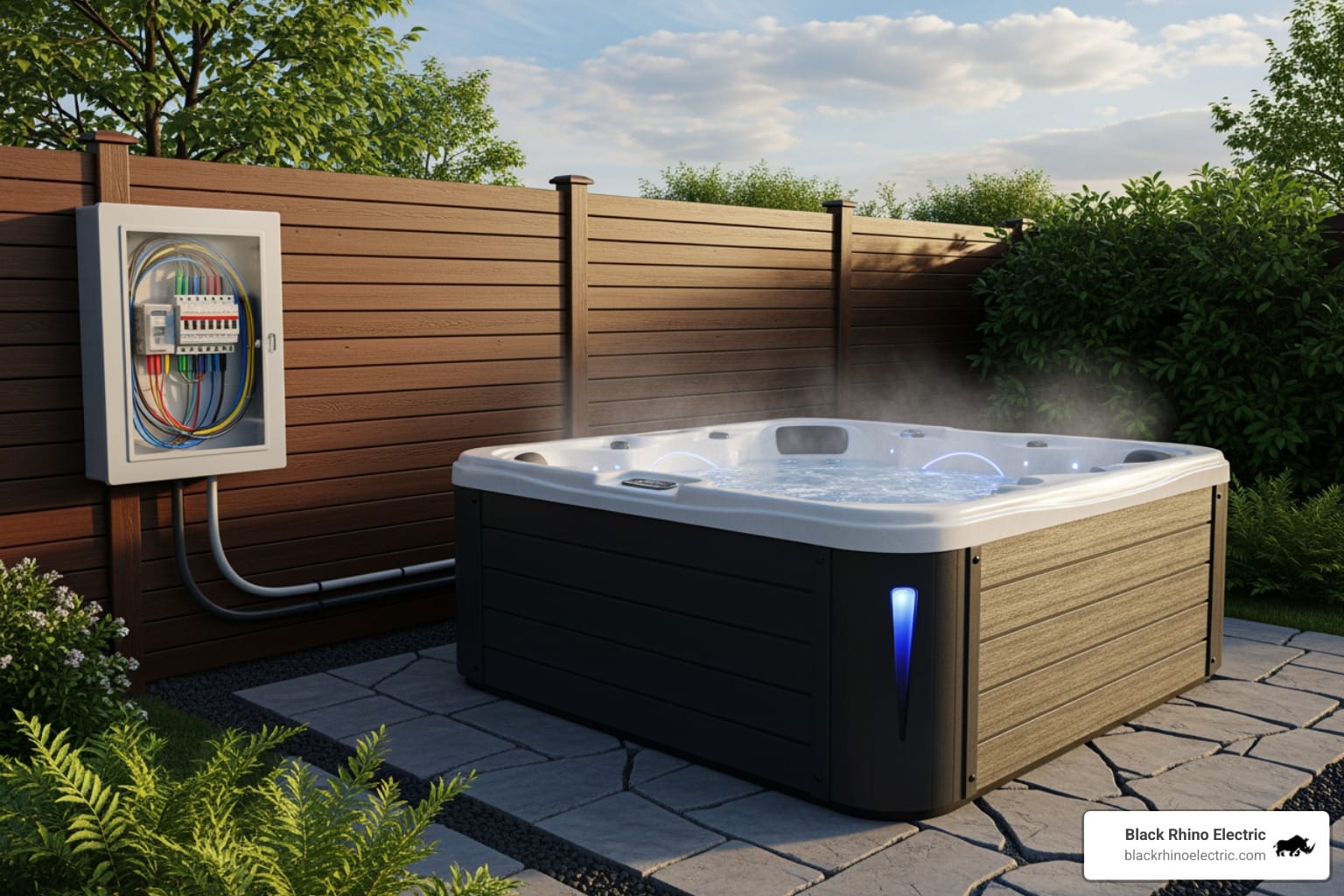
Quick Answer: What You Need for Safe GFCI Hot Tub Wiring
GFCI hot tub wiring is the single most important safety feature standing between you and a potentially life-threatening electrical shock while you’re soaking in your backyard spa. Getting it right means understanding not just the “how” but the crucial “why” behind every wire, breaker, and connection. Here’s what you need to know to move from a bare patio to bubbling bliss, safely.
For a typical 240V, 50-amp hot tub, you need:
- Dedicated 240V circuit protected by a two-pole 50A GFCI breaker
- 6 AWG copper wire (4-wire system: two hots, one neutral, one ground)
- GFCI disconnect box placed 5-10 feet from the hot tub, within line of sight
- Proper grounding and bonding of all metal components per NEC Article 680
- THWN-2 rated conductors suitable for wet locations
- Licensed electrician installation to ensure code compliance and safety
Key Safety Rule: Never substitute a GFCI outlet for a GFCI breaker on a hot tub circuit—it won’t handle the load and violates electrical code.
Why GFCI Protection Is Non-Negotiable for Hot Tubs
You know what? Water and electricity are a deadly combination, which is why the National Electrical Code (NEC) is so strict about hot tub wiring. A standard circuit breaker protects equipment from overloads, but it does nothing to protect you from a ground fault that could send current through your body.
A GFCI breaker, on the other hand, constantly monitors the electrical current. The moment it detects a tiny imbalance—as small as 4-6 milliamps—it trips the circuit in a fraction of a second, preventing a shock from becoming fatal. Since 2023, NEC requirements have become even stricter, cementing GFCI protection as the foundation of every safe hot tub installation.
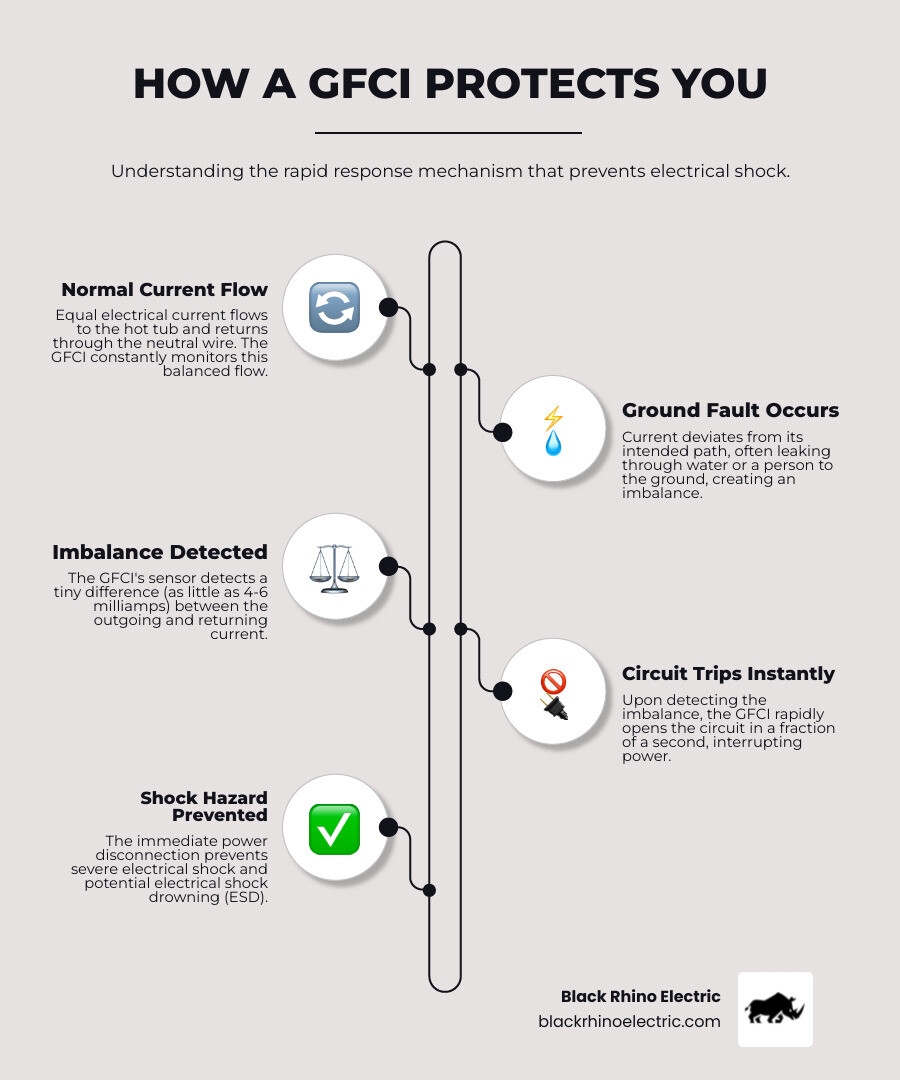
GFCI Breaker vs. Standard Breaker: A Critical Distinction
It’s crucial to understand the difference. A standard breaker protects your home and equipment from overcurrents and fires. A GFCI breaker protects people from electrical shock.
| Feature | Standard Breaker | GFCI Breaker |
|---|---|---|
| Primary Protection | Equipment and wiring from overloads/shorts | People from ground faults and electrical shock |
| Detection Method | Overcurrent/short circuit | Current imbalance (leakage to ground) |
| Trip Threshold | High (e.g., 50A) | Very low (4-6 milliamps) |
| Response Time | Slower | Milliseconds (instantaneous) |
| Hot Tub Use | Insufficient for safety | Mandated by code |
In a wet environment like a hot tub, the risk of electrocution is exceptionally high. That’s why the NEC mandates GFCI protection—it’s not a suggestion, it’s a non-negotiable safety requirement. To dive deeper into the specific power needs for your spa, check out our guide on Hot Tub Electrical Requirements for Utah Homeowners.
Decoding NEC Rules for GFCI Hot Tub Wiring
The NEC’s Article 680 lays out the rules for spas. For gfci hot tub wiring in Utah, we adhere strictly to these guidelines. The core principles are:
- Dedicated Circuit: Your hot tub needs its own circuit. Most 240V models in Ogden and Layton require a 50 or 60-amp dedicated circuit with a two-pole GFCI breaker.
- Disconnect Switch: A maintenance disconnect switch must be visible, located at least 5 feet but no more than 10 feet from the tub’s edge (NEC 680.12). This allows for quick power cutoff for emergencies or service.
- Proper Wire Gauge: For a typical 50-amp spa, 6 AWG copper wire is required in a 4-wire system (two hots, one neutral, one ground). We use THWN-2 rated conductors suitable for wet locations.
- Conduit and Burial: Outdoor wiring must be protected in conduit (e.g., rigid PVC) and buried to the proper depth (typically 18 inches) to prevent damage.
- Equipotential Bonding: This critical step connects all metal parts near the tub (motors, railings, etc.) with a solid 8 AWG copper wire. This equalizes electrical potential to prevent “stray voltage” shocks.
As the National Fire Protection Association (NFPA) notes, GFCI protection is mandatory and must be tested regularly. Navigating these codes is complex, which is why hiring a licensed electrician is the only safe way to ensure your installation is compliant. You can read more on the NFPA’s blog: Electrical Requirements for Hot Tubs and Spas.
A Practical Guide to Proper GFCI Hot Tub Wiring
Installing a hot tub in your North Ogden or Syracuse home is exciting, but the electrical setup is a job for a professional. It requires precision and a deep understanding of how the main panel, GFCI disconnect, and spa controller work together.

Can a GFCI Outlet Replace a GFCI Breaker?
This is a common question, and the answer is a resounding no for 240V hot tubs. While a GFCI outlet is great for a 120V kitchen appliance, it’s completely wrong for a spa.
- Load Capacity: GFCI outlets are rated for 15 or 20 amps. A hot tub needs 50 or 60 amps.
- Voltage: GFCI outlets are 120V devices. They cannot provide the two-pole protection required for a 240V spa.
- Code Violations: Using an outlet instead of a breaker is a direct violation of the NEC, making your installation unsafe and likely voiding your warranty.
For your hot tub, a GFCI breaker is the only safe and compliant option. For more on different GFCI types, see our page on GFCI Power Outlets, but remember: for the spa, it’s a breaker.
Common (and Dangerous) GFCI Hot Tub Wiring Mistakes
Even with good intentions, DIY wiring mistakes can be incredibly dangerous. Here are the most common pitfalls we see:
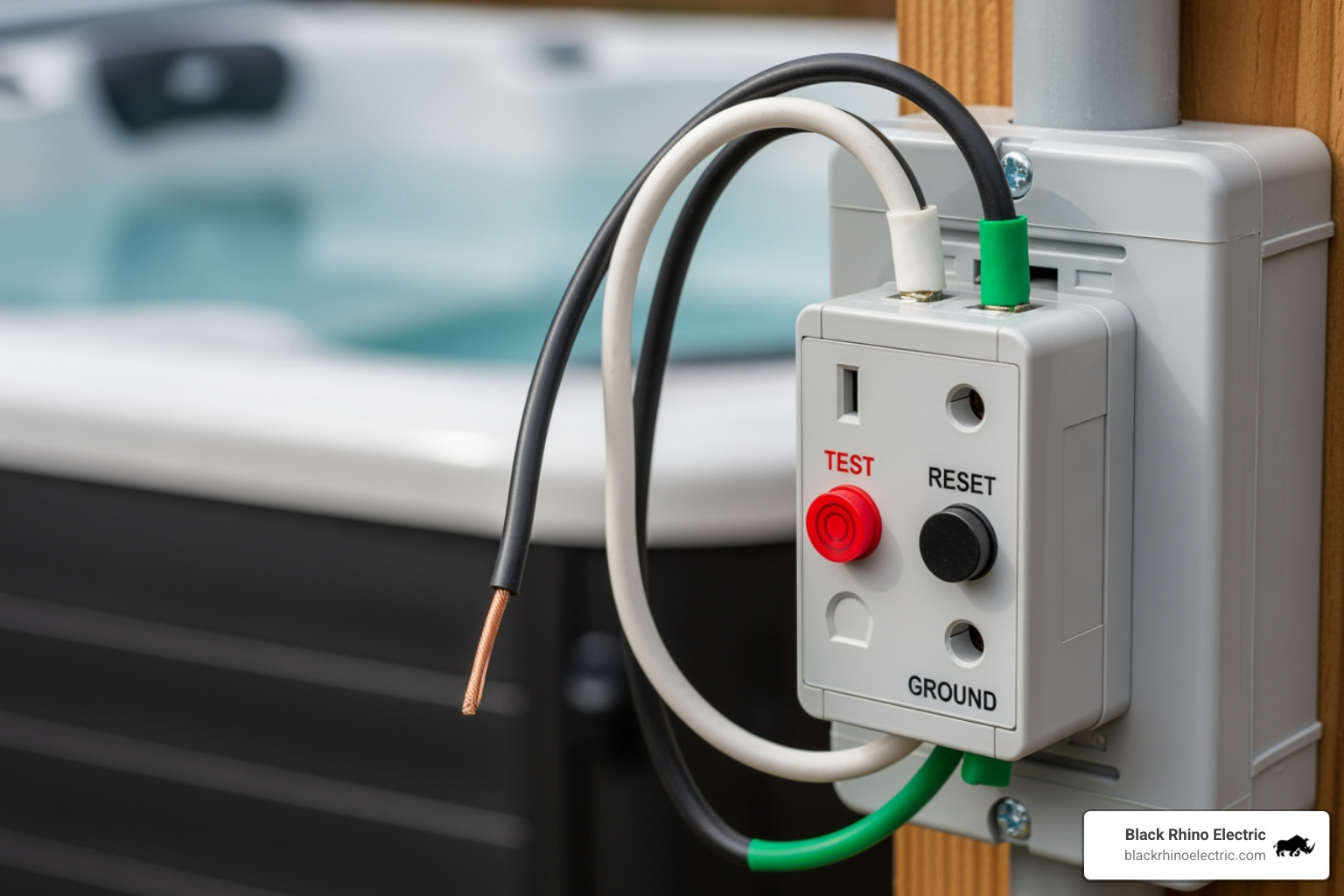
- Incorrect Neutral Wire Connection: A subtle but critical error. The GFCI’s white neutral pigtail must connect to the incoming service neutral, not the ground bar, for the device to function.
- Using the Wrong Wire Size: Undersized wire (e.g., 8 or 10 AWG instead of 6 AWG for a 50A circuit) will overheat, creating a fire hazard and damaging your spa’s components.
- Improper Disconnect Placement: The disconnect must be 5-10 feet from the tub and within line of sight. Too close or too far is a code violation and a safety risk.
- Skipping Equipotential Bonding: Forgetting to connect all metal parts with an 8 AWG copper wire creates a risk of shock from differing electrical potentials.
- Sharing the Circuit: A hot tub needs its own dedicated circuit. Tying it into another circuit will cause overloads and frequent trips.
- Poor Weatherproofing: Using indoor-rated parts outside or failing to seal connections allows moisture to enter, leading to corrosion, shorts, and failure.
These mistakes highlight why professional installation isn’t just a convenience—it’s essential for safety. Learn more in our article: Why You Need a Hot Tub Electrician for Safe Installations.
Testing and Maintaining Your GFCI Protection
Correct installation is just the first step. Your GFCI needs regular testing to ensure it’s always ready to protect you.
Monthly Testing:
- With the hot tub powered on, press the “TEST” button on the GFCI breaker.
- The power should immediately cut off with an audible click.
- Press the “RESET” button (or flip the breaker off and on again) to restore power.
If the power does not cut off, your GFCI has failed. Do not use the hot tub and call a qualified electrician from Black Rhino Electric immediately.
Regular Inspections:
- Corrosion: Every few months, look for greenish buildup on terminals and connections. Corrosion can impede safety systems and should be addressed by a professional.
- Weatherproofing: Check that all outdoor boxes and conduits are sealed and free of cracks or damage.
An annual professional inspection is the best way to catch issues before they become dangerous. For more tips, see our guide on Top Electrical Maintenance Tips to Keep Your Home Safe.
Ensuring a Flawless Installation for Total Peace of Mind
At Black Rhino Electric, we know a hot tub is a major investment in your family’s enjoyment. But let’s be frank: without proper electrical work, that dream can become a nightmare of safety risks. The dangers of improper gfci hot tub wiring are severe, from electric shock to fire.
That’s why our approach prioritizes safety and compliance above all. The value of a Certified Electrician can’t be overstated for these projects. Our licensed electricians in Ogden, Roy, and across Weber County bring deep knowledge of NEC Article 680, local codes, and the expertise to ensure your installation is safe, efficient, and passes inspection the first time.
Your Final Pre-Soak Safety Checklist
Before you take that first blissful dip, a final check is paramount. We ensure every item on this list is perfect:
- GFCI Tested: The breaker trips with the “TEST” button and resets correctly.
- Disconnect Accessible: The switch is visible and placed 5-10 feet from the tub.
- Permits Closed: All local permits are obtained and inspections passed.
- No Visible Damage: All wiring and connections are secure and free of corrosion.
- Grounding and Bonding Verified: All metal parts are correctly bonded to prevent shock.
- Dedicated Circuit Confirmed: The hot tub has its own, unshared power line.
- Weatherproofing Intact: All outdoor enclosures are sealed against the elements.
Choosing Black Rhino Electric means choosing unparalleled safety and expertise for your hot tub. We handle every detail, ensuring your spa is a source of pure relaxation, not worry. For a truly worry-free experience, trust the experts to handle every detail; contact us at 801-810-4292 or Request a Free Quote today to get started on your safe and professional hot tub installation.