

Finding the right electrical service pros can feel overwhelming, but ensuring the safety and reliability of your home's electrical system is a decision that shouldn't be taken lightly. It’s not just about functionality; it’s about peace of mind. Let me explain how to navigate the process and hire a true professional with confidence.
Your Guide to Finding Trusted Electrical Service Pros
Choosing a qualified electrician is your first and most important step. It’s the difference between a job done right—meeting all local codes and giving you peace of mind—and a job that could cause problems down the road.
Here’s what separates a true pro from the rest.

Verifying Credentials: The First Checkpoint
Before you even start talking about your project, your first move should be to confirm two things: licensing and insurance. A valid license proves an electrician has met Utah's tough standards for training and knowledge. Full insurance coverage protects you from liability if an accident or property damage happens.
A professional's willingness to readily provide proof of their license and insurance is a direct reflection of their transparency and commitment to accountability. Never hesitate to ask for these documents.
Proper credentials also give you a clear picture of an electrician's skill level. You'll typically run into two main classifications:
- Journeyman Electrician: A skilled professional who has finished a multi-year apprenticeship. They’re qualified to handle most electrical installations and repairs under general supervision.
- Master Electrician: An electrician with years of experience beyond the journeyman level who has passed an advanced exam. They can plan, design, and oversee complex electrical projects and often supervise other electricians.
The Value of Local Experience
An electrician's experience right here in Weber, Davis, or Salt Lake County is invaluable. They'll have a deep understanding of the local building codes and permitting processes, which can vary from one city to the next. This local know-how helps prevent expensive delays and ensures your project passes inspection without a hitch.
A trusted electrical service pro also gets that problems don’t stick to a 9-to-5 schedule. That’s why many top-tier providers now use an AI receptionist for electricians to make sure no crucial calls are missed, even after hours.
Finally, always get multiple itemized quotes. This lets you compare not just the price, but the full scope of work and the quality of materials included. It’s the only way to understand the real value each pro is offering.
What to Ask Before You Hire an Electrician
Once you’ve got a shortlist of a few potential electrical pros, the real work begins. Honestly, the difference between a competent electrician and a great one often comes down to how they answer a few key questions. Taking a few minutes to run through this "interview" can save you from massive headaches, surprise costs, and unsafe work down the road.
We’re moving beyond just checking a license. These questions dig into their real-world experience, their process, and how much they actually stand behind their work.
Gauging Experience and Expertise
Not all electrical work is the same. You need to be sure the person you hire has direct, hands-on experience with your specific project. Is it a simple fixture swap or a complex panel upgrade? Are you installing a new EV charger or diving into a smart home setup?
Ask them straight up:
- "Have you completed projects just like this one?" A confident "yes" should be followed up with examples. If you're installing a Tesla Wall Connector, you want someone who has done dozens of them, not someone using your garage as a training ground.
- "What potential challenges do you see with this job?" This question is a great way to gauge their foresight. A seasoned pro has seen it all and can anticipate hiccups with older wiring, funky framing, or specific code requirements in your city.
The U.S. electrician industry is booming, expected to hit $347.5 billion by 2026. That growth is mostly from modernizing and retrofitting existing homes, not just new construction. With over 252,000 electrical businesses out there, this surge in demand makes it even more critical to find a pro who specializes in exactly what you need. You can read more about this industry trend and what it means for homeowners on ibisworld.com.
Clarifying Process and Guarantees
How an electrician manages the job is just as important as the technical skill. Clear communication and a smooth process are the tell-tale signs of a professional operation.
A great contractor doesn't just fix your electrical problem; they provide a seamless, transparent experience from the first call to the final cleanup. Their answers should build trust, not create more questions.
Here’s a practical list to run through to get a feel for their workflow:
- "Do you offer a warranty on your work and the materials you use?" This is non-negotiable. Any reputable electrician will stand behind their work with a clear, written warranty, usually for at least one year. No warranty? No hire.
- "Who is responsible for pulling the permits?" For most significant electrical work, a permit is required by law. The contractor should always, always handle this. It means they're taking full responsibility for the job's compliance and safety.
- "How do you handle unexpected issues or changes?" Problems pop up. A professional will have a clear process for communicating issues, providing written change orders with updated costs, and getting your approval before they proceed.
- "What does your cleanup process look like when you're done?" It might seem like a small thing, but it speaks volumes about their respect for your property. They should leave the work area as clean as, or cleaner than, they found it.
By asking these direct questions, you empower yourself to hire not just any electrician, but the right one for your home. It’s how you ensure the project gets done safely, correctly, and with total transparency.
Understanding Electrical Service Costs in Northern Utah
Let's talk money. Budgeting for electrical work can feel like you’re trying to hit a moving target, especially since costs depend so much on the job's complexity, the age of your home, and the specific materials needed.
Here’s the thing: finding a trustworthy electrician who is upfront about pricing is absolutely critical. It’s how you avoid those nasty surprises on the final bill and make sure you’re getting real value for your investment.
A clear, itemized quote isn't just a piece of paper. It's a sign that your contractor respects your budget and is confident in their assessment. It gives you the power to see exactly where every dollar is going.
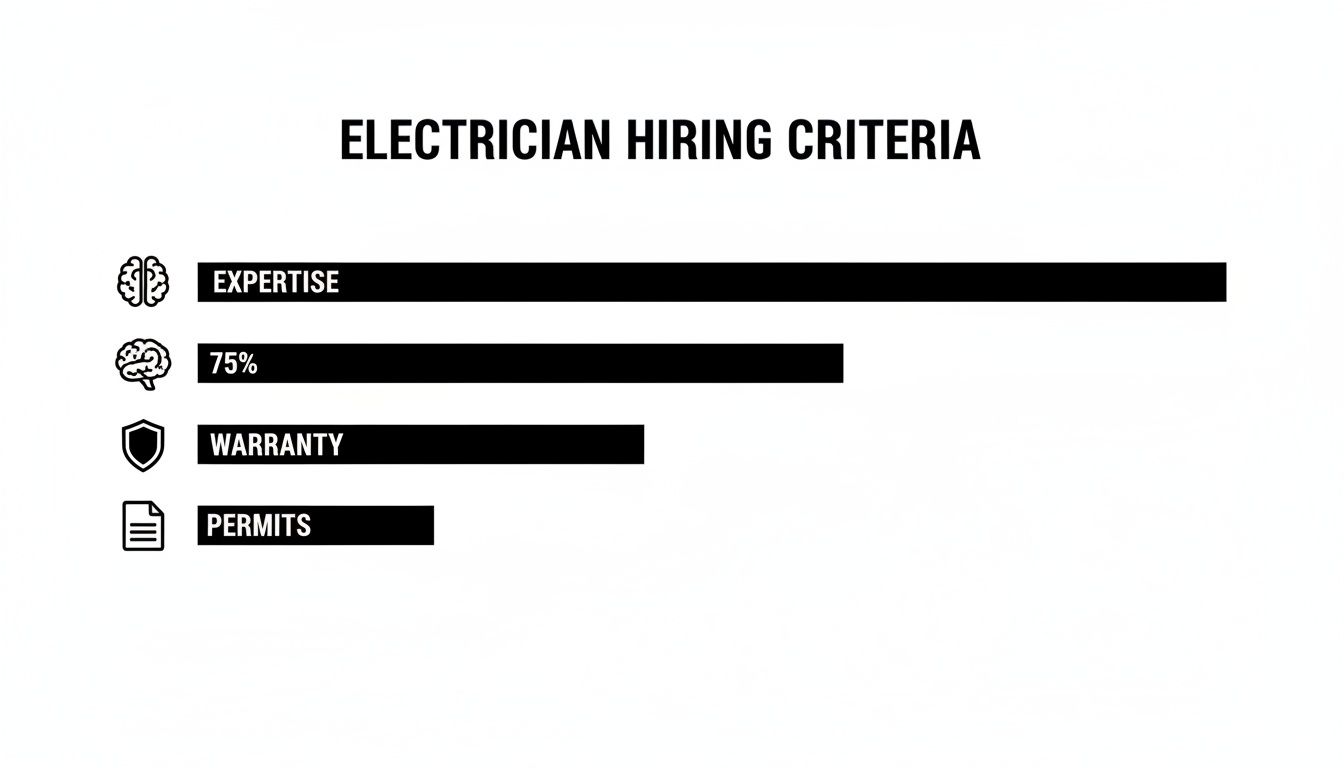
This chart really drives the point home. While cost is always a factor, most homeowners are actually prioritizing proven expertise and solid warranties—the hallmarks of a true professional.
Typical Cost Ranges for Common Electrical Projects in Northern Utah
To give you a realistic starting point for your budget, I've put together a table with some ballpark figures for common projects we see across Weber, Davis, and Salt Lake Counties. Keep in mind that every home is different, and factors like the age of your wiring or tricky access points can shift these numbers. Still, this gives you a solid frame of reference.
A detailed breakdown of ceiling fan labor cost and installation pricing is a great example of how nuanced even smaller jobs can be when you factor in wiring, box support, and assembly.
A suspiciously low bid often means one of two things: the contractor missed something significant in their assessment, or they plan on cutting corners with subpar materials or unsafe practices. Neither is a risk worth taking.
Here’s a look at what you can generally expect.
| Service | Average Cost Range | Key Factors Influencing Price |
|---|---|---|
| Electrical Panel Upgrade | $1,800 – $3,500 | Panel amperage, circuit count, and location accessibility. |
| Whole-Home Rewiring | $8,000 – $20,000+ | Square footage, ease of access to walls, and type of wire used. |
| Level 2 EV Charger Install | $1,000 – $2,500 | Distance from panel, need for a new circuit, and charger model. |
| Dedicated Hot Tub Circuit | $900 – $2,000 | Circuit length, GFCI breaker requirements, and trenching needs. |
This table should help you spot a bid that’s way out of line—either too high or, just as concerning, too low. It’s all about having the right information to make a smart decision for your home.
How Electricians Bill for Their Work
Understanding how you'll be charged is just as important as the total cost. Most professionals in our area use one of two billing models:
- Flat-Rate Pricing: You get one total price for the entire job, no matter how many hours it takes. This is great for bigger projects because it gives you cost certainty from the get-go. No surprises.
- Time & Materials (Hourly): You pay for the electrician's time plus the cost of parts. This is common for troubleshooting and smaller repairs where the scope isn't totally clear until the work starts.
The electrical industry is changing fast, especially with the explosion of electric vehicles. The global EV charger market was valued at $26.9 billion in 2023, and that number is just climbing. This boom makes it essential to hire pros who are actually experts in modern installations, not just dabbling in them.
Red Flags to Avoid When Choosing an Electrician
Hiring the wrong electrician can lead to more than just a shoddy job—it can mean safety hazards, frustrating code violations, and having to pay someone else to fix it all over again. You need to know the warning signs that separate the genuine electrical service pros from the folks who cut corners.
Here’s the thing: a true professional will be transparent, patient, and able to back up their claims without hesitation. Spotting red flags early is your best defense. If a contractor gets squirrelly when you ask for their state license number and proof of insurance, that’s your first and biggest sign to walk away. This isn’t just paperwork; it’s your primary protection against faulty work and accidents on your property.
Vague Quotes and High-Pressure Tactics
One of the most common red flags is a quote scribbled on the back of a business card. If a contractor gives you a single, mysterious number without breaking down the costs for labor and materials, you should be wary. A professional quote is a clear roadmap for the project, showing you exactly what you’re paying for.
Another tactic to watch for is the demand for a huge cash payment upfront. A reasonable deposit for materials on a big project is standard, but asking for more than 15-20% of the total job cost before any work begins is a problem. It can signal financial instability or, in the worst-case scenario, that the contractor might take your money and disappear.
An unusually low bid should set off as many alarms as a high one. It often means they're using cheap, substandard materials, hiring unskilled labor, or skipping crucial steps like pulling the required permits.
Communication and Professionalism Issues
If a contractor is tough to reach, won’t return your calls, or acts annoyed by your questions from the very start, imagine how they’ll communicate when an unexpected issue pops up mid-project. Poor communication is a preview of future headaches.
Keep an eye out for these other warning signs:
- No Real Reviews: A contractor with no online presence or verifiable testimonials from past clients in your area is a ghost. You want someone with a track record you can actually check.
- "A Handshake Is Good Enough": A verbal agreement is not enough. A professional will insist on a detailed written contract that outlines the scope of work, timeline, and payment schedule.
- Showing Up Unprepared: If they arrive in an unmarked van with tools thrown in the back, it’s often a reflection of how they run their entire operation.
You know what? You have to trust your gut. If something feels off during your initial conversations, it’s better to find an electrician who inspires confidence and acts like a professional from the moment they answer the phone.
Getting Your Home Ready for the Electrician
So, you’ve picked a qualified electrician and the project is on the books. Great move. Now, a little prep work on your end can make a massive difference in how smoothly everything goes. Taking a few simple steps is one of the easiest ways to keep your project on schedule and avoid extra labor costs.
When the crew can walk right in and get to work, you save time and money. Here are a few practical things you can do to get your home or business ready for the team.
Clear the Way for a Smooth Project
This might sound obvious, but the single most helpful thing you can do is clear the work area. It’s amazing how often this gets overlooked in the hustle of daily life. Before the electricians arrive, take a few minutes to create an open, safe space for them.
- Panel Upgrades: Your electrical panel needs breathing room. Clear a space at least 3-4 feet deep in front of it. That means moving those storage shelves, holiday decoration boxes, or anything else that’s drifted into that zone.
- Outlet & Switch Jobs: If they’re working on outlets behind the couch or installing a new switch, pull furniture like bookshelves, desks, and couches away from the wall.
- Major Rewiring: For bigger jobs that kick up dust, it’s smart to cover nearby furniture. An old blanket or some plastic sheeting does the trick and protects your stuff from the inevitable mess.
A Quick Pro Tip: If the work is happening in a busy spot like a hallway, figure out another route for your family to use. It keeps everyone out of the way and prevents a frustrating bottleneck right when you’re trying to get out the door.
Let Them Know How Your Household Runs
Good communication about your family’s routine is a game-changer. Your electricians want to minimize disruption, but they can't read your mind. A quick heads-up about your daily schedule helps them work around you, not through you.
A few key details to share with your contractor:
- Kids and Pets: Got a dog that needs to be kept in the backyard? A cat that hides? Toddlers who nap at a specific time? Let the crew know so they can work safely and quietly when it matters most.
- Working from Home: If you’ve got a home office, talk about the project timeline. Knowing when the power might be off for a bit allows you to schedule your important calls and meetings around it.
For business owners, this is even more critical. Planning for a temporary power shutdown is non-negotiable. Give your team a heads-up and schedule critical tasks around the electrician’s work to keep productivity from taking a hit. A little coordination really does go a long way.
Why a Local Utah Electrician Matters
After walking through how to find a great electrician, one thing becomes crystal clear: it all boils down to expertise, trust, and local know-how. Hiring true electrical service pros isn’t just about someone who can twist wires together; it’s about finding a partner who genuinely understands Northern Utah's homes, its building codes, and its people. This is where a dedicated local team makes all the difference.

As a contractor with deep roots right here in Weber, Davis, and Salt Lake counties, our team at Black Rhino Electric lives and breathes these values. We know the quirks of the houses here because we live here, too. That local familiarity, combined with a rock-solid, safety-first approach, is what we bring to every single job.
Our Commitment to the Community
Our entire philosophy is built on the simple, honest qualities we’ve talked about in this guide. No fluff, just straightforward promises.
- Fully Licensed & Insured: Every project we touch is backed by complete protection. It’s non-negotiable and gives you total peace of mind.
- Transparent Pricing: You’ll get a clear, itemized quote before we start. No hidden fees, no vague numbers—you’ll know exactly what you’re paying for.
- Guaranteed Satisfaction: We stand by our work, period. The job isn’t finished until it’s done right and you’re happy with the result.
The need for skilled electrical work isn't just a local trend; it's a global one. The market is projected to skyrocket to USD 1,159.6 billion by 2035, and North America is leading the charge. A huge part of that growth comes from modernizing and repairing homes just like yours, which really underscores how crucial it is to have reliable local experts you can count on. You can read more about these industry trends and what they mean for homeowners like you.
Whether it’s a simple residential panel upgrade or a specialized Tesla Wall Connector installation, our focus never changes: delivering safe, reliable results that are built to last.
Frequently Asked Questions About Electrical Services
When you're looking into electrical work, a lot of questions come up. It's totally normal. To give you some clear, straightforward answers, we've pulled together some of the most common things we hear from homeowners and business owners right here in Northern Utah.
How Do I Know if My Electrical Panel Needs an Upgrade?
Your home will usually give you some pretty clear signals when the panel is getting old or just can't keep up anymore. Keep an eye out for breakers that trip all the time or lights that flicker and dim whenever you turn on the microwave or A/C. A faint burning smell from the panel area is a definite red flag that needs immediate attention.
Honestly, if your home is over 25 years old and still has its original panel, it's a smart move to get it professionally inspected.
You'll almost certainly need an upgrade if you're adding any major, power-hungry appliances. Think about things like:
- EV Chargers: A Level 2 charger needs its own dedicated 240V circuit, something older panels often weren't designed to handle.
- Hot Tubs: Just like an EV charger, a hot tub pulls a ton of power and requires a modern, robust panel to run safely.
- Major Renovations: That new kitchen or home addition is going to add a lot of new circuits, easily pushing an old panel past its safe limits.
What Is the Difference Between a Licensed and Unlicensed Electrician?
The difference is huge, and it all comes down to your safety. A licensed electrician has gone through years of state-required training, passed tough exams, and has to keep up with the latest National Electrical Code (NEC) standards. They're also required to carry liability insurance, which is what protects you and your property if something goes wrong.
Hiring a licensed pro is your guarantee that the work will be safe and up to code.
An unlicensed person, on the other hand, offers zero protection. They work without insurance, accountability, or verified skills, putting your home, your family, and your wallet at serious risk.
Is It Necessary to Get aPermit for Electrical Work?
Yes, for almost any job bigger than swapping out a light fixture, your local city or county is going to require a permit. This covers all the common stuff—panel upgrades, adding new circuits, home rewiring, and EV charger installations.
Don't think of it as red tape; it's a critical safety check. The permit process ensures an independent inspector comes out to verify that the work was done correctly and meets all current safety codes. A good, reputable contractor will always handle the entire permitting process for you from start to finish.
If you have more questions buzzing around, feel free to check out our full electrical FAQ page to find more answers.
When you're ready for a professional, stress-free experience from a team that builds its business on transparency and clear communication, give the experts at Black Rhino Electric a call at 385-396-7048 or request a free quote to talk through your project.