Getting an EV charger installed at home is a fantastic upgrade, but it's smart to understand the ev charger installation requirements first. This isn't just about buying a charger off the shelf; it’s about making sure your home's electrical system can safely and efficiently handle the extra load. Honestly, a proper installation by a licensed electrician is the key to protecting your car, your home, and your own peace of mind.
Your First Steps to Seamless Home EV Charging
So, you're ready to make the switch to home charging? It’s a total game-changer for any EV owner, trust me. The path from buying the charger to plugging in your car for the first time involves a few critical steps. This isn't just about convenience—it's about long-term safety and reliability.
You know what? This whole process really boils down to a simple, three-stage flow. This infographic lays out the typical journey from the initial assessment all the way to your first easy home charge.
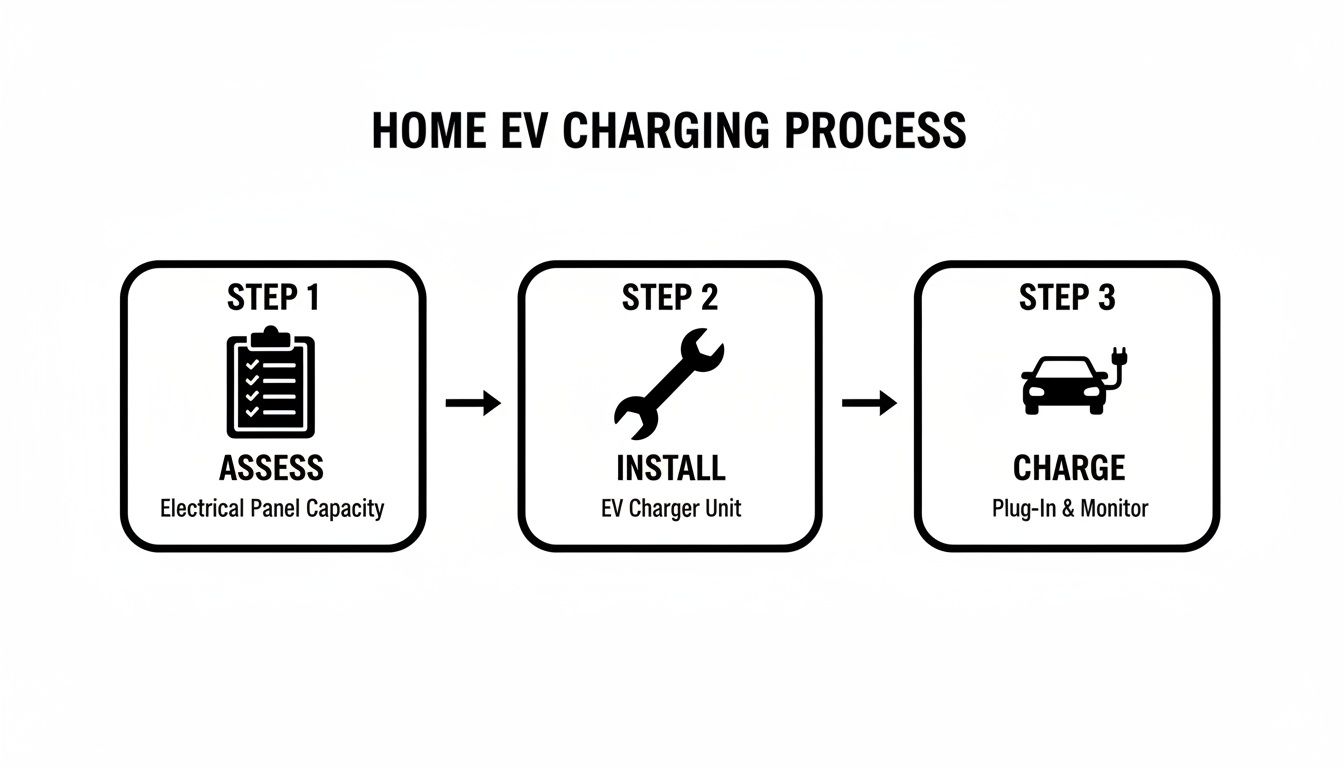
As you can see, a good plan always kicks off with a thorough assessment. That’s followed by the professional installation, and finally, you get to enjoy the daily ease of charging right from your garage.
The Importance of a Professional Assessment
Here’s the thing: every single home is different. An electrician's initial evaluation is arguably the most crucial part of the entire process. They’ll dig into your current electrical setup to figure out exactly what’s needed for a safe, code-compliant installation.
The National Electrical Code (NEC) sets the minimum safety standards for all electrical work, and that absolutely includes EV charger circuits. A professional makes sure every component of your installation meets or even exceeds these vital requirements.
Let's be clear: this is not a weekend DIY project. Improper wiring or an overloaded panel can create serious fire hazards or even damage your vehicle's expensive battery. A qualified electrician from a trusted company like Black Rhino Electric ensures every detail is handled correctly from the get-go, reflecting years of hands-on experience in the field.
They will evaluate:
- Your Main Electrical Panel: Is there enough capacity to support a new 240-volt circuit?
- Wiring and Breaker Needs: What size wire and circuit breaker does your specific charger require?
- Optimal Charger Location: Where is the safest and most convenient spot to mount the unit?
Thinking about getting a professional opinion? You can learn more about these initial steps by exploring the benefits of a detailed electrical quote. It’s the best way to get all the information you need before moving forward.
Understanding Your Home's Electrical Foundation
Getting your home ready for an electric vehicle starts with its electrical system. Honestly, this is where a safe, reliable installation begins and ends. Think of your home’s main electrical service like a highway—it has a maximum capacity for traffic. Adding a powerful Level 2 charger is like building a new on-ramp, so you have to be sure the highway can handle the extra flow without causing a massive jam.
This is a critical part of the ev charger installation requirements because most Level 2 chargers need their own dedicated 240-volt circuit. Let me explain: this is far more demanding than a standard wall outlet. It requires a direct, uninterrupted connection to your home's power supply.
Your Electrical Panel: The Command Center
The nerve center of your home's power is the main electrical panel. Ever take a good look at it? It’s usually a grey metal box tucked away in a garage, basement, or utility closet, and it determines your home’s total electrical capacity. The first step is to check its amperage rating, which is typically printed right on the main breaker switch at the very top.
- 100A Service: Often found in older or smaller homes. A 100-amp panel might already be close to its limit, especially if you have other large electric appliances like an HVAC unit or a water heater.
- 150A Service: This is more common in newer homes and often provides enough headroom for an EV charger without a major headache.
- 200A Service or Higher: Generally considered the gold standard for modern homes. A 200-amp panel almost always has enough capacity to add a new 240-volt circuit for your charger.
An experienced electrician will perform what’s called a load calculation. This isn't a guess; it's a precise assessment that adds up the power demands of all your home's appliances to see if there's enough capacity left for the EV charger. This calculation is non-negotiable for ensuring the system remains safe and doesn't constantly trip breakers.
What Happens If Your Panel Is Full or Undersized?
So, what happens if your electrician opens that panel door and finds every slot is already taken, or the load calculation shows you're maxed out? Don't worry. This is a common scenario, and there are excellent, safe solutions. You know what? It’s a great opportunity to make your home’s electrical system more robust for the future.
An overloaded electrical panel isn't just an inconvenience; it's a serious fire hazard. Adding a high-draw EV charger to a system that can't support it is a risk that is never worth taking. A professional evaluation is non-negotiable.
Here’s the thing, you have a few professional options:
- Panel Upgrade: This is the most comprehensive solution. It involves replacing your existing 100A or 150A panel with a larger 200A panel, giving you plenty of capacity for your charger and any future electrical needs. To learn more about this process, check out our guide on professional breaker and panel services.
- Subpanel Installation: If your main panel has the capacity but just lacks physical space, a subpanel can be installed. This is essentially a smaller, secondary breaker box that’s fed from the main panel, creating new slots for circuits like your EV charger.
- Circuit Management Solutions: In some cases, "smart" load-shedding devices can be used. These clever tools monitor your home's total energy use and can temporarily pause the EV charger if other high-power appliances (like an electric dryer) turn on, preventing an overload.
The explosive growth in home charging highlights just how important these foundational electrical assessments are. The demand for wired, Level 2 infrastructure is skyrocketing, and experts predict the private EV charging market will hit 3.8 million units by 2026. You can discover more insights about EV charging statistics and trends on korewireless.com. This trend shows that getting your home’s electrical system right isn’t just for today—it’s an investment for tomorrow.
Proper Wiring, Conduit, And Charger Placement
Once we’ve confirmed your home’s electrical panel is up to the task, the next step is figuring out the physical path from that panel to your car. This isn't just about connecting two dots. Honestly, getting the wiring and placement right is where a professional’s experience really shines, preventing a ton of future headaches.
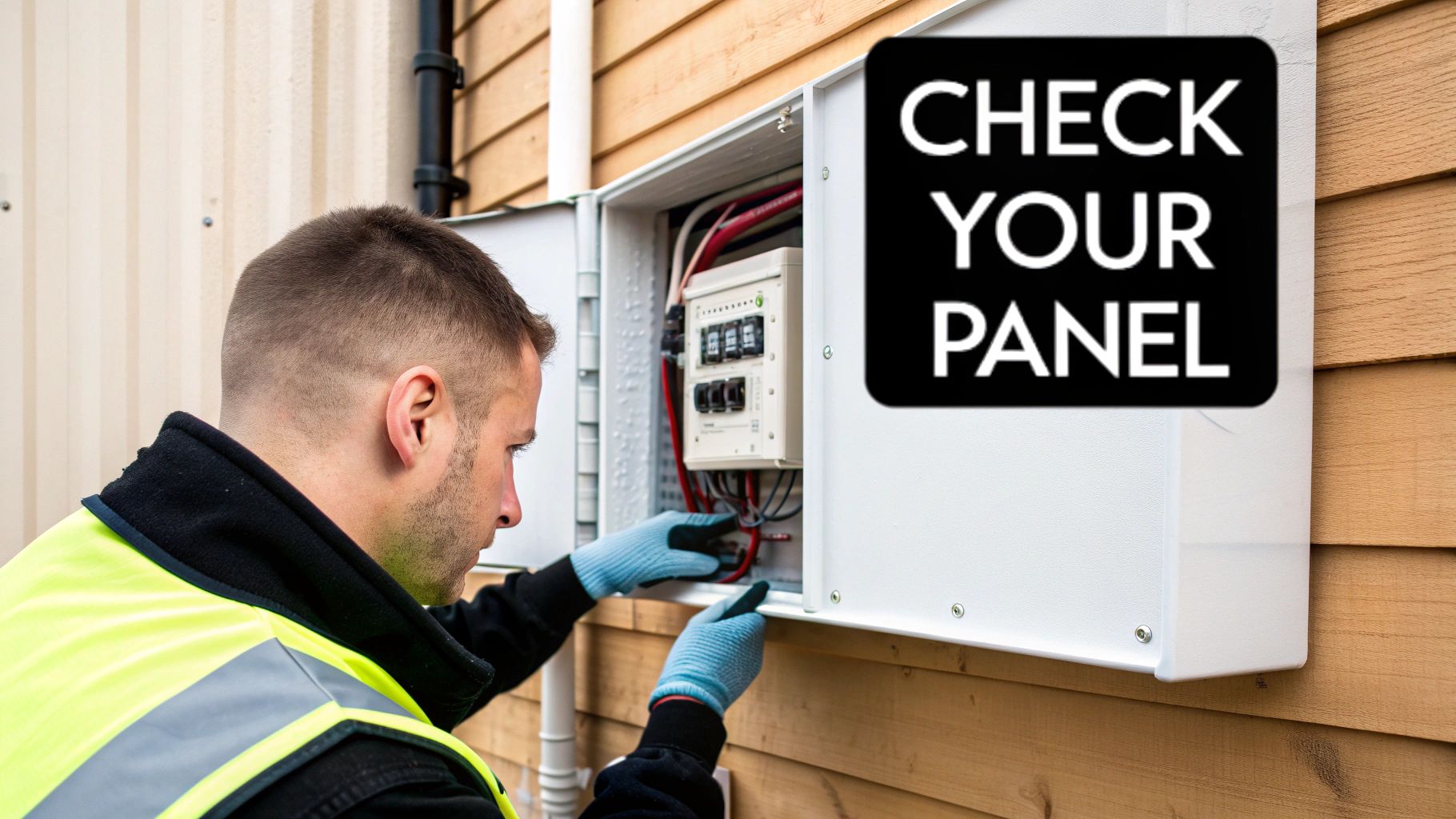
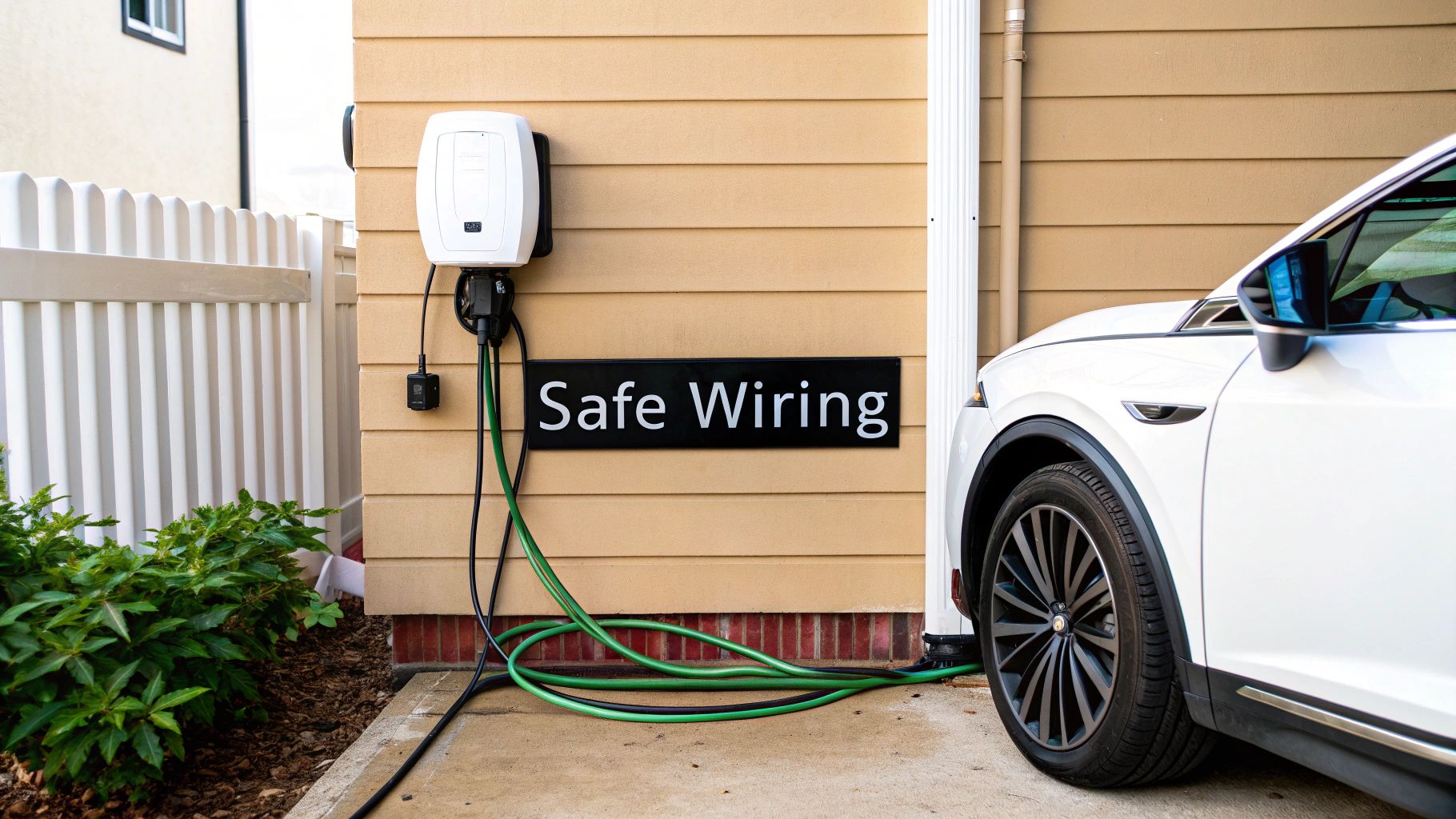
Think of the wiring as the artery pumping all that power to your EV. Using the right wire gauge is completely non-negotiable. For a typical 50-amp circuit that powers a Level 2 charger, a thick 6 AWG copper wire is the standard. This heavy-duty wire ensures electricity can flow for hours on end without overheating—a major fire hazard if you use undersized wiring.
That vital wiring then gets tucked inside a conduit. Let me explain: a conduit is basically an armored tunnel that shields the wires from physical damage, moisture, and general wear and tear. Whether we use PVC for indoor runs or rigid metal for exposed outdoor spots, the conduit is your wiring’s first and best line of defense.
Finding The Perfect Spot For Your Charger
Deciding where the charger itself will live is a mix of practicality, safety, and a little bit of strategy. Where should it actually go? The answer affects your daily convenience and the final installation cost. Here’s the thing: a little forethought here goes a very long way.
A licensed electrician will help you balance all these factors to find that sweet spot between a user-friendly setup and one that’s fully compliant with local codes.
Here are the key things we consider for charger placement:
- Proximity to Your Electrical Panel: The shorter the run from the panel to the charger, the less wire and conduit you need. This directly translates to lower material and labor costs. Simple as that.
- Charging Cord Reach: Can the charger’s cord comfortably reach your car’s charging port? The cord should never be stretched taut or create a tripping hazard across a walkway.
- Weather and Element Protection: For outdoor or carport installs, we look for a spot sheltered from direct rain, snow, and the harsh afternoon sun. This can significantly prolong the life of your unit.
- Accessibility and Safety: The location has to meet local code requirements for clearance around the unit. This ensures there's enough space for you to operate it safely and for any potential servicing down the road.
Comparing Charger Levels and Requirements
You know what? It’s helpful to see how these requirements stack up against the different types of chargers. A simple Level 1 charger is one thing, but a Level 2 unit—which is what most homeowners install—has a whole different set of needs. Seeing the differences side-by-side makes it crystal clear why professional installation is so important.
"Improper wiring when installing a high-powered device with continuous energy loads, such as your EV charger, can lead to a fire, the invalidation of any vehicle or EV charger warranties, and other damaging and devastating consequences."
To make it easy, here’s a quick breakdown of what to expect from the different charger levels you'll encounter.
EV Charger Level Comparison
| Charger Level | Voltage | Typical Charging Speed (Miles per Hour) | Common Installation Requirements |
|---|---|---|---|
| Level 1 | 120-Volt | 3 to 5 miles | Plugs into any standard, dedicated wall outlet. No special wiring needed. |
| Level 2 | 240-Volt | 25 to 60 miles | Requires a dedicated 240V circuit, proper gauge wiring, and installation by a licensed electrician. |
| Level 3 (DCFC) | 480-Volt+ | 180 to 240 miles per 20 minutes | Not suitable for residential use due to extreme power demands and prohibitive costs. |
As you can see, that jump from Level 1 to Level 2 is a big one. It introduces a whole new set of EV charger installation requirements that absolutely demand professional attention to keep things safe and performing correctly. This is precisely where an expert electrician proves their worth.
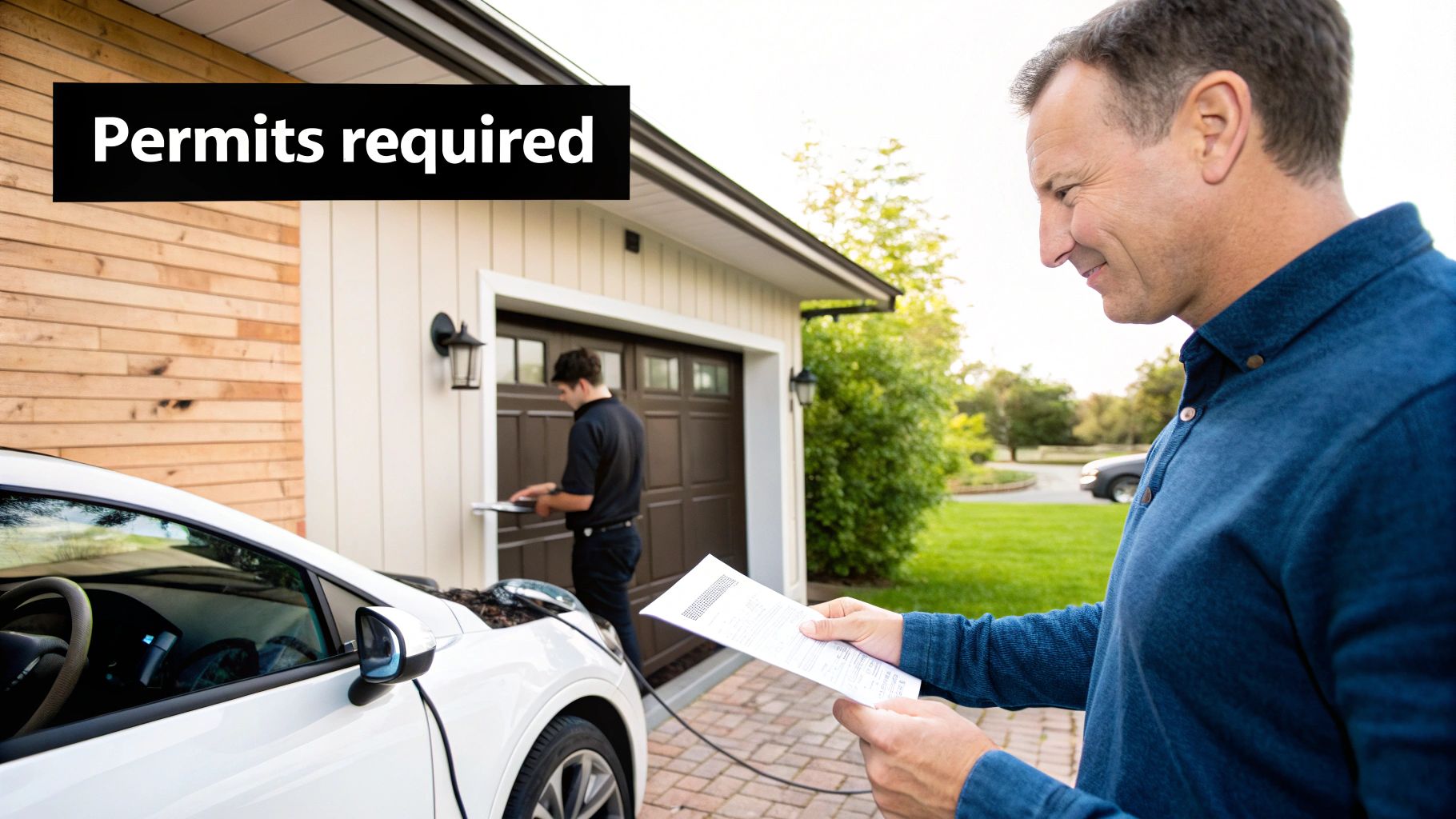
The administrative side of an EV charger installation can feel a bit daunting, but honestly, it’s one of the most important parts of the entire process. In most places, including right here across Northern Utah, installing a new 240-volt circuit requires an electrical permit. This isn't just red tape; it's a critical safety net for you, your home, and your investment.
Think of it this way: permits are your quality assurance. They guarantee that all the work is done to the strict safety standards of the National Electrical Code (NEC) and is double-checked by a neutral, third-party inspector. This simple process protects you from unsafe work that could lead to fire hazards or damage your expensive new EV.
This focus on safety and doing things by the book is the cornerstone of trustworthy electrical work. A professional electrician, like the certified team at Black Rhino Electric, handles this entire process for you—from filing the initial paperwork to scheduling the final inspection. It ensures your installation is not just functional but also fully documented, safe, and legal.
Why The Permit Process Is Your Best Friend
You know what? It’s easy to see permits as just another bureaucratic hoop to jump through, but that couldn’t be further from the truth. The permit and inspection process is a system of checks and balances that holds your electrician accountable and verifies the quality of their work. Think of it as a second set of expert eyes on your project.
This isn’t just a formality; it has real-world implications for you as a homeowner.
- Insurance Compliance: If an electrical fire ever started from an unpermitted installation, your homeowner's insurance could deny the claim, leaving you with a massive financial burden.
- Home Resale Value: When you sell your home, unpermitted electrical work can become a major sticking point for buyers and inspectors, potentially delaying or even derailing the sale.
- Guaranteed Safety: An inspector’s approval confirms that the wiring gauge, breaker size, and all connections meet the latest safety codes, protecting your family from electrical hazards.
Ultimately, a completed and signed-off permit is your official proof that the job was done right. It's a document that provides lasting peace of mind.
Understanding Local Codes And The NEC
The National Electrical Code (NEC) provides the baseline for safe electrical design and installation across the United States. However, local municipalities—like those in Weber, Davis, and Salt Lake counties—can and often do add their own specific amendments.
A licensed local electrician is indispensable because they are deeply familiar not just with the NEC, but with the specific interpretations and additional requirements of your city or county’s building department. This local expertise prevents delays and ensures a smooth inspection process.
For example, one city might have specific rules about where an outdoor charger can be mounted, while another might have stricter conduit requirements for wiring that runs along an exterior wall. Navigating these local variations is a key part of a professional’s job.
Attempting this without that specialized knowledge can easily lead to a failed inspection, forcing costly and time-consuming rework. A pro gets it right the first time, ensuring everything is up to code from start to finish.
Breaking Down Costs, Compatibility, And Timelines
Let's get to the questions every homeowner asks: "How much is this going to cost?" and "Will this charger even work with my car?" Honestly, sorting through the financial and tech details is a huge part of the ev charger installation requirements. We'll cut through the confusion on compatibility, break down the costs, and give you a realistic timeline for the whole project.
Charger and Vehicle Compatibility Explained
You know what? Compatibility is much simpler than most people think. The good news is the EV industry has pretty much standardized its charging connections, which makes finding the right charger for your car straightforward.
Most non-Tesla EVs in North America use what’s called the J1772 connector. Think of it as the universal standard that’s been around for years. Tesla, on the other hand, uses its own plug, now called the North American Charging Standard (NACS).
Here’s the thing, it’s not really an either-or situation:
- For Tesla Owners: Installing a Tesla Wall Connector is a popular choice for its clean look and easy integration. But you can also use any J1772 charger with the small adapter that comes standard with every Tesla.
- For Non-Tesla Owners: A universal J1772 charger is your go-to. If a friend with a Tesla ever needs to charge up, they can just use their adapter on your charger.
The bottom line is that simple adapters make cross-compatibility a non-issue. We can install the perfect charger for your main vehicle while making sure you have the flexibility you might need down the road.
Understanding the Full Cost of Installation
Okay, let's talk numbers. The final price tag for a professional installation isn't just a single item; it's a sum of several key parts. A good electrician will give you a detailed quote that breaks all of this down so you know exactly what you’re paying for.
Providing a transparent, itemized cost breakdown isn't just good business—it’s a mark of trustworthiness and expertise. It ensures there are no surprises and empowers you, the homeowner, to understand the full scope and value of the work being performed.
Let me explain what goes into the total cost.
| Cost Component | Description |
|---|---|
| The Charger Unit | The price of the physical charging station itself. This can run from $400 to over $1,000, depending on the brand and features. |
| Professional Labor | The licensed electrician's time and expertise. This is the core cost of making sure the installation is safe and up to code. |
| Materials | This covers all the necessary parts like the right gauge copper wire, protective conduit, a new circuit breaker, and mounting hardware. |
| Permit Fees | The administrative cost your local city or county charges to file the electrical permit and cover the inspection. |
| Potential Upgrades | If your project needs it, this could include costs for a main panel upgrade or trenching for a detached garage. |
The national average for a standard installation often falls between $800 and $2,000, but this can vary a lot based on the job's complexity. For instance, a simple install in a garage right next to the electrical panel will be on the lower end. A long outdoor run that needs trenching will be higher.
The market for this is growing fast, which tells you how valuable these installations are. The public EV charging infrastructure market is projected to soar past USD 7.7 billion by 2026, a massive jump from USD 632.4 million in 2018. This boom in commercial spaces mirrors the surge in residential demand for reliable, professional installations. You can learn more about the EV charging market's incredible growth on researchdive.com. For electricians here in Northern Utah, that means mastering both home Level 2 installations and more complex commercial jobs.
A Typical Project Timeline From Start To Finish
So, how long does this all take? A standard installation is often quicker than people expect. Once you give the quote a thumbs-up, the process follows a clear path.
Here’s a step-by-step look at a typical project:
- Initial Chat & Quote (1-2 Days): We'll talk about your needs, assess your electrical system (sometimes just with photos, sometimes with a site visit), and send over a detailed quote.
- Permit Application (1-5 Business Days): As soon as you approve the quote, we file for the necessary electrical permit with your local city or county.
- Installation Day (2-6 Hours): A licensed electrician arrives to do the physical installation. A standard job is usually done in a single visit.
- Final Inspection (Scheduled within a week): We coordinate with the local inspector to verify that the installation meets all safety and code requirements.
- Project Complete: Once the inspector gives the green light, your charger is officially ready to go!
From the first call to the final approval, a typical project is often wrapped up within one to two weeks, mostly depending on how busy the local inspector's schedule is.
Why A Licensed Electrician Is Non-Negotiable
After breaking down all the technical details, it should be clear this isn't your average weekend DIY project. The ev charger installation requirements are complex for a reason. Honestly, the risks of getting it wrong are severe—from creating a serious fire hazard to frying your EV's sensitive and incredibly expensive battery system.
Worse, an unpermitted, amateur install could void your homeowner's insurance, leaving you completely exposed if something goes wrong. This is one of those times where trying to save a few bucks upfront can cost you a fortune down the road.
The True Value of Professional Expertise
Hiring a licensed and insured electrician isn't just an expense; it's a critical investment in safety, reliability, and genuine peace of mind. A pro brings a level of experience and accountability you simply can't replicate.
Here’s what a certified expert from Black Rhino Electric brings to your project:
- Deep Local Code Knowledge: We work with the specific electrical codes and permit processes across Weber, Davis, and Salt Lake counties every single day. We know what local inspectors look for.
- Specialized EV Charger Experience: We get the unique power demands of different charger brands, from Tesla Wall Connectors to universal J1772 units. We’ve installed hundreds of them.
- Guaranteed Workmanship: Our work is insured and guaranteed. Every connection is torqued to spec, every component is correctly rated, and the entire system is built for years of safe, daily use.
An electrician doesn't just install a charger; they integrate a high-power appliance into your home's most critical system. Their expertise ensures this integration is seamless, safe, and fully compliant with all legal standards.
Protecting Your Most Valuable Assets
Ultimately, this is about protecting your home and your vehicle. An improper installation can lead to persistent circuit breaker trips, slow charging, and in the worst-case scenario, electrical fires. A professional installation is your best defense against these preventable problems.
The demand for this expertise is exploding. The global EV charging station market is projected to reach a staggering USD 143.76 billion by 2031, driven by new regulations and the rapid rollout of charging infrastructure. You can read the full research about the EV charging market's future on globenewswire.com.
This growth means professional EV charger installation is becoming a highly specialized skill, not a handyman task. Don't leave the safety of your home and family to chance.
A Few Common Questions Answered
When you're diving into the world of home EV charging, questions are going to pop up. It’s totally normal. You’re wondering about your specific car, what the process actually feels like, and if there are any savings to be had. Here are the straight answers to a few questions we hear all the time from homeowners.
Do I Need A Special Charger For My Tesla?
You’ve got great options here. While Teslas use their own connector (called NACS), many Tesla drivers choose to install a Tesla Wall Connector. It’s built for their cars, offers fast charging speeds, and just plain works seamlessly with the Tesla ecosystem.
But you're not locked in. You can also install a universal J1772 charger and just use the adapter that came with your Tesla. This is a fantastic choice if you have (or plan to have) EVs from different brands, making your setup flexible for any car that pulls into the garage.
How Long Does A Level 2 Charger Installation Take?
A standard, straightforward installation is surprisingly quick. If your electrical panel is in the garage and has enough capacity, our electrician can often get the physical installation done in just a few hours.
The whole process from start to finish—including getting the permit and the final city inspection—might take a few days. But the actual hands-on work in your home is usually wrapped up in a single day. On the off chance the charger or panel acts up after installation, some simple electrical detective work is needed. You can learn more about how we handle that in our troubleshooting electrician services.
Can I Get A Tax Credit For Installing An EV Charger?
Yes, you often can. Financial incentives can take a real bite out of the cost. The federal government has previously offered the Alternative Fuel Vehicle Refueling Property Credit, which can cover a good chunk of your equipment and installation expenses.
It's also smart to check with your local Utah utility provider. They sometimes have their own rebates for energy-efficient upgrades like an EV charger. We always tell our clients to talk with a tax professional to get the most current info for their specific situation.
Ready to power up your EV with a safe, professional, and code-compliant installation? The licensed team at Black Rhino Electric is here to handle every detail, from the initial assessment to the final inspection. To get started, call us at 385-396-7048 or request a free quote online today.