
Your home’s electrical system is its silent, unseen workhorse, but are you listening to what it’s telling you? Recognizing the early signs of faulty electrical wiring is one of the most important things you can do to protect your family and property. Ignoring these subtle (and sometimes not-so-subtle) clues can lead to devastating consequences, including the risk of an electrical fire.
Let's walk through the red flags your house might be waving, so you can take action before a small problem becomes a catastrophe. Let me explain. Your home's wiring, especially in older properties across Weber, Davis, and Salt Lake counties, isn't designed to last forever. Over time, materials degrade, connections loosen, and the ever-increasing electrical demands of modern life place a strain on systems never meant to handle such a heavy load. Ignoring the warning signs is a gamble you don't want to take.
This guide is designed to be your authoritative, actionable resource, grounded in our extensive experience as licensed electricians. We'll break down the most common red flags, one by one, giving you the practical knowledge you need. For each sign, we’ll cover:
- What the problem looks, sounds, or smells like.
- The likely underlying causes from a professional perspective.
- The specific fire and safety risks involved.
- When to stop and immediately call a professional electrician.
By the end of this article, you will be equipped to spot trouble early, understand the urgency, and make informed decisions to ensure your home’s electrical system is safe, reliable, and up to code.
1. Frequent Circuit Breaker Trips
Think of your circuit breaker panel as the central nervous system of your home's electrical system. Its primary job is to protect your wiring, appliances, and, most importantly, your family from dangerous electrical faults. So, when a breaker "trips" repeatedly, is it just an annoyance or a serious warning? Honestly, if it’s happening often, it’s a critical warning sign and one of the most common signs of faulty electrical wiring.
A breaker that trips once in a blue moon might just be a temporary fluke. But a breaker that trips weekly, daily, or every time you use a specific appliance is screaming for attention. This isn't a minor issue; it's a clear signal that a circuit is being pushed beyond its safe limits.
What Causes Frequent Trips?
Here’s the thing: consistent tripping isn't random. It points to one of three primary electrical issues:
- Circuit Overload: This is the most common culprit, especially in older homes across Weber, Davis, and Salt Lake counties. An overload happens when you try to draw more electricity than a circuit is designed to handle. For example, running a microwave and a high-powered blender on the same kitchen circuit can easily exceed the 15 or 20 amps the circuit was built for.
- Short Circuit: More dangerous than an overload, a short circuit occurs when a "hot" wire touches a "neutral" or "ground" wire. This creates a low-resistance path, causing a massive surge of current to flow, which trips the breaker instantly to prevent a fire.
- Ground Fault: This is a specific type of short circuit where a hot wire comes into contact with a ground wire or a grounded part of an appliance. Like a short circuit, it causes an immediate trip and poses a significant shock risk, particularly in areas with moisture like kitchens and bathrooms.
When to Take Action
Don't fall into the dangerous habit of simply walking to the panel and resetting the breaker every time it trips. Each trip is a data point telling you something is wrong.
Crucial Safety Tip: Continuously resetting a frequently tripping breaker without addressing the root cause is like ignoring a smoke alarm. The protective mechanism is working, but the underlying danger of overheating wires and a potential electrical fire remains and can worsen over time.
If a breaker trips more than once a month, it's time to stop guessing and get a professional diagnosis. An experienced electrician from Black Rhino Electric can perform a load analysis to determine if your circuits are overloaded or use specialized tools to pinpoint the exact location of a dangerous short circuit. For a deeper dive into how professionals diagnose these issues, you can learn more about our troubleshooting process for frequent circuit breaker trips.
2. Burnt Smell or Discoloration Around Outlets and Switches
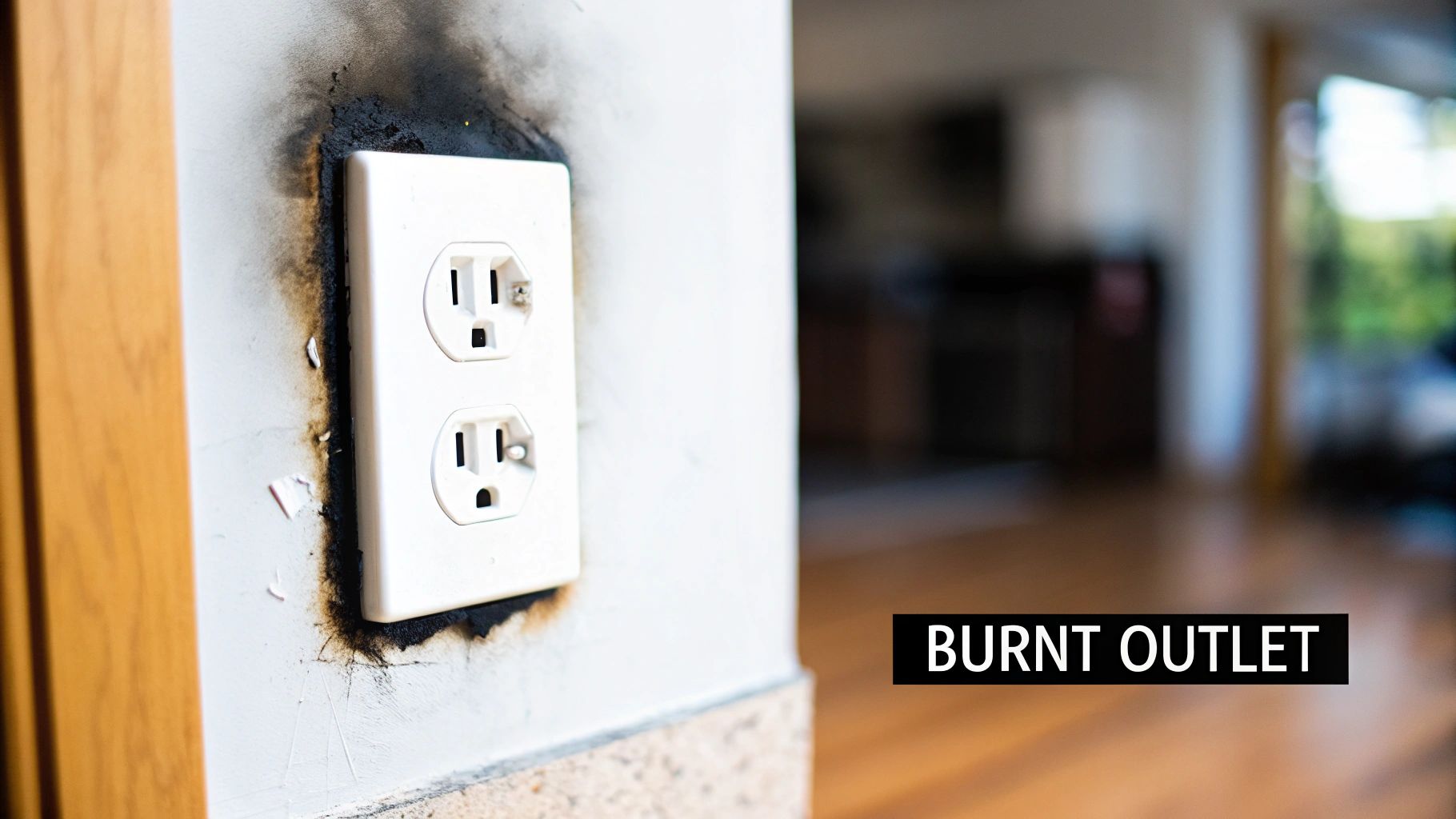
Your sense of smell can be one of your most powerful allies in detecting electrical problems. An acrid, fishy, or sharp smell of burning plastic near an outlet, switch, or your breaker panel is a serious alarm bell. You know what? This odor is an undeniable warning sign that something is dangerously overheating, and it’s one of the most urgent signs of faulty electrical wiring.
Visible evidence often accompanies the smell. You might notice yellow, brown, or black scorch marks around the slots of an outlet or on the switch plate itself. This isn't just a cosmetic issue; it's a physical sign that intense heat has been generated, likely from arcing electricity or a failing connection.
What Causes Burning Smells and Scorch Marks?
Let me explain: these signs don't appear without a serious underlying cause. The heat required to discolor plastic and produce that smell points to a significant electrical fault:
- Loose Connections: Over time, the wires connected to the terminals on an outlet or switch can become loose. This poor connection creates high resistance, which in turn generates intense heat as electricity struggles to flow through.
- Arc Fault: An arc fault is essentially electricity jumping through the air between two conductive points that aren't making a solid connection. This creates a tiny, incredibly hot electrical discharge (up to 10,000°F) that can easily ignite surrounding materials like drywall or dust.
- Overloaded Wiring: Persistently overloading an outlet (for example, with a high-draw space heater) can cause the outlet itself and the wires behind it to overheat and fail long before the breaker responds.
When to Take Action
The moment you detect a burning smell or see scorch marks, immediate action is required. This is not a "wait and see" situation; it’s a fire hazard in progress.
Crucial Safety Tip: Never touch, plug anything into, or unplug anything from an outlet that smells burnt or shows discoloration. Immediately go to your circuit breaker panel and shut off the power to that specific circuit. If the smell is strong or you see smoke, evacuate your home and call 911 before calling an electrician.
This is a clear-cut case where a professional from a trusted company like Black Rhino Electric is non-negotiable. An experienced electrician needs to replace the damaged device and, more importantly, diagnose why it failed to prevent it from happening again.
3. Warm or Hot Outlets and Switch Plates
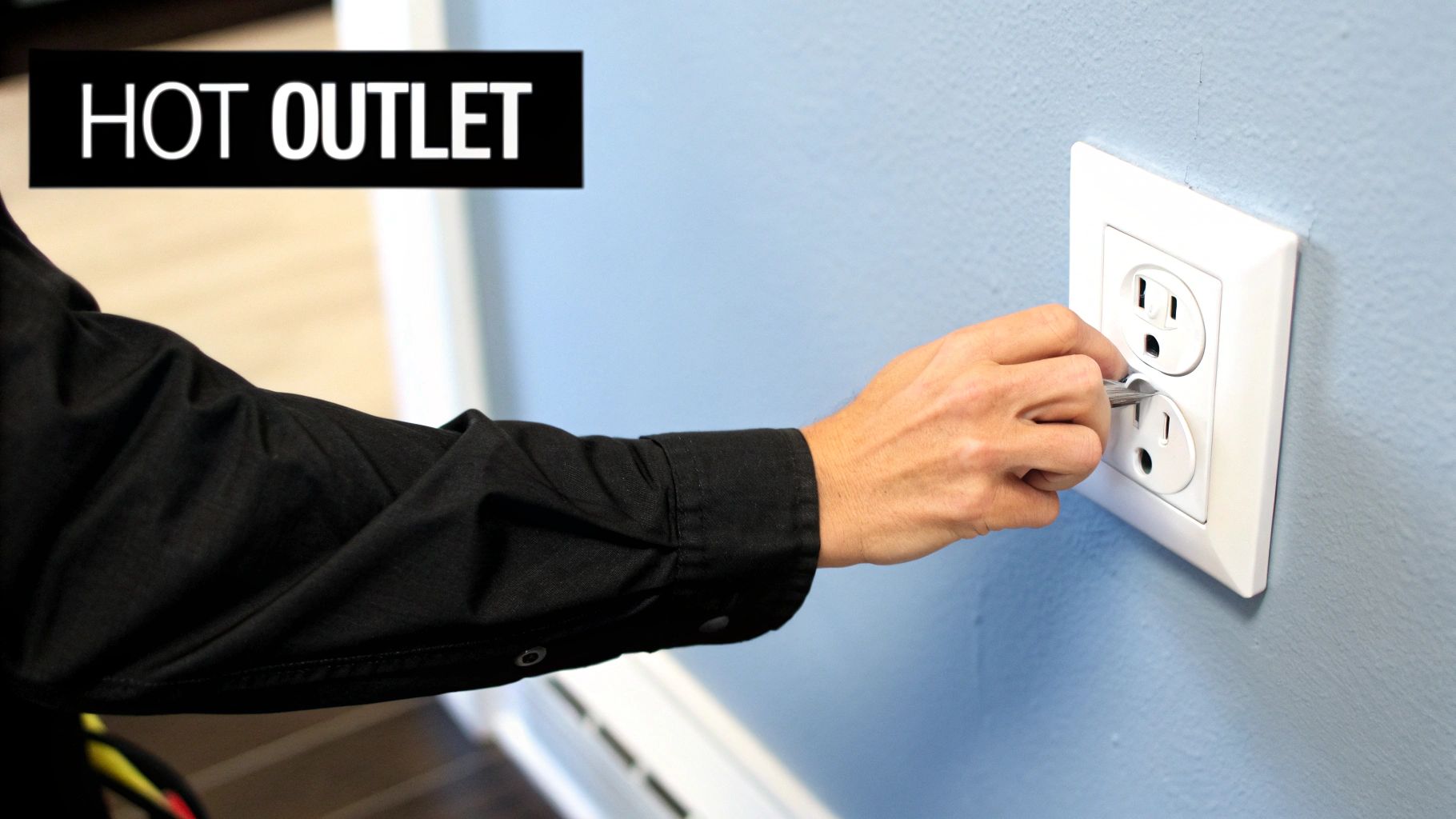
Your electrical outlets and light switches should always be cool to the touch. If you ever notice an outlet, dimmer, or switch plate that is warm or even hot, you're touching one of the most urgent signs of faulty electrical wiring. This isn't a minor issue to monitor; it's a direct indication that something is dangerously wrong within your wall.
A warm outlet is essentially a tiny, uncontrolled heater. It's generating excessive heat because of a poor or failing connection, and that heat is building up in an enclosed space filled with flammable materials. Can you see why that’s a significant fire hazard?
What Causes an Outlet to Get Hot?
Here’s the thing: heat is a byproduct of electrical resistance. When an outlet or switch feels warm, it means there's too much resistance somewhere in the connection. This typically points to one of these dangerous issues:
- Loose Wiring: Connections behind an outlet can work themselves loose. This creates a weak point where electricity has to "jump" the gap, generating intense heat.
- Damaged or Corroded Wires: Older wiring, especially in homes across Weber, Davis, and Salt Lake counties, can become corroded or damaged, increasing resistance and heat.
- Overloaded Outlet: Plugging too many high-draw appliances into a single outlet can force more current through the device than it was designed for, causing it to overheat.
- Faulty Device: The outlet or switch itself might be old, worn out, or defective. The internal contacts can weaken, creating a poor connection that generates heat.
When to Take Action
Any warmth from an outlet or switch is abnormal and requires an immediate response. Do not use the outlet or its corresponding switch again until it has been inspected by a professional.
Crucial Safety Tip: Never dismiss a warm outlet. The heat you feel on the faceplate is only a fraction of the heat being generated inside the wall cavity. Ignoring it gives a potential fire a place to smolder and ignite undetected.
The first step is to go to your electrical panel and turn off the breaker that controls the affected outlet. This is not a DIY repair. A licensed electrician from Black Rhino Electric must diagnose the cause to ensure the connection is made safe and secure.
4. Flickering or Dimming Lights
Your home's lighting should be a steady, reliable presence. So, when lights begin to flicker, dim unexpectedly, or pulse, it's more than just a minor annoyance. This behavior is a very common and often misunderstood one of the top signs of faulty electrical wiring, indicating a potential problem that needs immediate attention.
A brief dim when a large appliance like your air conditioner kicks on can be normal. However, persistent, random, or intense flickering is your electrical system's way of telling you that something is unstable. It's a signal of an inconsistent and potentially dangerous power supply.
What Causes Lights to Flicker or Dim?
Here’s the thing: flickering isn't just a quirky personality trait of your house. It points to specific, often hazardous, electrical issues:
- Loose Connections: This is the most frequent cause. A wire that isn't securely fastened at an outlet, light switch, or in the main service panel can create an intermittent connection, generating dangerous heat that can lead to a fire.
- Voltage Fluctuations & Overloaded Circuits: In many older homes, the electrical service may be undersized for modern demands. When your oven preheats, it can cause a significant voltage drop across the entire system, making all the lights dim.
- Problems with the Utility Service: Sometimes, the issue isn't inside your home at all. The problem could stem from a loose connection where the utility company's lines meet your house.
When to Take Action
Do not dismiss persistent flickering as something you just have to live with. Each flicker represents an unstable electrical current, which can damage sensitive electronics and create a fire risk.
Crucial Safety Tip: A loose connection is a fire waiting to happen. The arcing that causes flickering generates intense heat. Over time, this heat can melt wire insulation and ignite surrounding materials like wood framing or drywall.
If you notice lights flickering consistently, it's time for a professional diagnosis. An electrician can perform a voltage analysis and systematically check connections to find the source of the instability. To explore how our experts handle these situations, you can learn more about our professional lighting and wiring services.
5. Visible Damage, Corrosion, or Fraying on Wires
Unlike hidden electrical issues, some problems are in plain sight. Any visible damage to the wires in your home, from minor nicks to severe corrosion, is an unambiguous and urgent warning. Discovering these issues is one of the most direct signs of faulty electrical wiring you can encounter, and it requires immediate attention.
Exposed wiring is a ticking time bomb. The plastic or rubber insulation around a wire prevents electrical current from escaping and causing shocks, sparks, or fires. When that protective sheathing is compromised, the live conductor is exposed, creating a direct path for disaster.
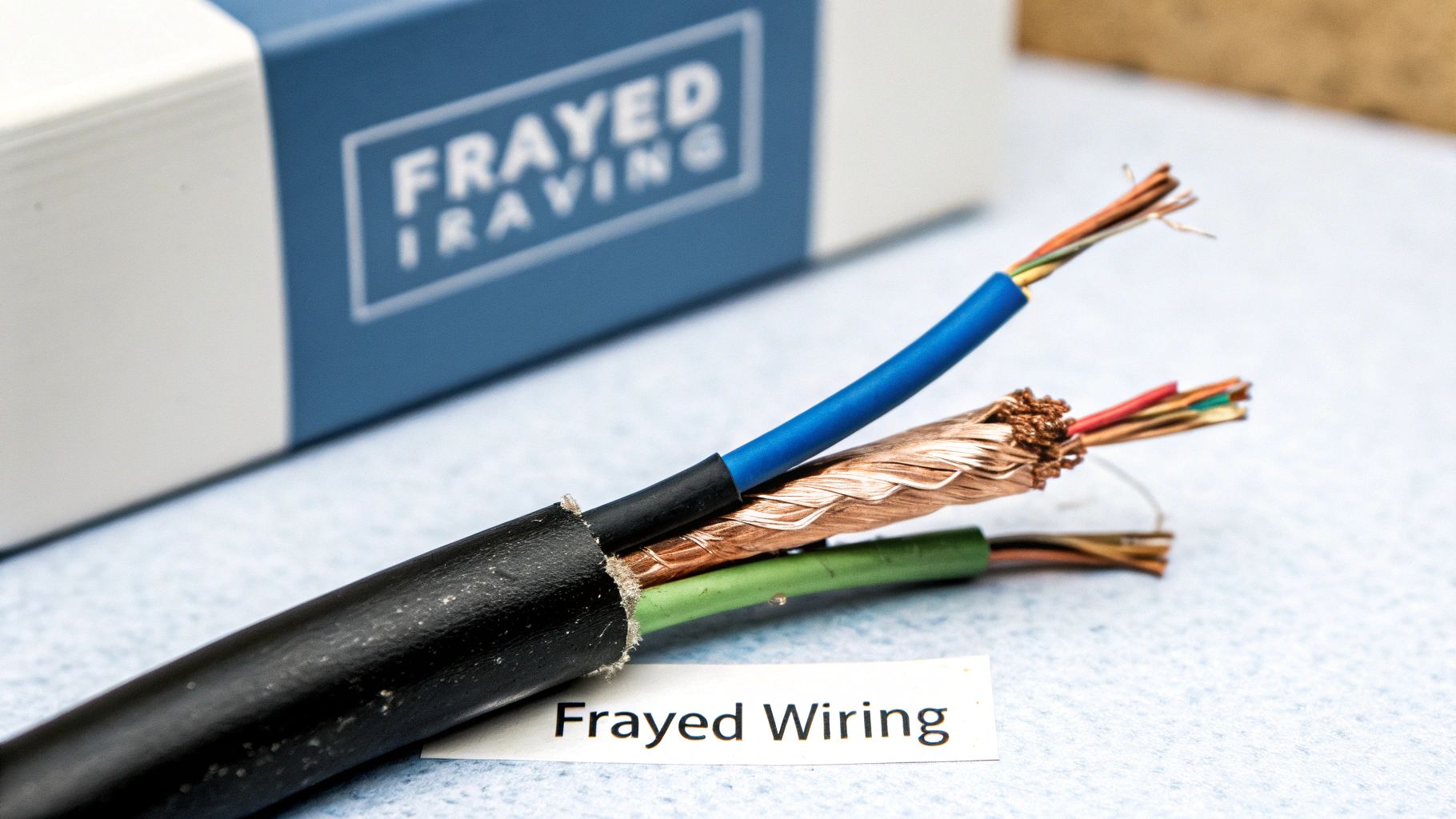
What Causes Visible Wire Damage?
Here’s the thing: wires don't just fall apart on their own. Damage is typically the result of external forces or environmental factors, especially in areas like basements, attics, and garages.
- Physical Damage: A wire can be pinched by a door, nicked during a home improvement project, or abraded from years of vibration.
- Rodent Damage: Rodents like mice, rats, and squirrels love to chew on the insulation of electrical wires. This not only exposes the live conductor but can also lead to dangerous short circuits deep within your walls.
- Heat or Chemical Exposure: Wires installed too close to a heat source can have their insulation melt away over time.
- Corrosion from Moisture: In damp environments like basements and crawlspaces, moisture can lead to corrosion on wires and connections, compromising the wire’s integrity.
When to Take Action
If you see a damaged wire, there is no safe DIY fix. Electrical tape is not a permanent or safe solution for compromised insulation. The risk of electric shock or fire is simply too high.
Crucial Safety Tip: Never touch or attempt to handle a damaged or exposed wire, even if you believe the power is off. Always treat every wire as if it were live. The only safe first step is to go to your breaker panel and shut off the power to that entire circuit.
Visible wire damage is a clear and present danger that requires a professional. An electrician needs to assess the extent of the damage to determine if a simple repair is possible or if a full circuit replacement is necessary for your safety.
6. Aluminum Wiring (in Homes Built 1965-1978)
Think of your home's construction date as a key clue to its electrical health. If your home was built between 1965 and 1978, it might contain a hidden risk that is now considered one of the most serious signs of faulty electrical wiring: aluminum wiring. While not inherently faulty at the time, this type of wiring has proven to be a significant fire hazard over the decades due to its unique physical properties.
Aluminum wiring became widespread during a period of high copper prices. However, we've since learned that aluminum expands and contracts at a much higher rate than copper. This "thermal cycling" causes connections at outlets and switches to loosen over time, creating dangerous arcing and overheating.
What Causes Problems with Aluminum Wiring?
Here’s the thing: the danger isn't from the aluminum wire itself, but from the connections. Over time, these connections degrade and fail, leading to hazardous conditions.
- Loose Connections: Aluminum's high rate of expansion and contraction (known as "creep") causes it to work its way loose from terminal screws on switches and outlets, creating resistance and intense heat.
- Oxidation: When aluminum is exposed to air, it forms a layer of aluminum oxide, which is a poor electrical conductor. This builds up at connection points, increasing resistance and heat.
- Dissimilar Metals: Connecting aluminum wire to devices designed for copper (like standard outlets) can cause galvanic corrosion, further degrading the connection.
When to Take Action
If your home falls within the 1965-1978 build window, you cannot afford to ignore the possibility of aluminum wiring. This requires a proactive professional assessment from electricians experienced with this specific issue.
Crucial Safety Tip: Do not attempt to work on aluminum wiring yourself. The risks are too high, and specific tools and techniques are required. Using standard copper-rated devices or failing to properly prepare the wire can make the situation significantly more dangerous.
If you suspect your home has aluminum wiring, an expert inspection from a team like Black Rhino Electric is essential. A qualified electrician can confirm its presence and recommend the safest, most cost-effective remediation strategy, often involving a process called "pigtailing" to ensure a safe and stable connection to modern devices.
7. GFCI and AFCI Protection Missing or Non-Functional
Think of GFCI and AFCI devices as the specialized bodyguards of your electrical system. Their absence, or failure to function correctly, is one of the most serious signs of faulty electrical wiring, indicating your home lacks critical modern safety features. A home without this protection is like a car without airbags or seatbelts; it's missing essential safeguards against a sudden catastrophe.
What Causes This Safety Gap?
Here’s the thing: this isn't just about old wiring. It's about a lack of specific, code-required protective devices.
- Outdated Electrical System: Many homes built before the 1990s were not required to have GFCI or AFCI protection. If your outlets in the kitchen or bathroom have only two slots, they almost certainly lack this protection.
- Failed or Improperly Installed Devices: These devices don't last forever. A GFCI outlet can wear out in 10-15 years, and it might still provide power, but its life-saving trip mechanism could be completely non-functional.
- Unpermitted Renovations: DIY or unpermitted remodeling projects often overlook these crucial safety upgrades, creating a false sense of security.
When to Take Action
You won't know the protection is missing or has failed until a dangerous event occurs. You need to be proactive. Test every GFCI outlet (the ones with the "TEST" and "RESET" buttons) in your home monthly. Press the "TEST" button; the power should cut off instantly. If it doesn't, what do you think that means? It means the outlet is not protecting you.
Crucial Safety Tip: A non-functional GFCI outlet is just a regular outlet. It offers zero protection against electrocution in high-risk, wet areas like bathrooms, kitchens, and garages. Assuming it works without testing is a gamble you should never take.
If you have an older home or find that your GFCI outlets fail a simple test, it’s time for a professional safety upgrade. An experienced electrician from Black Rhino Electric can assess your home's needs and install modern GFCI outlets and AFCI breakers to bring your system up to current safety codes.
8. Overloaded Circuits and Improper Wiring (Backstabbed Connections)
A particularly hazardous shortcut is a method known as "backstabbing," where wires are simply pushed into spring-loaded holes on the back of outlets and switches instead of being securely fastened under terminal screws. This quick and lazy installation creates a weak connection that can fail over time, making it one of the most hidden and dangerous signs of faulty electrical wiring. When this is combined with an overloaded circuit, the danger multiplies significantly.
What Causes This Hazard?
Let's be clear: this problem is almost always a result of improper installation, not a product defect. It points directly to poor workmanship and a disregard for safety standards.
- Improper Installation (Backstabbing): Instead of securely looping a wire around a terminal screw, the installer jammed it into a small hole. These spring-clip connections are notorious for loosening over time, creating a severe arcing and fire risk.
- Circuit Overload: Combining this weak connection with an overloaded circuit is a recipe for disaster. The increased current generates intense heat at that faulty point.
- Aging and Wear: Over the years, the spring clips inside a backstabbed outlet lose their tension, making the already poor connection even looser and increasing heat buildup until it fails.
When to Take Action
Unlike a flickering light, a backstabbed connection offers few warnings before it fails. You might notice an outlet that works intermittently or feels warm to the touch.
Crucial Safety Tip: If you discover even one backstabbed outlet or switch in your home, it is critical to assume there are more. This practice is often a sign of widespread poor workmanship, and a professional inspection from a reputable company like Black Rhino Electric is essential.
A licensed electrician can identify these connections and properly re-wire them using the secure screw terminals. They will also assess whether your circuits are properly sized for their intended loads. For a comprehensive look at how a professional evaluates your entire electrical system, you can find more information about our expert breaker panel and wiring services.
8-Point Comparison: Faulty Electrical Wiring Signs
| Sign of Faulty Wiring | Common Cause | Risk Level | DIY Fixable? | Professional Action Needed |
|---|---|---|---|---|
| Frequent Breaker Trips | Circuit Overload, Short Circuit | High | No | Load analysis, circuit tracing, potential panel upgrade. |
| Burnt Smell/Discoloration | Loose Connections, Arc Fault | Extreme | No | Immediate power shutoff, component replacement, circuit inspection. |
| Warm/Hot Outlets | Loose Wiring, Overload | High | No | Shut off breaker, professional diagnosis, and repair/replacement. |
| Flickering/Dimming Lights | Loose Connections, Voltage Drop | Moderate-High | No | Voltage check, connection tightening from panel to device. |
| Visible Wire Damage | Physical Damage, Rodents | Extreme | No | Circuit shutoff, wire replacement, addressing root cause (pests). |
| Aluminum Wiring | Material Properties (Creep) | High | No | Professional inspection, pigtailing with approved connectors, or full rewire. |
| No GFCI/AFCI Protection | Outdated System, Failed Device | High | No | Install modern GFCI/AFCI outlets and breakers to meet code. |
| Backstabbed Connections | Improper Installation | High | No | Re-wiring connections to secure screw terminals, circuit evaluation. |
Don't Wait for a Warning Sign to Become a Disaster
We’ve covered a lot of ground, from the seemingly minor nuisance of flickering lights to the unmistakable danger of a burning smell. Each of these signs of faulty electrical wiring is your home's way of communicating a potential problem, sending up a flare before a small issue can escalate into a catastrophic failure. Ignoring these signals is a gamble no homeowner should ever be willing to take.
Here’s the thing: your home's electrical system is a complex network hidden behind walls. It’s easy to take it for granted until something goes wrong. A frequently tripping breaker isn't just an inconvenience; it’s a clear indication that a circuit is being pushed beyond its safety limits. A discolored outlet isn't a cosmetic flaw; it's visible evidence of a dangerous heat buildup that could ignite surrounding materials.
From Awareness to Action: Your Next Steps
Mastering the ability to spot these issues is the first, most crucial step in proactive home safety. But awareness alone isn't enough. The true value lies in taking decisive, timely action. Let me explain the shift in mindset that’s required. Instead of thinking, "I'll get to that later," the proper response to a warm switch plate or a buzzing sound should be immediate professional intervention. Honestly, the temporary cost of hiring an electrician is insignificant compared to the potential cost of a house fire.
Here's your actionable plan:
- Routine Visual Checks: Once a month, walk through your home. Look at your outlets and switches for discoloration or damage.
- Test Your GFCIs: Use the "TEST" button monthly to ensure they are functional.
- Acknowledge Nuisances: Don't dismiss recurring issues like a breaker that always trips. It's a clear sign of an overloaded circuit.
- Know Your Limits: Anything involving wiring, outlets, or the breaker panel is a job for a professional. The risk of shock or fire is too high for a DIY approach.
The Ultimate Peace of Mind
Ultimately, the goal is to create a home where you don't have to worry about the unseen dangers lurking behind your walls. By understanding these common signs of faulty electrical wiring, you are empowered to protect your most valuable asset and the people within it. You know what? That confidence and peace of mind are invaluable. This knowledge isn't just about home maintenance; it's about responsible homeownership and prioritizing safety above all else.
If any of the issues discussed in this article sound familiar, or if you simply want the absolute certainty that your home's electrical system is safe and up to code, the expert team at Black Rhino Electric is ready to help. Our licensed electricians specialize in diagnosing and repairing faulty wiring, ensuring your home in Weber, Davis, or Salt Lake county is secure. Don't leave your family's safety to chance; give us a call at 385-396-7048 or request a free quote online to schedule a professional inspection today.