

Feeling confident about the electrical system hidden behind your walls? For most homeowners, the answer is a bit uncertain, which is why a comprehensive residential electrical inspection checklist is an invaluable tool for ensuring your family's safety. This guide will walk you through the key areas a professional examines, empowering you with the knowledge to spot potential hazards before they become serious problems.
1. Electrical Panel Inspection: Your Home's Electrical Command Center
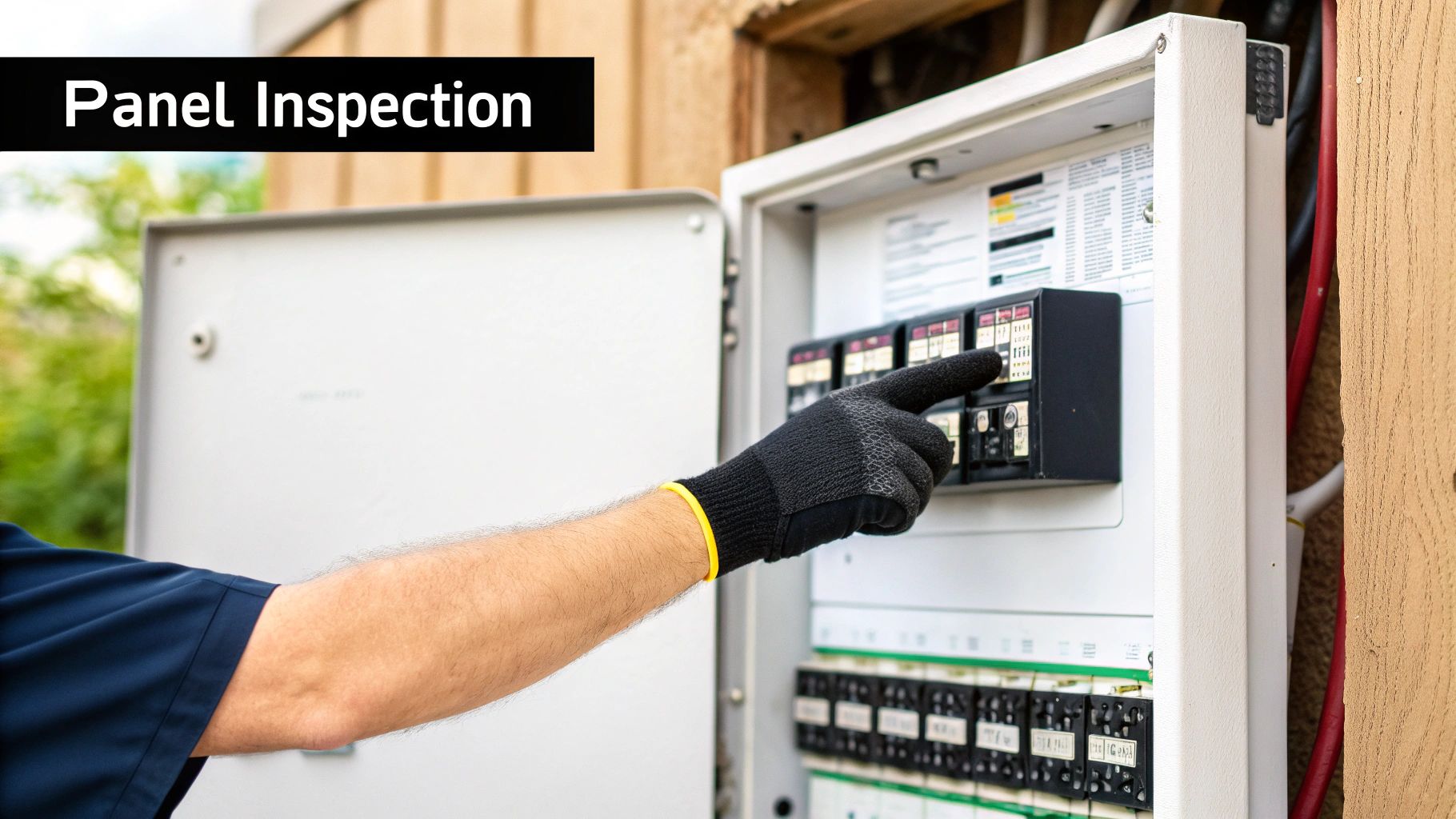
The electrical panel, often called a breaker box, is the absolute heart of your home's electrical system. Think of it as the command center: it receives the main power from the utility company and safely distributes it to all the various circuits throughout your house. A thorough inspection here is non-negotiable because a faulty panel isn't just an inconvenience; it’s a significant risk for fire, electrocution, and system-wide power failures.
Key Inspection Points
A professional will meticulously examine several key aspects of your panel:
- Proper Labeling: Is every breaker clearly and accurately labeled? A poorly labeled panel is a major headache and a safety issue during an emergency.
- Breaker Sizing: Are the breakers correctly sized for the wires they protect? An oversized breaker won't trip when it should, creating a severe fire hazard.
- Physical Condition: We look for any signs of rust, corrosion, or water entry, which can degrade connections and cause dangerous faults.
- Wiring Integrity: Are there any signs of melted insulation, burnt connections, or amateur, unpermitted wiring jobs? These are immediate red flags.
- Brand and Age: Certain older panels, like those from Federal Pacific Electric (FPE) and Zinsco, have documented histories of failure and are often recommended for immediate replacement.
Real-World Scenarios
Here’s the thing: panel issues are more common than you might think. A classic example is a 1970s home still operating on its original 60-amp panel. Honestly, this is simply inadequate for the demands of modern appliances, from high-efficiency HVAC systems to EV chargers, and requires an upgrade to a 200-amp service for safety and functionality. Discovering an infamous "widow-maker" FPE panel during an inspection is another critical finding that necessitates a complete panel replacement to ensure the home is safe. For a deeper understanding of when a panel needs an upgrade or replacement, explore our detailed guide on breaker and panel services.
Actionable Maintenance Tips
While a licensed electrician should handle any internal work, homeowners can perform visual checks:
- Check for Accessibility: Ensure the panel is never blocked by furniture, storage, or anything else. You need clear access in an emergency.
- Look for Rust: Visually inspect the outside and inside (without touching anything) of the panel door for any signs of rust or moisture.
- Listen for Sounds: A panel should be silent. If you hear buzzing or crackling sounds, it’s a sign of a serious problem requiring immediate professional attention.
- Test AFCI/GFCI Breakers: If your panel has them, test the AFCI and GFCI breakers monthly using their built-in test buttons.
2. Outlet and Switch Safety Testing
Every time you plug in an appliance or flip a switch, you’re interacting directly with your home’s electrical system. This makes the proper function of outlets and switches a cornerstone of household safety. This part of the inspection verifies that all electrical outlets (receptacles) and switches work correctly and, crucially, have the modern safety features required by code, like GFCI and AFCI protection. A faulty outlet isn't just an inconvenience; it’s a primary cause of electrical shocks and fires.
Key Inspection Points
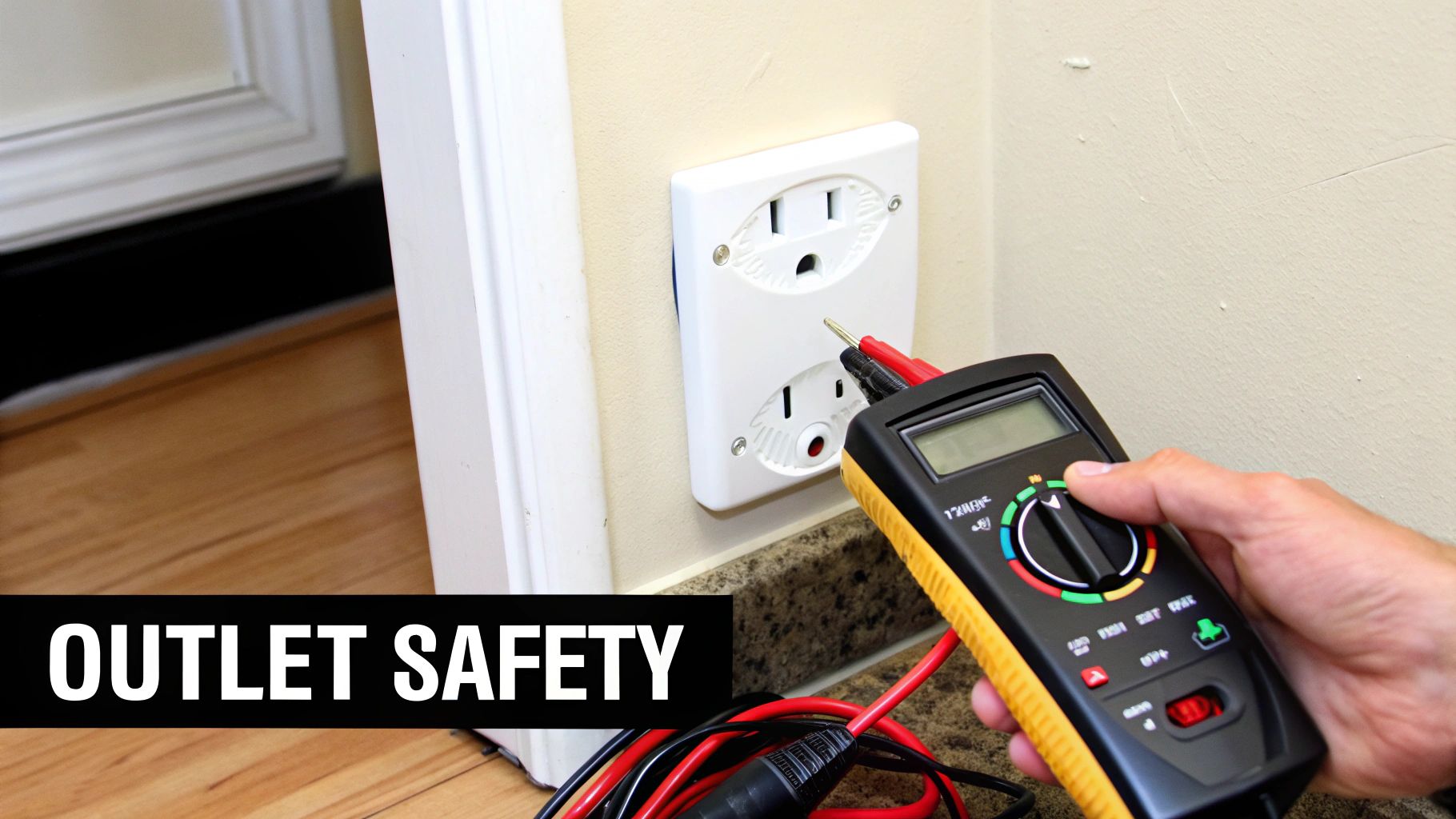
A professional electrician uses specialized tools to go far beyond simply seeing if an outlet works. Here’s what we check:
- Proper Grounding and Polarity: Using a circuit tester, we confirm that the outlet is wired correctly. Improper polarity can damage electronics, while a missing ground connection removes a critical safety feature designed to prevent electric shock.
- GFCI and AFCI Protection: We test every GFCI (Ground-Fault Circuit Interrupter) and AFCI (Arc-Fault Circuit Interrupter) outlet and breaker to ensure they trip as designed. These devices are life-savers, preventing shock in wet areas and stopping fires from hazardous electrical arcs.
- Physical Condition: Are any outlets cracked, loose from the wall, or showing signs of scorching or melting? These are immediate hazards that require replacement.
- Voltage Levels: We verify that the outlet provides a stable and correct voltage. Inconsistent voltage can damage sensitive modern electronics.
- Two-Prong Outlets: We identify any ungrounded two-prong outlets, which are common in older homes and do not meet modern safety standards.
Real-World Scenarios
Let me explain why this matters. A common issue we find in older Salt Lake County homes is the dangerous "upgrade" of a two-prong outlet to a three-prong one without running a new ground wire. This gives a false sense of security and leaves you unprotected. In another scenario, a family in Davis County was protected from serious shock when a hairdryer fell into a sink because their bathroom had a properly functioning GFCI outlet that immediately cut the power. These aren't just hypotheticals; they are real situations where proper outlet safety makes all the difference.
Actionable Maintenance Tips
You can play an active role in maintaining the safety of your home's outlets and switches:
- Test Your GFCIs: Once a month, press the "TEST" button on each GFCI outlet. It should click off. Then press "RESET" to restore power. If it doesn't trip, it needs to be replaced.
- Check for Looseness: If you plug something in and the plug feels loose or falls out, the internal contacts are worn. This can cause arcing and heat buildup, so have the outlet replaced.
- Feel for Heat: A switch or outlet should never feel warm to the touch. If you notice any heat, stop using it immediately and call an electrician.
- Don’t Overload: Avoid plugging multiple high-power devices into a single outlet using power strips. Distribute the load across different circuits.
3. Wiring Condition and Insulation Assessment: The Electrical Circulatory System
If the panel is the heart of your home's electrical system, the wiring is its circulatory system, carrying power to every corner of every room. Over time, this critical infrastructure can degrade, become damaged, or simply become outdated, posing a hidden but significant threat. Inspecting the condition of your wiring and its insulation is an essential part of any home inspection because faulty wiring is one of the leading causes of electrical fires.
Key Inspection Points
A licensed electrician will trace accessible wiring routes to identify any signs of danger, wear, and non-compliance:
- Insulation Integrity: We check for insulation that is brittle, cracked, frayed, or has been chewed by rodents, which can lead to exposed live wires.
- Outdated Materials: The presence of older wiring types, such as knob-and-tube or aluminum wiring, is a major red flag that often requires significant upgrades.
- Proper Wire Gauge: Does the wire thickness match the amperage of the circuit breaker protecting it? A 14-gauge wire on a 20-amp breaker is a classic overheating and fire hazard.
- Signs of Overheating: We look for any discolored or melted insulation around connections in junction boxes, outlets, or fixtures, indicating a dangerous overload.
- Secure Connections: Are all connections made inside approved junction boxes with proper connectors? Exposed, amateur splices are a common and dangerous code violation.
Real-World Scenarios
You know what? You can’t always see what’s behind your walls. We often discover dangerous situations in attics and crawl spaces, like rodent-damaged wiring that has been slowly arcing for years. Another common finding in homes built between the mid-1960s and mid-1970s is aluminum wiring. While not illegal, its connections are known to loosen over time, creating excessive heat and a serious fire risk that must be addressed. Even a simple DIY project can go wrong, such as using an undersized extension cord as permanent wiring, which is a clear violation and a recipe for disaster.
Actionable Maintenance Tips
While a professional should handle any repairs, homeowners can be vigilant for signs of wiring issues:
- Visual Checks: In accessible areas like basements and attics, look for any wiring that appears damaged, stretched, or isn't properly secured.
- Check for Discoloration: Look at your outlets and switch plates. Are any of them warm to the touch or discolored? This often points to a problem with the wiring behind them.
- Notice Strange Smells: A persistent burning smell, often described as fishy or like burning plastic, can indicate that wire insulation is overheating somewhere in your home.
- Listen for Buzzing: Pay attention to any buzzing or crackling sounds coming from outlets or switches. This is a tell-tale sign of a loose or arcing connection that requires immediate professional help.
4. Grounding and Bonding Verification: Your System's Ultimate Safety Net
Proper grounding and bonding are the unsung heroes of your electrical system's safety features. Think of grounding as a safe pathway for stray electrical current to travel harmlessly into the earth, preventing it from passing through you or causing a fire. Bonding ensures that all metal components in your home (like water pipes and gas lines) are at the same electrical potential, eliminating shock hazards. This verification is a non-negotiable step because it is your primary defense against electrocution and equipment damage from power surges or lightning strikes.
Key Inspection Points
An electrician will perform a series of tests and visual checks to confirm your system is safely grounded and bonded:
- Main Grounding Electrode: We inspect the connection to your primary ground rod (or other approved electrode), ensuring it's secure, free of corrosion, and properly installed to the correct depth.
- Bonding Connections: We trace and verify that all necessary metal components, such as water pipes, gas lines, and structural steel, are securely bonded back to the electrical panel.
- Wire Sizing and Protection: The grounding electrode conductor (the wire running to your ground rod) must be correctly sized for your service and protected from physical damage.
- System Continuity: An inspector will check for continuous, unbroken pathways from all parts of the electrical system back to the ground. Any gaps in this path render the safety system useless.
- Ground Resistance Testing: For the highest level of assurance, a ground resistance tester may be used to measure the effectiveness of your grounding system, ensuring it meets required conductivity levels.
Real-World Scenarios
Here’s the thing: grounding issues often go unnoticed until it's too late. A common problem we find in older homes is a disconnected bonding jumper on a water meter. If the meter is replaced and the jumper isn't reinstalled, the metal water pipes are no longer effectively bonded, creating a serious shock hazard. Another scenario involves rural properties built on rocky or sandy soil; a single ground rod is often insufficient. In these cases, we may need to install multiple ground rods or an alternative grounding array to achieve the safe level of conductivity required by code.
Actionable Maintenance Tips
While a comprehensive grounding test requires a licensed professional, homeowners can spot potential red flags:
- Locate Your Ground Rod: Know where your main ground rod is located (usually outside near your electrical meter).
- Visual Inspection: Periodically look at the connection where the ground wire clamps to the rod. Ensure it isn't loose, heavily corroded, or physically damaged by landscaping activities.
- Check for Disconnected Wires: When other work is done (like plumbing), visually confirm that any bonding wires attached to pipes have not been disconnected.
- Notice Flickering Lights: While it can indicate many issues, frequent flickering, especially during storms, can sometimes point to a poor grounding connection. If you notice this, call a professional immediately.
5. Light Fixture and Appliance Connection Inspection
From your elegant dining room chandelier to your hard-working washing machine, your light fixtures and major appliances are the final destinations for your home's electrical current. How they are connected is a critical safety point. An inspection of these connections ensures they receive the correct power safely and efficiently, as improper installations can lead to appliance damage, electrical shorts, and devastating fires.
Key Inspection Points
A professional electrician won't just see if the appliance turns on; they'll investigate the integrity of the connection itself:
- Dedicated Circuits: Do power-hungry appliances like your electric range, water heater, or central air conditioner have their own dedicated circuits? This is required by code to prevent overloading.
- Correct Breaker and Wire Size: We verify that the circuit breaker's amperage and the wire gauge are properly matched to the appliance's power draw. For example, an electric range often needs a 40-50 amp, 240V circuit with thick 6 or 8-gauge wire. Using the wrong size is a major fire risk.
- Connection Quality: Are the connections at the outlet and the appliance secure, clean, and free of corrosion or melting? Loose connections are a primary cause of electrical fires.
- Proper Grounding: We check that all applicable appliances use a three-prong, grounded plug and are connected to a properly grounded outlet to protect against electric shock.
- Code Violations: We look for dangerous shortcuts like the use of extension cords as permanent wiring solutions or multiple kitchen appliances daisy-chained onto a single 20-amp circuit, which is a common but hazardous code violation.
Real-World Scenarios
Let me explain. Issues with appliance wiring are often hidden behind walls or the units themselves. A common finding is a DIY-installed dishwasher hardwired with undersized wiring, creating a slow-burning fire hazard under the counter. Another frequent problem is a window air conditioning unit plugged into a standard 15-amp circuit alongside other electronics, causing the breaker to trip constantly and eventually fail. These scenarios highlight why verifying that each major appliance has the correct, code-compliant electrical supply is essential for safety and performance.
Actionable Maintenance Tips
You can perform some basic visual checks to spot potential problems before they escalate:
- Check Cords and Plugs: Regularly inspect the cords of your appliances for any signs of fraying, cracking, or damage. Ensure plugs fit snugly into their outlets.
- No Permanent Extension Cords: Scan your home for any extension cords being used as a permanent solution for an appliance. This is a major red flag that you need a new outlet installed.
- Look for Scorch Marks: Check the outlets behind your appliances for any discoloration or scorch marks, which indicate a dangerous overheating problem.
- Verify Dedicated Circuits: If you’re unsure, check your breaker panel labels. Major appliances like the stove, dryer, and water heater should each have their own labeled breaker. For professional help with fixture installation and connection safety, you can find more information about our specialized lighting and fixture services.
6. Circuit Load Analysis and Capacity Assessment
Is your electrical system keeping up, or is it gasping for breath? A circuit load analysis and capacity assessment answers this crucial question. It’s a detailed calculation to determine if your home's electrical system can safely handle the total demand of all your lights, appliances, and gadgets. An overloaded system is a recipe for frequent breaker trips, damaged electronics, and a serious fire risk.
Key Inspection Points
A licensed electrician performs this analysis by calculating the amperage demands of all circuits and ensuring they are balanced and not overloaded:
- Total Connected Load: We add up the power requirements (wattage or amperage) of all hardwired appliances and potential plug-in devices to get a baseline demand.
- NEC Demand Factors: Not everything runs at once. We apply National Electrical Code (NEC) demand factors to calculate a realistic, simultaneous load.
- Breaker and Wire Sizing: We confirm that each circuit's breaker and wire gauge are correctly matched to handle its specific intended load without overheating.
- System Capacity: The final calculated load is compared against your main panel's total capacity (e.g., 100-amp, 150-amp, or 200-amp service) to identify any shortfalls.
- Thermal Imaging: Advanced inspections use thermal cameras to visually identify "hot spots" on breakers and connections, which are clear signs of an overloaded circuit.
Real-World Scenarios
Here's the thing: modern life demands more power. A classic example is a 1980s home with its original 100-amp service. When the homeowners add central air conditioning, a modern electric range, and a home office with multiple computers, they start experiencing constant breaker trips. The system is simply overloaded. We also frequently see a single 15-amp bedroom circuit struggling to power a space heater, computer, TV, and lighting, creating a significant fire hazard. Installing a home theater or an EV charger almost always requires adding new, dedicated circuits to handle their specific high-power demands safely.
Actionable Maintenance Tips
While a full load calculation requires an expert, you can be mindful of your home's electrical limits:
- Know Your Big Consumers: Be aware of which appliances draw the most power (e.g., space heaters, hair dryers, microwaves) and avoid running them on the same circuit simultaneously.
- Check Appliance Labels: The nameplate on appliances lists their wattage or amperage, giving you an idea of their electrical draw.
- Plan for the Future: If you're planning a major remodel or adding a large appliance, factor in a potential electrical service upgrade. It's wise to plan for about 25% more capacity than you currently need.
- Notice the Signs: Pay attention to dimming lights when an appliance kicks on, frequently tripping breakers, or buzzing sounds from outlets. These are all signs of an overloaded system that needs immediate professional evaluation.
7. Smoke and Carbon Monoxide Detector Installation
Smoke and carbon monoxide (CO) detectors are arguably the most important life-saving devices in your home. They are your first and only early warning system for the silent, invisible threats of fire and poisonous gas. Verifying their correct placement, functionality, and age is a non-negotiable part of a safety inspection because a malfunctioning or expired detector provides a false and dangerous sense of security.
Key Inspection Points
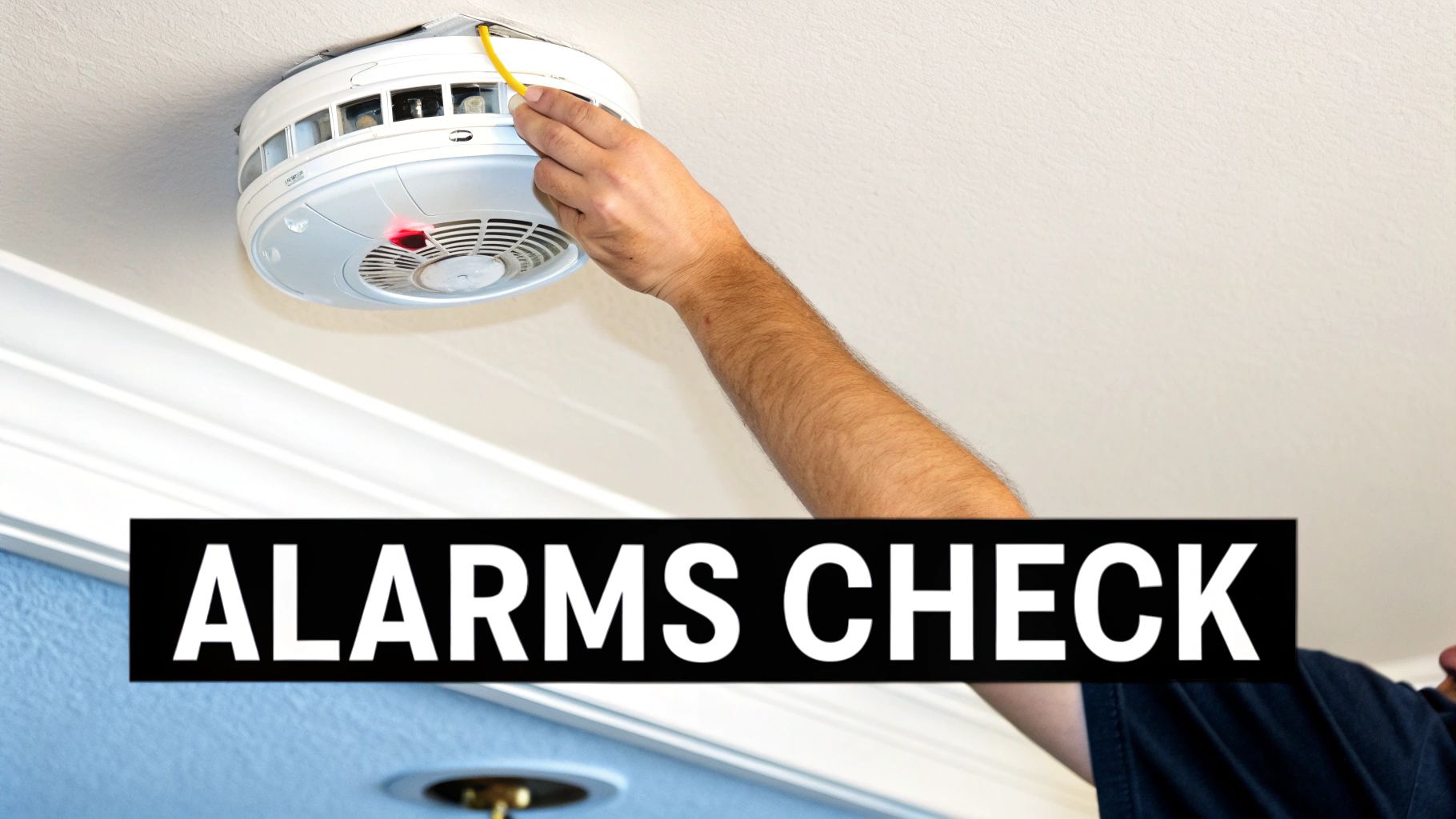
During an inspection, a professional electrician will systematically check every detector in your home:
- Proper Placement: Are detectors installed in every bedroom, in hallways outside sleeping areas, and on every level of the home? We verify they meet local code requirements for location.
- Detector Age: Every detector has an expiration date, typically 7-10 years. An old unit may not function correctly in an emergency, so we check the manufacturing date on each one.
- Functionality Test: We press the test button on every unit to ensure the alarm sounds correctly. For hardwired, interconnected systems, we verify that when one alarm sounds, they all do.
- Power Source: We check if the detectors are battery-only or hardwired with a battery backup, ensuring the power source is reliable and batteries are fresh.
- Type of Detector: Is the home protected by ionization, photoelectric, or dual-sensor smoke alarms? Is there adequate CO detection near fuel-burning appliances and sleeping areas?
Real-World Scenarios
Let me explain. Proper installation makes all the difference. We often find homes where a single CO detector is placed in a remote basement, leaving upstairs bedrooms completely unprotected from a furnace malfunction. Another common scenario is discovering that hardwired smoke detectors in an apartment building have been disconnected by a tenant, nullifying the interconnected system designed to alert all residents if a fire starts in one unit. Ensuring these systems are installed and maintained correctly is a critical safety measure that prevents tragedies.
Actionable Maintenance Tips
While our electricians handle the technical inspection, homeowners should perform regular maintenance to ensure constant protection:
- Test Monthly: Press the "test" button on every smoke and CO detector in your home once a month. It only takes a few seconds.
- Replace Batteries Annually: A great reminder is to change the batteries every time you change your clocks for daylight saving time.
- Keep Them Clean: Gently vacuum the outside of your detectors with a soft brush attachment to remove dust and cobwebs that can interfere with the sensors.
- Never Paint a Detector: Paint can clog the sensing chamber and render the unit useless.
- Know the Lifespan: Check the date on the back of your detectors. If they are more than 10 years old (or 5-7 for some CO detectors), replace them immediately.
8. Exterior and Wet Location Electrical Safety
The electrical components on the outside of your home face a constant battle against the elements: rain, snow, sun, and extreme temperatures. This is why inspecting exterior and wet location electrical safety is a vital step. These areas, including outdoor outlets, lighting, and equipment near pools or hot tubs, present a heightened risk of electric shock and accelerated corrosion. A failure here isn't just about a light going out; it's a serious safety threat to your family and property.
Key Inspection Points
A professional electrician will carefully evaluate all exterior systems for safety and durability:
- GFCI Protection: Is every outdoor and wet location receptacle protected by a Ground Fault Circuit Interrupter (GFCI)? This is a non-negotiable code requirement that prevents deadly shocks.
- Weatherproof Enclosures: We check that all exterior outlets, junction boxes, and light fixtures have "in-use" covers and are properly sealed to prevent water intrusion.
- Wiring and Conduit Condition: Is wiring protected from physical damage and sunlight? Wires must be routed through appropriate conduit, and any exposed insulation is checked for UV degradation.
- Proper Burial Depth: Underground wiring for landscape lighting or outbuildings must be buried at the correct depth (typically 18-24 inches) to prevent accidental damage from digging.
- Secure Fixtures: All outdoor lights, fans, and other fixtures must be securely mounted and rated for outdoor use.
Real-World Scenarios
Here’s the thing. A common issue we find is a standard indoor outlet installed on a back patio, completely exposed to the elements. This is an immediate shock and fire hazard. Another frequent discovery is landscape lighting with wires barely hidden under mulch instead of being properly buried in conduit. This creates a risk for anyone doing yard work. A more complex but critical inspection involves hot tubs, which require a dedicated high-amperage circuit, a specific GFCI breaker, and an emergency shut-off switch within sight. For a detailed look at the requirements for these installations, you can explore the specifics of safe hot tub wiring.
Actionable Maintenance Tips
Homeowners can take several steps to maintain outdoor electrical safety:
- Test GFCIs Monthly: Just like your indoor GFCIs, test every outdoor outlet monthly using the "TEST" and "RESET" buttons.
- Keep Covers Closed: Always use weatherproof, "in-use" outlet covers and ensure they are kept closed to protect the receptacle from moisture, even when nothing is plugged in.
- Inspect Cords: Before using extension cords outdoors, check them for cracks, frays, or damage. Only use cords specifically rated for outdoor use.
- Seasonal Visual Checks: Each season, visually inspect outdoor outlets and fixtures for signs of cracking, corrosion, or water damage. Ensure seals and gaskets are intact.
8-Point Residential Electrical Inspection Comparison Table
| Inspection Area | What We Check For | Why It Matters | Homeowner Action |
|---|---|---|---|
| Electrical Panel | Rust, proper labeling, breaker size, outdated brands (FPE/Zinsco) | This is the heart of your system; failure can cause fires or outages. | Keep area clear, listen for buzzing, test AFCI/GFCI breakers. |
| Outlets & Switches | Correct grounding, GFCI/AFCI function, physical damage, no two-prongs | Prevents electric shock and fires at points of direct contact. | Test GFCIs monthly, check for loose outlets, feel for heat. |
| Wiring Condition | Frayed/cracked insulation, rodent damage, outdated wiring (knob & tube) | Damaged wiring is a leading cause of hidden electrical fires. | Notice burning smells, check for discolored outlets, listen for crackling. |
| Grounding System | Secure ground rod connection, proper bonding to metal pipes | This is your ultimate safety net against electrocution and surges. | Visually inspect the ground rod connection for corrosion or damage. |
| Appliance Wiring | Dedicated circuits, correct wire gauge, secure connections, proper plugs | Prevents appliance damage and fires from overloaded circuits. | Avoid permanent extension cords, check for frayed plugs/cords. |
| Circuit Load | Overloaded circuits, total system capacity vs. demand | An overloaded system leads to tripped breakers and fire hazards. | Avoid running too many high-power items on one circuit. |
| Safety Detectors | Correct placement, age (replace every 10 yrs), functionality | Provides critical early warning for fire and carbon monoxide. | Test monthly, replace batteries annually, keep detectors clean. |
| Exterior Safety | GFCI protection, weatherproof covers, buried wires | Prevents shock in wet areas and protects against the elements. | Test outdoor GFCIs, keep covers closed, inspect for damage. |
Ready to Ensure Your Home is Electrically Sound?
Navigating the complexities of your home's electrical system can feel overwhelming, can't it? But you've just taken a huge step toward ensuring its safety and reliability. By understanding this checklist, you've moved from uncertainty to empowerment, equipped with the knowledge to spot potential hazards and recognize when professional intervention is absolutely necessary.
You know what? The value here isn't just in ticking boxes; it's about the peace of mind that comes from being proactive. Instead of viewing your home's wiring as an invisible mystery, you can now see it as a manageable, critical system that deserves regular attention. From the central nervous system of your electrical panel to the crucial safety net of GFCI protection, each point we covered is a vital link in the chain of your home's electrical integrity.
Honestly, while this guide empowers you with diagnostic knowledge, its primary goal is to help you identify when to call for expert help. Tasks like analyzing circuit loads, verifying proper bonding, or replacing outdated wiring require the specialized tools, training, and deep understanding of the National Electrical Code that only a licensed electrician from Black Rhino Electric possesses. Our experience is your greatest asset in ensuring a safe home.
Don't leave your family's safety to chance. If you've uncovered any red flags or simply want the ultimate confidence that comes from a professional assessment, the expert electricians at Black Rhino Electric are ready to help. We bring years of dedicated experience to every inspection, ensuring your home in Weber, Davis, or Salt Lake County is up to code and completely safe. For a thorough, professional evaluation and a free, no-obligation estimate, call us today at 385-396-7048 or request a free quote on our website.