
Figuring out electrician costs can feel like a puzzle, especially when you're trying to budget for a project. Have you ever wondered how much do electricians charge and what actually goes into their final quote? Understanding the difference between hourly and flat-rate billing is the first step to decoding your estimate and ensuring you get a fair price for safe, professional work.
Contents
- 1 Hourly Rates Vs Flat Rate Pricing What's the Difference?
- 2 Estimated Costs for Common Electrical Projects in Northern Utah
- 3 Key Factors That Influence Your Final Electrical Bill
- 4 Red Flags to Watch for When Hiring an Electrician
- 5 How to Get an Accurate Quote and Save on Electrical Work
- 6 Frequently Asked Questions About Electrician Costs
- 7 Ready for a Clear, Honest Quote on Your Project?
Hourly Rates Vs Flat Rate Pricing What's the Difference?
When an electrician hands you a quote, it’s going to be built on one of two foundations: an hourly rate or a flat-rate price. Let me explain the difference, because understanding this helps you know if you’re getting flexibility or budget certainty. You know what? There's no single best way; it's all about matching the pricing to the project.
Hourly rate is exactly what it sounds like. You pay for the actual time the electrician is on the clock, working on your project, plus the cost of any parts and materials they use. This is super common for troubleshooting weird issues, handling small repairs, or tackling jobs where it's tough to guess the exact time needed. The big plus here is transparency—you see exactly how much time went into the fix.
On the other hand, flat-rate pricing gives you a single, all-inclusive cost for the entire project, locked in before the work even starts. This number covers everything—labor, materials, the works—no matter how many hours the job actually takes. Homeowners usually love this for bigger, well-defined projects like a panel upgrade or wiring a new addition because it kills any surprise costs and makes budgeting a breeze.
Understanding Service Call Fees
It’s important to know that most electricians charge a service call fee, sometimes called a trip charge, especially when they're coming out to diagnose a problem. This fee usually covers the first hour of their time, their travel to your place in Weber, Davis, or Salt Lake counties, and the initial detective work. You can expect this to be between $100 to $200. It ensures they're compensated for their time and expertise, even if the fix is as simple as resetting a hidden GFCI outlet.
How Experience Affects Hourly Rates
Not all electricians charge the same, and a huge reason for that is their experience and license level. An apprentice who’s still learning the ropes is going to cost less per hour than a master electrician who has seen—and solved—just about every problem imaginable. This tiered pricing reflects a pro's skill, deep knowledge of electrical codes, and their ability to work safely and efficiently.
The key takeaway is that a cheaper hourly rate isn't always a better deal. A seasoned electrician might diagnose and fix a problem in half the time it takes someone with less experience, potentially saving you a good chunk of money in the end.
Pro Tip: For small, unpredictable repairs (like figuring out why a circuit keeps tripping), an hourly rate might be more cost-effective. For large, defined projects (like installing an EV charger), a flat-rate quote provides peace of mind and budget control.
Here’s a quick look at what you can generally expect to pay per hour based on an electrician's professional standing.
Hourly Electrician Rates by Experience Level
This table breaks down the typical hourly rates you'll see from electricians, which directly tie back to their license and years in the field.
| Experience Level | Typical Hourly Rate | Best For |
|---|---|---|
| Apprentice Electrician | $40 – $60 | Assisting on larger jobs, basic tasks like running wire under supervision. |
| Journeyperson Electrician | $60 – $90 | Standard installations, repairs, and troubleshooting for most residential projects. |
| Master Electrician | $90 – $120 | Complex diagnostics, panel upgrades, designing electrical systems, and permitting. |
Ultimately, whether you choose a company that charges by the hour or gives you a flat-rate price, the most important thing is clarity. Always make sure you understand exactly what’s included in the price before you give the green light for any work to begin.
Estimated Costs for Common Electrical Projects in Northern Utah
Alright, you get the difference between hourly and flat-rate pricing. Now for the real question: "So, how much is this actually going to cost me?" Let's break down the typical price ranges for the most common electrical jobs we tackle here in Northern Utah. Think of these numbers as a solid starting point to help you budget and know what to expect before you even pick up the phone.
Of course, every job is a little different. Your home’s wiring, the complexity of the work, and the specific parts needed can nudge these numbers up or down. This is a guide, not a final quote.
Small Repairs and Installations
These are the everyday jobs that pop up in any home—a flickering light, a dead outlet, a new fan. They're usually the most affordable and can often be wrapped up in a single visit.
- Replacing an Outlet or Switch: Swapping out a standard outlet or light switch will typically run between $125 and $250. This usually covers the service call and the new device itself. If it’s a GFCI outlet (the one with the "test" and "reset" buttons you see in kitchens and bathrooms), expect the cost to be a little higher since the part is more expensive.
- Installing a Light Fixture or Ceiling Fan: The cost to install a new fixture or fan can land anywhere from $200 to $500. The biggest factor here is whether the wiring is already in place. If we're just replacing an old fixture with a new one, you'll be on the lower end of that range. If we have to run new wire and install a new electrical box, it'll be closer to the high end.
- Troubleshooting Electrical Issues: Got a mystery on your hands, like a circuit that keeps tripping? The initial visit to diagnose the problem usually falls under the standard service call fee of $100 to $200. Once we pinpoint the issue, the total cost will depend on what it takes to fix it.
This infographic breaks down how an electrician's experience level influences their hourly rate, which is a big piece of the final cost puzzle.
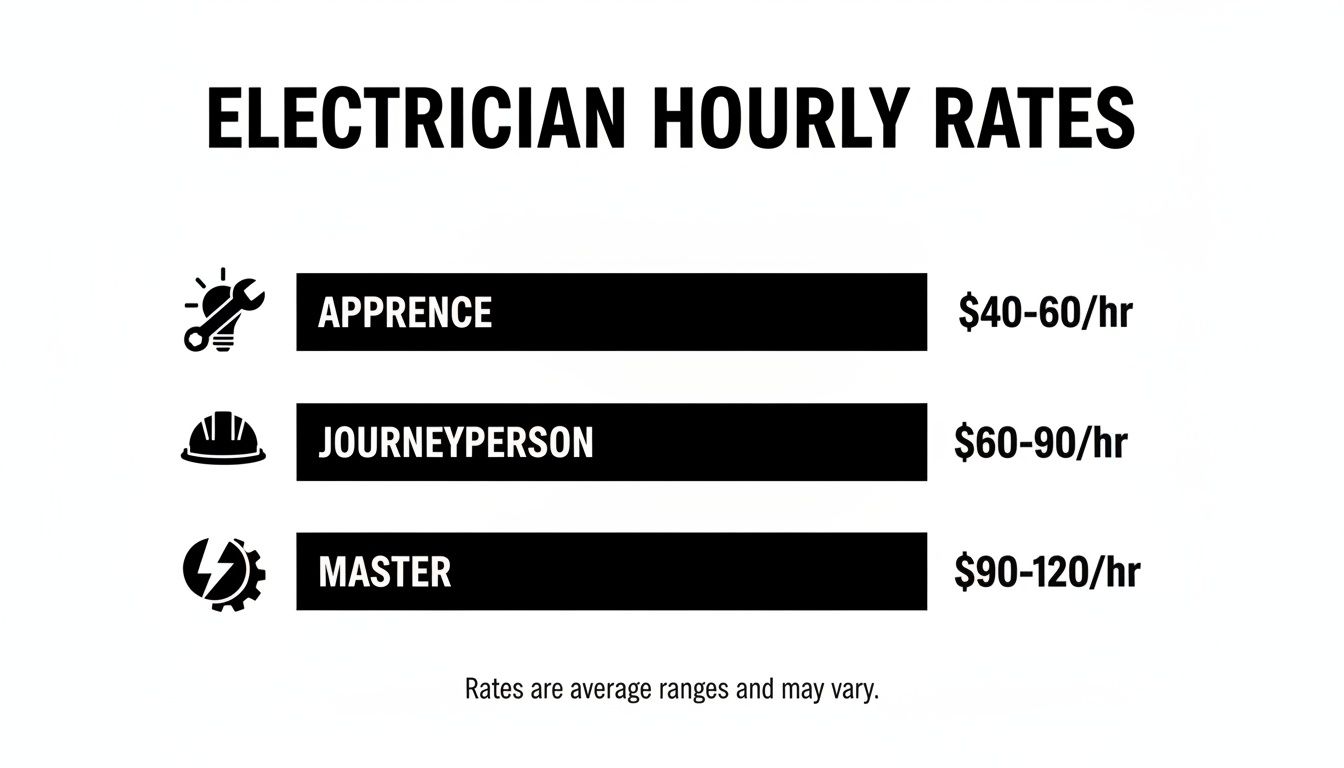
As you can see, a Master Electrician costs more per hour, but their expertise can often get a complex problem sorted out faster, which can actually save you money in the long run.
Major Upgrades and Installations
Big projects are a real investment in your home’s safety, function, and value. These jobs almost always get a flat-rate quote because they involve more planning, more materials, and multiple steps.
For major projects, a flat-rate quote is your best friend. It protects you from unexpected labor costs and gives you total budget clarity before a single wire is touched.
Here’s a look at what some of these bigger electrical jobs typically cost in the Weber, Davis, and Salt Lake county areas.
Average Cost for Common Electrical Jobs in Northern Utah
We've put together a quick-reference table for some of the most common electrical projects homeowners and businesses ask for. These ranges give you a realistic idea of what to expect for professional, code-compliant work.
| Service | Estimated Cost Range | Key Considerations |
|---|---|---|
| Electrical Panel Upgrade | $2,500 – $4,500+ | The amperage of the new panel (e.g., 100A to 200A), whether the meter base needs moving, and the condition of existing wiring. |
| EV Charger Installation | $700 – $2,000 | Distance from the panel to the garage, whether a new dedicated circuit is needed, and if a panel upgrade is required to handle the load. |
| Wiring a Hot Tub | $800 – $1,800 | Requires a dedicated GFCI-protected circuit, a disconnect switch, and often involves running conduit from the panel to the tub's location. |
| Complete Home Rewire | $8,000 – $20,000+ | The size of the home, accessibility of walls (drywall repair costs), and the type of wire being used (e.g., copper). |
Remember, these are estimates. The best way to get a firm price is to have a licensed electrician evaluate your specific situation on-site.
Specialized Electrical Services
Beyond the usual repairs and upgrades, you might need something that requires a very specific skill set. These projects are priced based on their unique demands.
One of the most popular jobs right now is installing a home EV charger. As electric vehicles become more common, having a reliable Level 2 charger at home is a game-changer. A proper installation ensures you can charge your car safely and quickly overnight. If you have a specific model, learning more about a professional Tesla EV charger installation can give you a much clearer picture of the process.
Here are a few other specialized services we handle:
- Electrical Inspections: A thorough safety inspection for a home purchase or to ensure code compliance will typically cost between $250 and $500.
- Smart Home Device Installation: This can range from a few hundred dollars for smart switches to several thousand for a fully integrated system. The cost depends entirely on the complexity.
- Generator Transfer Switch Installation: Expect to pay $1,000 to $2,500 to install a transfer switch. This is what lets you safely connect a portable generator to your home's electrical system during a power outage.
Key Factors That Influence Your Final Electrical Bill
Figuring out the final cost isn't as simple as looking at an hourly rate or a flat-rate price. The truth is, several crucial factors can quietly shape your final invoice, turning what seems like a straightforward job into something more complex—and more expensive. If you understand these variables, you can decode your quote and have a much clearer conversation with your electrician.
Here’s the thing: an electrician’s quote is a careful calculation of time, materials, and risk. Let's pull back the curtain on the key elements that determine the final number on your bill.
Job Complexity and Accessibility
The nature of the work itself is the single biggest cost driver. For example, swapping out an existing light fixture in a room with easy attic access is a simple, quick job. But installing new recessed lighting in a cathedral ceiling with no attic? That’s a different story. It means more labor—cutting into drywall, fishing wires through tight spaces, and patching everything up afterward.
Accessibility plays a huge role here.
- Easy Access: Working in an open basement or a roomy attic means the job gets done faster and more efficiently.
- Difficult Access: Projects that force an electrician into a cramped crawl space, around complex obstacles, or behind finished walls will always take longer and cost more.
Think of it this way: a simple task can become a complex puzzle if the work area is hard to reach. That extra time and effort will show up in the quote.
The Fluctuating Cost of Materials
Electrical work is about more than just labor; it requires physical parts and materials. The cost of these components can vary wildly and will be a significant chunk of your final bill.
The price of raw materials like copper wire can swing based on global market conditions. A surge in copper prices can directly impact the cost of a home rewiring project, sometimes adding hundreds of dollars to the total.
Common materials that contribute to the cost include:
- Copper Wiring: The backbone of any electrical system.
- Circuit Breakers: Essential safety devices in your panel.
- Outlets, Switches, and Fixtures: The specific models you choose can range from basic builder-grade to high-end smart devices.
- Conduit and Electrical Boxes: Necessary for protecting wires and housing connections safely.
A professional electrician will always use high-quality, code-compliant materials. While it might be tempting to save a few bucks on cheaper parts, this is one area where cutting corners can lead to serious safety hazards down the line.
Permits and Local Code Requirements
For many electrical projects—like a panel upgrade, a major rewire, or adding new circuits—a permit from your local city or county is legally required. This isn't just red tape; it's a critical safety measure. The permit process ensures the work is inspected by a third-party official to confirm it meets the strict standards of the National Electrical Code (NEC).
Permit fees can add $50 to $500 or more to your project, depending on where you live in Weber, Davis, or Salt Lake counties and the scope of the work. Your electrician handles the hassle of pulling the permit and scheduling inspections, and this administrative time is factored into the project's overall price.
Travel Time and The Electrician's Expertise
Where you're located matters. If your home is in a remote area or far from the electrician's home base, a travel fee may be included to cover fuel and time on the road. This is standard practice and allows electricians to serve a wider community effectively.
On top of that, you're paying for expertise, which is in high demand. The electrician industry in the United States has seen significant growth, with the median salary for electricians reaching $62,350 annually. The field is projected to grow 9 percent from 2024 to 2034, much faster than average, partly due to the rising demand for EV charger installations and energy-efficient upgrades. You can explore more data on electrician employment trends from the Bureau of Labor Statistics. This demand for skilled professionals means their time and knowledge are valuable resources reflected in their pricing.
Red Flags to Watch for When Hiring an Electrician
Finding the right electrician is about way more than the bottom line on an invoice; it’s a gut-check decision for the safety of your home. When you’re focused on how much do electricians charge, it’s easy to gloss over warning signs that could lead to much bigger, more expensive problems down the road. Honestly, protecting your property and family from shoddy electrical work is priceless.

Here’s the thing: spotting a few key red flags can save you from a world of headaches, code violations, and genuine hazards. Knowing what to look for ensures you hire a true professional who values quality and safety as much as you do.
The Unbelievably Low Bid
An estimate that comes in drastically lower than all the others might feel like a lucky break, but it’s often a massive red flag. Extremely low bids almost always signal that the contractor is cutting corners somewhere significant.
This can mean a few things, none of them good:
- Using Subpar Materials: They might be using cheap, non-certified parts that aren't built to last and could pose a real fire risk.
- Hiring Unlicensed Labor: An unusually low price could mean they’re using unqualified, uninsured workers to do the job.
- Planning to Add Fees Later: This is a classic bait-and-switch. The initial lowball offer balloons with “unexpected” charges once the work has already started.
A quality, licensed contractor has real overhead costs—insurance, proper tools, ongoing training, and fair wages for skilled technicians. A price that seems too good to be true almost always is.
Lack of Proper Licensing and Insurance
This one is non-negotiable. An electrician working in your home must be able to show you proof of both their state license and current insurance coverage. This isn't just paperwork; it’s your primary protection if something goes wrong.
Crucial Insight: If an uninsured worker gets hurt on your property, you could be held liable for their medical bills. And if their work causes damage—like a fire—their lack of insurance means you'll be left footing the entire bill for repairs yourself.
Always ask for their license number and request a certificate of insurance. A reputable company like Black Rhino Electric will provide this information without a moment’s hesitation.
High-Pressure Tactics and Vague Agreements
A professional electrician will give you a detailed, written quote and then give you time to actually review it. Be wary of anyone who pressures you for an immediate decision or offers a "today only" special that sounds more like a car commercial.
Other warning signs include:
- Demanding Full Payment Upfront: No reputable electrician will ask for 100% of the payment before the work is done. A reasonable deposit for materials (typically 10-30%) is standard on large projects, but never the full amount.
- No Written Contract: A verbal agreement is a recipe for disaster. A professional contract clearly outlines the scope of work, materials being used, total cost, and the payment schedule.
- Inability to Provide References: A contractor who is proud of their work will have a list of happy customers willing to vouch for them. If they can’t or won’t provide references, it’s a clear sign to walk away.
How to Get an Accurate Quote and Save on Electrical Work
Getting a solid quote is the final step before the real work begins. To actually understand how much do electricians charge, you need more than a number scribbled on a business card. You need a clear, written proposal that explains exactly what’s being done, leaving zero room for surprises later.
This isn’t just about finding a fair price; it's about making sure you get quality work, total safety, and a bit of peace of mind. Let me walk you through a few simple steps you can take to get a rock-solid quote and find smart ways to save without ever compromising on safety.
Be Detailed and Ask the Right Questions
When you call for a quote, the more details you can give, the better. A vague request like, "I need a new light installed," is tough to price accurately. But something like, "I want to replace an existing dining room chandelier with a new one I've already bought," gives an electrician a much clearer picture.
If you can, send photos or even a quick video of the work area. Then, when you're talking through the quote, dig a little deeper with a few key questions:
- Is the cost of all materials—like wire, outlets, and breakers—included?
- Does this quote cover patching any drywall that needs to be opened up?
- Are permit fees and the final inspection part of this total price?
- What kind of warranty or guarantee do you offer on your work?
A good, transparent contractor will have no problem answering these. In fact, they’ll appreciate that you’re asking.
Get Multiple Quotes (But Compare Them Wisely)
It’s always a good idea to get at least two or three quotes for any big electrical job. This gives you a feel for the going rate in your area. But here’s the thing: don’t automatically grab the lowest number.
Key Insight: A quote isn't just a price tag. It's a reflection of a company's commitment to quality, safety, and doing things by the book. Compare the scope of work, the materials they plan to use, and the contractor's licensing and insurance—not just the bottom-line cost.
Hourly rates for electricians can vary quite a bit depending on where you are and their level of expertise. The national average is around $29.51 per hour, but in pricier markets like California, that can climb to $34.77 or more. Here in Northern Utah, rates usually fall somewhere in between, which reflects a fair balance between value and the cost of skilled, insured labor. For a deeper dive, check out ZipRecruiter's comprehensive data on how electrician pay varies by region.
Practical Ways to Save Money
Saving money on electrical work doesn’t mean finding the cheapest person on the internet. It’s about being smart and efficient when you work with a qualified pro.
- Bundle Your Projects: Got a few small electrical tasks on your to-do list? Get them all done in a single visit. Replacing a finicky outlet, installing a new dimmer, and fixing that flickering light in one trip means you only pay one service call fee.
- Be Flexible with Scheduling: If your job isn’t an emergency, ask if there’s a slower time for the electrician to come out. A little flexibility on your end can sometimes lead to better pricing.
- Clear the Work Area: This one’s easy. Before the electrician arrives, make sure the area they need to work in is clean and easy to get to. You’ll save them time, which directly saves you money on labor costs.
Following these tips puts you in the driver's seat, helping you get a fair quote and make a hiring decision you can feel good about.
Frequently Asked Questions About Electrician Costs
Trying to budget for electrical work brings up a ton of questions. Let's be honest, nobody likes a surprise on their final bill. To clear the air, we've put together some straight answers to the things homeowners and businesses ask us most about electrician costs. Getting a handle on this stuff helps you make smart decisions for your property's safety and your wallet.
Do Electricians Charge a Fee Just to Come to My House?
Yes, it's pretty standard for a professional electrical company to have a service call fee. You might hear it called a trip charge or a diagnostic fee. This initial charge typically covers the first hour of our time on-site, the fuel and time to get our truck to you, and—most importantly—the expertise needed to accurately figure out what's going on.
At Black Rhino Electric, we're upfront about it. Our service call fee usually lands between $100 and $200. This ensures a licensed electrician can do a proper, thorough assessment and give you a detailed, accurate quote for the actual repair or installation before any more work begins. No guesswork.
Is It Cheaper to Hire an Electrician for a Full Day?
While most of us don't offer a special "day rate," bundling your jobs into a single visit is absolutely the most cost-effective way to go. Why is that? The real savings are in avoiding multiple service call fees.
Think of it like this: having us come out to install a new light fixture, fix that one dead outlet in the garage, and replace a dimmer switch all at once is way cheaper than scheduling three separate appointments for each little thing. Before you call for a quote, walk around and make a list of every single electrical task you need done. That way, we can give you one comprehensive estimate that makes the most of our time and saves you money.
Why Are Some Electricians So Much More Expensive?
A big price gap between electricians usually boils down to three things: experience, licensing, and proper insurance. A master electrician who has spent years troubleshooting tricky problems is going to command a higher rate than a journeyman who is still building their skillset.
A licensed, insured company like Black Rhino Electric has real overhead costs—things like liability insurance, workers' compensation, professional-grade tools, and continuous training. An unlicensed handyman just doesn't have these protections. A bargain-basement price might look good at first, but it can be a huge red flag for subpar work, no insurance to cover mistakes, or cut corners that put your home's safety at risk.
When you invest in a reputable company, you're paying for the peace of mind that the job will be done safely, meet all electrical codes, and be backed by a real guarantee. It’s about protecting your home, your family, and your investment.
What Is the Average Cost to Upgrade an Electrical Panel in Utah?
Upgrading your electrical panel is one of the single most important investments you can make in your home. For homeowners here in Northern Utah, a standard electrical panel upgrade typically runs from $2,500 to $4,500.
Of course, several things can nudge that price up or down:
- Existing Wiring Condition: If we find old, brittle, or damaged wiring, that has to be addressed for safety.
- Panel Accessibility: A panel stuck in a cramped closet or hard-to-reach crawlspace means more labor.
- Service Meter Relocation: If the main meter outside has to be moved, that adds another layer of complexity.
- Local Permit Fees: Every city has its own fee schedule for permits, which are required to make sure the work is inspected and up to code.
That price covers the new panel itself, all new circuit breakers, the necessary materials, and the skilled labor it takes to do the job safely and correctly. An on-site evaluation is the only way to get a firm, exact price for your specific home. For more answers to common questions, check out our electrician FAQ section.
Ready for a Clear, Honest Quote on Your Project?
Figuring out electrician costs shouldn't feel like guesswork. Once you have a handle on how pricing works, what goes into a project estimate, and the little details that can shift the final cost, you can make a solid choice for your home or business.
The best way to get started is with a clear, no-obligation estimate built just for your project. Arming yourself with a professional assessment from our experienced team at Black Rhino Electric is the only way to ensure there are no surprises when the work is done. Ready to move forward with confidence? Give us a call at 385-396-7048 or request a free quote online today.