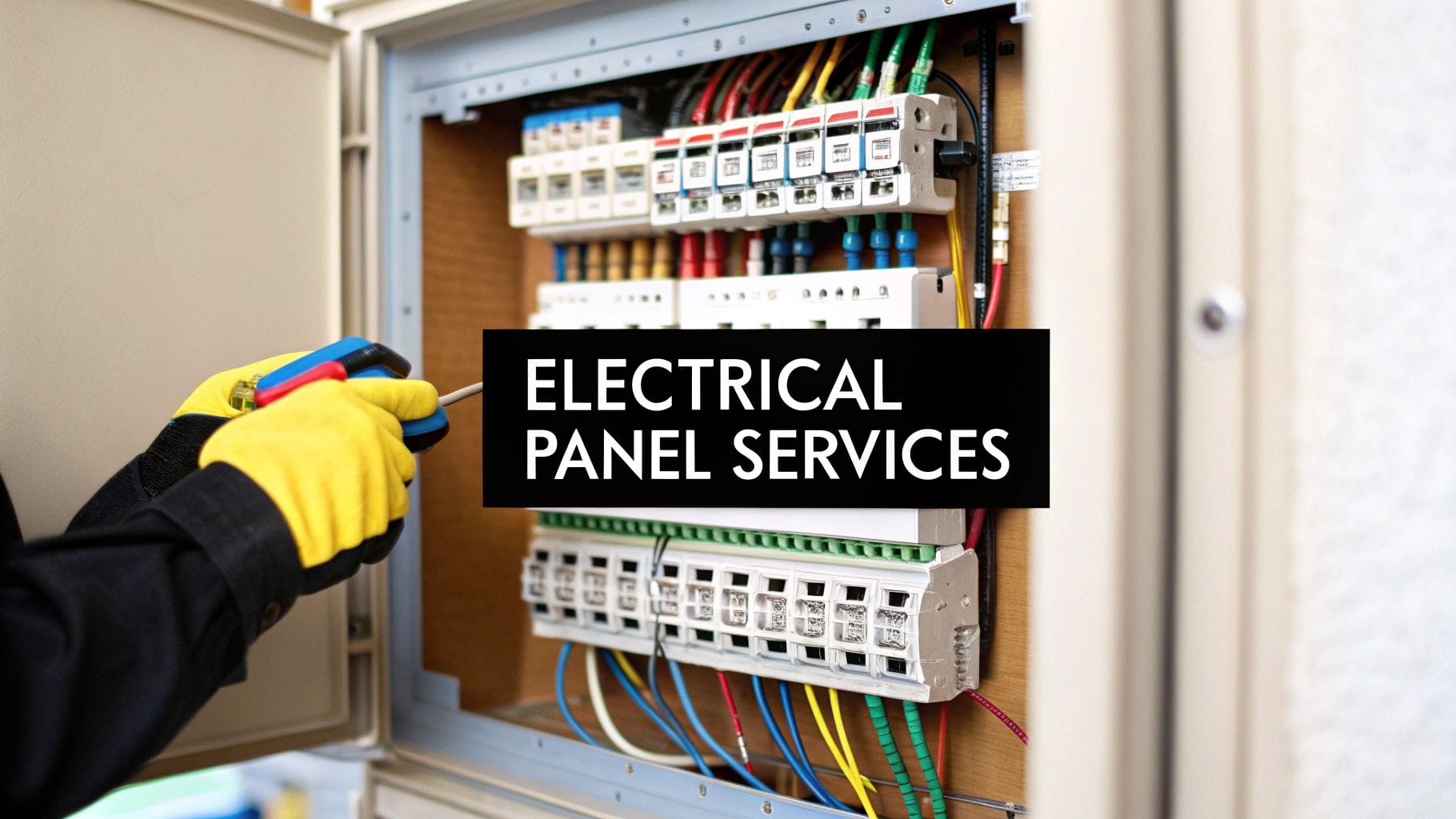
Your home's electrical panel is the unsung hero, quietly managing power for everything from your morning coffee to your nightly Netflix binge. Honestly, most of us only think about it when things go wrong, but professional electrical panel services are about more than just emergencies. They are crucial for keeping your home safe, efficient, and ready for the future.
Contents
- 1 Understanding Your Home's Electrical Command Center
- 2 Warning Signs Your Electrical Panel Needs Professional Help
- 3 A Breakdown of Key Electrical Panel Services
- 4 Powering Modern Technology Like EV Chargers and Smart Homes
- 5 Navigating Costs, Codes, and Timelines
- 6 Why a Licensed Local Electrician Is Non-Negotiable
- 7 A Few Common Questions About Electrical Panels
Understanding Your Home's Electrical Command Center
Think of your electrical panel as the heart of your home's power system. It's the single most important piece of equipment for distributing electricity safely, yet it’s often tucked away in a garage or basement, completely ignored until something goes wrong. Getting to know its role is the first step toward keeping your home powered safely and reliably.
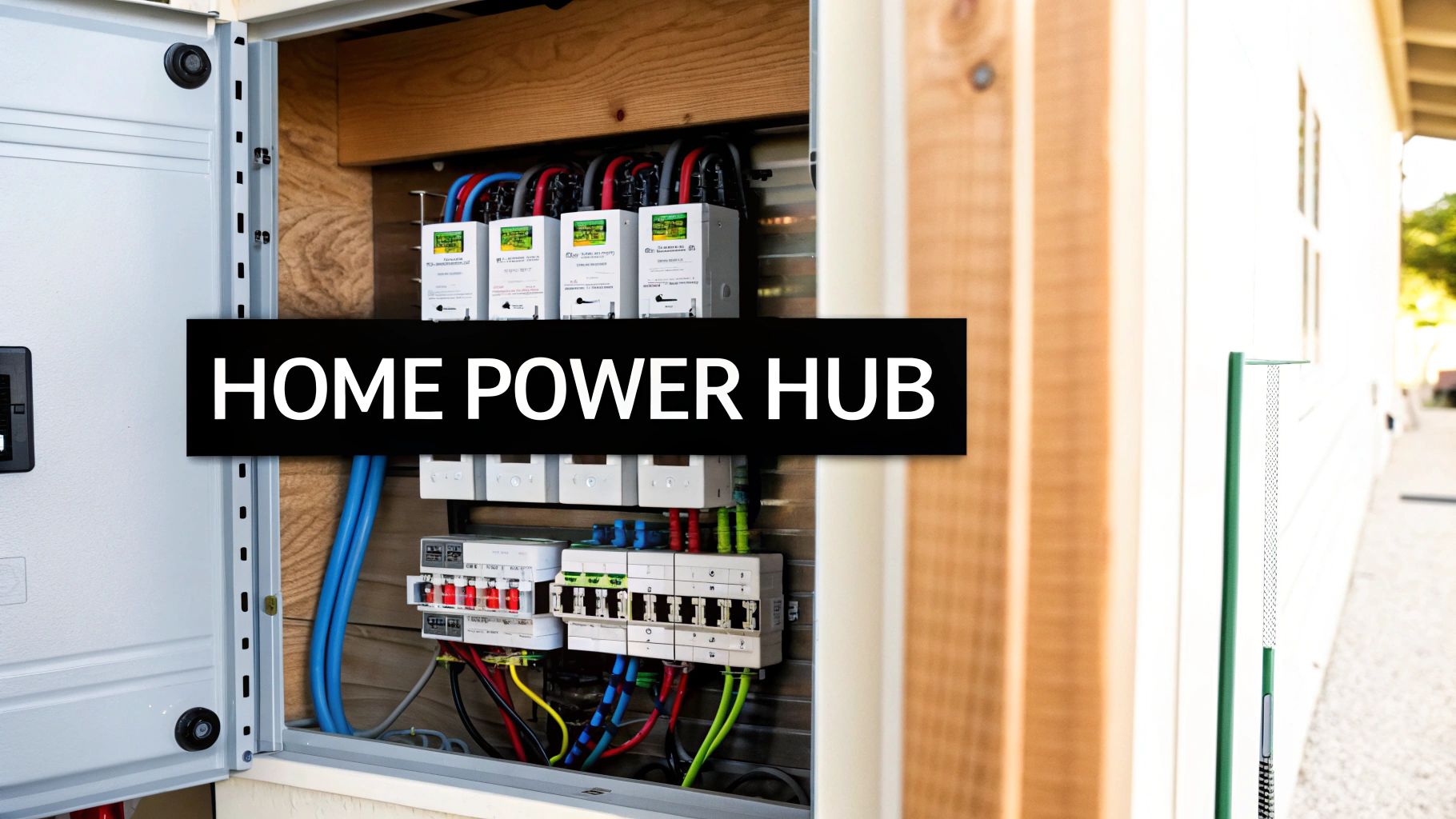
It’s easy to overlook that simple metal box. But inside, a complex system is constantly working to keep your lights on and your family safe.
The Core Components and Their Roles
Let me explain what’s going on inside with a simple analogy: your panel is like a traffic controller for electricity. It takes the main power line coming into your house from the utility and splits it into smaller, manageable circuits that feed different areas.
Here are the key players:
- Main Breaker: This is the big kahuna, the master switch. It controls every bit of power flowing into your home and can shut everything down in an emergency.
- Circuit Breakers: These are the individual safety switches for each circuit. If a circuit gets overloaded—say, you run the microwave and the toaster at the same time—the breaker "trips" to cut the power. This stops wires from overheating and prevents fires.
- Bus Bars: Think of these as the main highways inside the panel. These metal strips take power from the main breaker and distribute it out to all the individual circuit breakers.
This whole setup is a massive safety upgrade from the old-school fuse boxes you might find in older homes. Instead of having to replace a melted fuse every time there’s an overload, modern panels just need a quick flip of a switch to get the power back on (once you’ve unplugged the toaster, of course).
Why Your Panel's Capacity Matters More Than Ever
Our hunger for electricity has exploded. It’s a huge shift. In fact, as of 2024, there are over 420 million electrical panels installed globally. The biggest driver for new installations and upgrades is us—homeowners with older panels that just can't keep up with EV chargers, smart home systems, and all our high-draw appliances. You can dig into more of the data on the electrical panel market in this detailed report.
This is exactly why a panel's capacity—measured in amps—is so critical today. A 100-amp panel used to be the gold standard, but it can easily get overwhelmed in a modern home running central air, charging an electric vehicle, and powering a home office. This is where professional electrical panel services come in, helping you modernize your home’s power grid so it can handle the way you actually live.
Warning Signs Your Electrical Panel Needs Professional Help
Your home’s electrical panel is the strong, silent type, but it absolutely sends out distress signals before a major failure. Ignoring these warning signs is like ignoring the check engine light on your car—it’s a gamble that can lead to dangerous and expensive outcomes. Recognizing the symptoms early is key to getting professional help before a small issue becomes a serious hazard.
Frequent and Unexplained Breaker Trips
Think of a circuit breaker as a diligent safety guard. Its one job is to cut power when it senses a circuit is overloaded, preventing wires from overheating and potentially causing a fire. So, if a breaker trips every time you use the toaster and microwave at the same time, it’s just doing its job.
However, if a breaker trips frequently for no apparent reason, that’s a red flag. This could mean the breaker itself is old and failing, or there's a more serious wiring issue somewhere in the circuit. It’s the panel’s way of crying for help, and it’s a clear signal that a professional diagnosis is needed.
Dimming or Flickering Lights
Have you ever noticed the lights dim for a second when the air conditioner or refrigerator kicks on? This is a classic symptom of an overloaded or outdated electrical panel struggling to meet your home's power demands. It's a sign that your electrical system is stretched to its absolute limit.
While a minor flicker might seem harmless, it points to a significant power draw that your panel can't handle. Over time, this constant strain can lead to damaged appliances, overheated wiring, and a worn-out panel. Honestly, it's one of the most common signs that an electrical panel upgrade is on the horizon.
"A circuit breaker that constantly trips is more than an annoyance; it is a critical safety device indicating that the circuit is drawing more current than it can safely handle. Ignoring this can lead to overheating and is a leading, yet preventable, cause of electrical fires."
Physical Signs of Trouble You Can See and Smell
Sometimes, the most urgent warnings are the ones you can detect with your own senses. A professional electrician should inspect your panel immediately if you notice any of the following, as these can indicate an imminent fire risk:
- A Distinct Burning Odor: A sharp, acrid smell similar to burning plastic coming from your panel is a major red flag. This often means a wire's insulation is overheating and melting, or a circuit breaker is failing dangerously.
- Visible Scorch Marks: Black or brown discoloration on or around the circuit breakers or the panel itself is evidence of overheating or arcing—a dangerous electrical discharge.
- Odd Noises: Your panel should be silent. Any buzzing, sizzling, or humming sounds point to a loose connection or a failing breaker that requires immediate attention from an expert.
For a deeper dive into diagnosing electrical issues, you can learn more about our approach to electrical troubleshooting. Recognizing these problems is the first step, but a professional assessment is crucial for safety.
To help you connect the dots, we've put together a quick reference guide. This table breaks down what these common symptoms often mean and the level of urgency for each.
Common Electrical Panel Problems and What They Mean
| Symptom | Potential Cause | Risk Level | Recommended Action |
|---|---|---|---|
| Frequently Tripping Breakers | Overloaded circuit, short circuit, or a failing breaker. | Medium to High | Unplug devices from the circuit and call a licensed electrician. |
| Dimming or Flickering Lights | Overloaded panel or main service, loose neutral connection. | Medium | Schedule a panel inspection and load calculation. |
| Burning Smell from Panel | Overheating wires, melting insulation, or a failing breaker. | High | Immediately call a licensed electrician for emergency service. |
| Buzzing or Sizzling Sounds | Loose wiring, arcing electricity, or a defective breaker. | High | Contact a professional electrician right away for an inspection. |
| Scorch Marks on Outlets/Panel | Dangerous overheating, electrical arcing, or bad wiring. | High | This is an emergency. Call a certified electrician immediately. |
Remember, your electrical panel is the heart of your home's power system. These aren't issues to put on the back burner. A quick professional check-up can prevent major damage and keep your home safe.
A Breakdown of Key Electrical Panel Services
So, you’ve spotted one of the warning signs, or maybe you’re just planning a big home upgrade. Now what? When you call an electrician for electrical panel services, you're tapping into a specialized field that keeps your home running safely and smoothly. It’s not just about flipping switches; it’s about making sure your home's electrical heart can handle the demands of modern life.
Let me explain the main types of services you might need. Knowing the difference between a simple repair, a capacity upgrade, and a full-blown replacement will help you understand what to expect and why each one is critical in its own right. From a quick fix to a complete system overhaul, each service addresses a specific need to keep your power flowing safely.
Electrical Panel Repairs
Think of panel repairs as targeted fixes for specific problems. This isn't about overhauling your entire system but zeroing in on a single component that's failing or has become a safety risk. A repair is often the right call when most of your panel is in good shape, but one part is causing all the trouble.
Common reasons for a panel repair include:
- A Faulty Circuit Breaker: Sometimes a single breaker just wears out. It trips constantly, even without an overload. Swapping it out is a straightforward repair that restores safety and function to that circuit.
- Loose Wiring or Connections: Over time, connections inside the panel can work themselves loose, leading to dangerous arcing, buzzing sounds, and overheating. An electrician can safely get in there and tighten everything up, eliminating the hazard.
- Damage from Water: A leak near your panel can cause corrosion and rust, creating some serious safety issues. A repair might involve cleaning terminals and replacing damaged parts, but only if the overall panel is still sound.
Electrical Panel Upgrades
This is where things get more involved—and honestly, more exciting for homeowners. An electrical panel upgrade is all about increasing your home's total power capacity. The most common move is from an older 100-amp panel to a modern 200-amp panel, which is now the standard for new home construction.
Why would you need more power? Well, your 1970s panel simply wasn't built to handle a 21st-century lifestyle. Adding a Tesla charger, a new hot tub, or central air to a 100-amp service is like trying to push a river through a garden hose. It just won’t work safely. You can learn more about the specifics of breakers and panels on our residential services page.
An upgrade doesn't just give you more juice; it gives you peace of mind and gets your home ready for the future.
This decision tree gives you a simple guide for when to act on electrical panel symptoms.
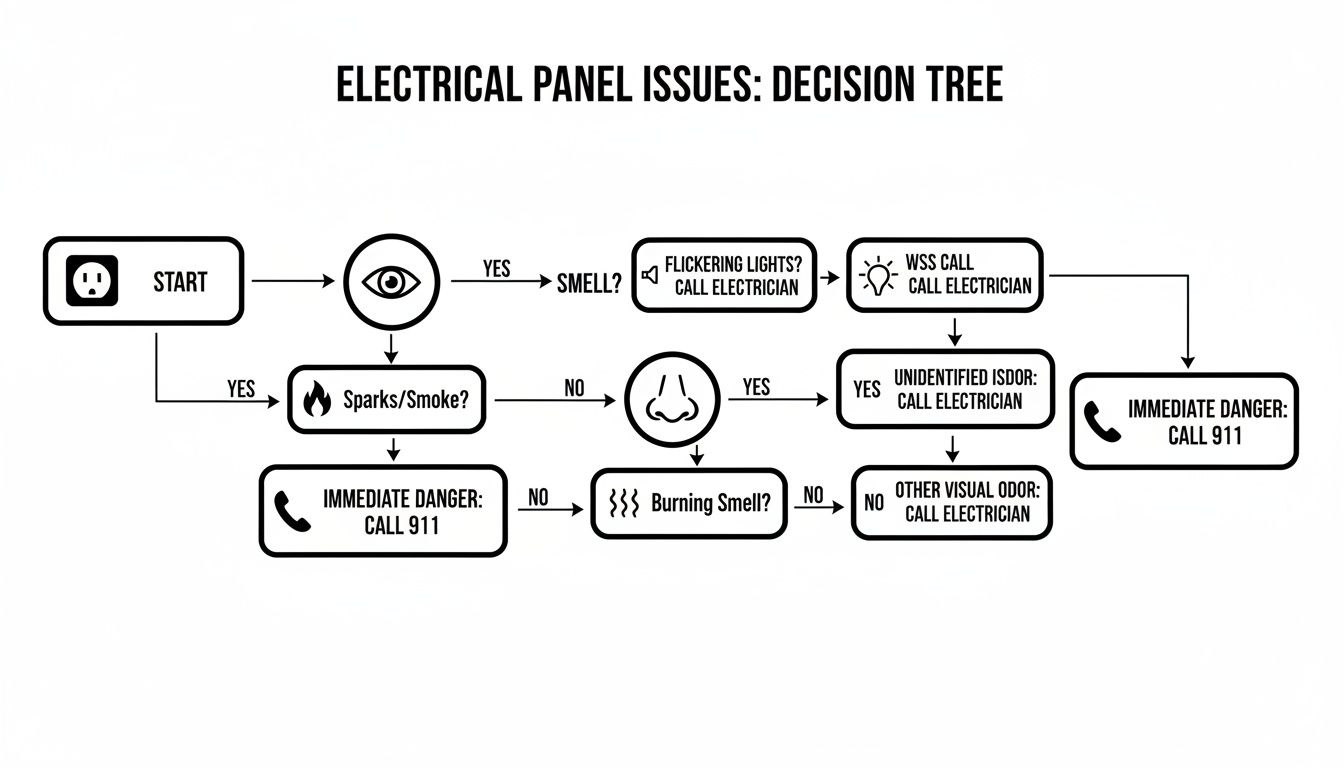
The key takeaway here is that any weird sensory cues—sight, sound, or smell—coming from your panel are direct signals to stop and call a professional immediately. Don't wait.
Full Panel Replacements
A full replacement means ripping out the entire old panel—the box, breakers, and sometimes the meter base—and installing a completely new system. This service is essential when a panel isn't just outdated but is actively dangerous.
Here’s the thing: some older panels from manufacturers like Federal Pacific and Zinsco have known design flaws that make them significant fire hazards. These panels can fail to trip during an overload, causing wires to overheat and ignite. If you have one of these, any good electrician will tell you it needs to be replaced. Period.
Other reasons for a full replacement include severe water damage, widespread corrosion, or physical damage to the panel box itself.
A full panel replacement is a proactive investment in your family's safety. It eliminates known hazards from obsolete equipment and brings your home's electrical system up to modern safety codes, significantly reducing the risk of an electrical fire.
The demand for safer, more capable panels is driving huge growth in the industry. The global electric control panel market was valued at USD 6.37 billion in 2024 and is projected to nearly double to USD 12.15 billion by 2034, with North America leading the charge. This growth is fueled by homeowners and businesses needing retrofits for EV chargers, smart homes, and other modern technologies.
Whether you need a quick fix or a complete overhaul, understanding these core electrical panel services empowers you to make the best decisions for your home’s safety and future.
Powering Modern Technology Like EV Chargers and Smart Homes
Homes today are evolving fast, and your electrical system has to keep pace. This is where professional electrical panel services really show their value, bridging the gap between old-school wiring and today's power-hungry tech. Think of your electrical panel as the heart of your home’s power grid—it's the single most important component for safely adding things like EV chargers and smart home networks.
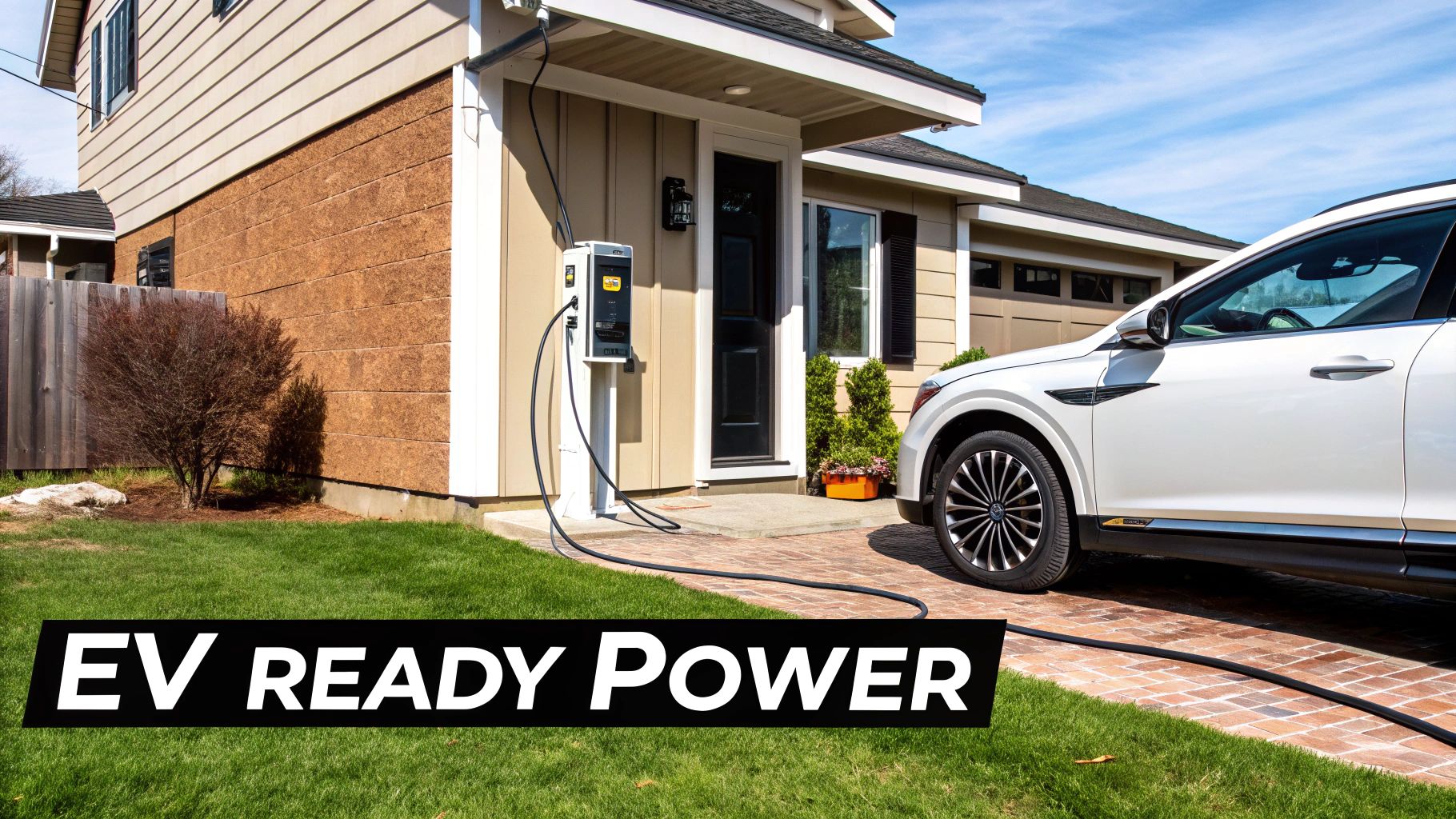
Let me put it another way. Imagine your home's electrical capacity is a two-lane road. Plugging in a high-draw device like an EV charger is like adding a massive on-ramp without widening the highway first. You’re just asking for a traffic jam—in this case, overloaded circuits and breakers that trip constantly.
The Power Demands of EV Chargers
Electric vehicles are becoming a common sight, and for good reason. But charging one at home is a serious electrical event. A Level 2 EV charger, which is what most people install, can pull between 30 to 50 amps of continuous power, often for hours at a time.
Here's the problem: many older homes still run on a 100-amp panel. That one EV charger could hog up to half of your home's entire electrical budget while it’s running. Now, picture what happens when the central air kicks on, someone starts the electric dryer, and you preheat the oven. The math just doesn't work, and your old panel will be pushed way past its safe limits.
An electrical panel upgrade isn't just a suggestion when installing an EV charger; in most cases, it's a safety requirement. It guarantees your system can handle that sustained, heavy load without overheating, preventing a fire hazard and protecting your investment.
To do this right, a licensed electrician runs a detailed load calculation to see if your current panel is up to the task. If not, upgrading to a 200-amp panel is the standard move. It gives you the headroom you need for the charger and everything else in your home. You can dig deeper into this by checking out our guide on EV charger installation.
Integrating Smart Home Systems
It's not just the big-ticket items like EVs that are changing the game. The slow creep of smart home devices also puts a unique kind of strain on your electrical system. While one smart bulb or speaker is no big deal, a fully integrated smart home is a different beast entirely.
Think about the combined load of all these devices running at once:
- Smart thermostats and security cameras that are always on.
- Automated lighting systems and motorized window shades.
- High-end home entertainment systems and networked kitchen appliances.
All these gadgets need clean, stable, and uninterrupted power to function correctly. An old panel with loose connections or failing breakers can cause power flickers and surges that damage sensitive electronics or make your smart systems go haywire. A modern panel provides the solid, reliable foundation these systems need to operate as designed.
The Rise of the Smart Panel
The evolution doesn't stop with a standard 200-amp panel, either. Honestly, smart electric panels are a game-changer for managing home energy. The global market for these devices hit USD 7.6 billion in 2024 and is expected to climb to USD 13.4 billion by 2030. These advanced panels give you circuit-level monitoring, detailed energy reports, and seamless integration with solar, batteries, and EV chargers—all from an app on your phone. You can find more market insights over at strategicmarketresearch.com.
This technology puts you in the driver's seat, letting you optimize energy use and get ready for a fully electrified future. Upgrading your panel isn't just about solving today's problems; it's about building a home that's ready for whatever comes next.
Let's be honest, nobody likes surprises when it comes to home projects, especially with something as critical as your electrical system. When you’re looking at electrical panel services, knowing what to expect with costs, timelines, and the local rules of the road makes the whole thing feel a lot less intimidating. It’s about building trust and helping you make a smart call for your home’s safety.
It’s impossible to give a flat rate because every single job is different. A simple fix, like swapping out a single grumpy breaker, is a world away from a full upgrade to a 200-amp service so you can finally install that hot tub or EV charger you’ve been eyeing.
What Shapes the Cost of Panel Work
The final price tag for any panel work really boils down to a few key things. Understanding them helps make sense of why quotes can vary and what you're actually paying for. This is about more than just parts; it’s about the complexity and safety of the work being done.
Here’s what moves the needle:
- Scope of Work: Are we doing a targeted repair, a capacity upgrade (like going from 100 amps to 200 amps), or a full-blown panel replacement because the old one is a safety hazard?
- Panel Location and Accessibility: A panel sitting in a wide-open garage is a much simpler job than one buried in a finished basement wall that needs drywall surgery.
- Existing Wiring Condition: If the wiring hooked up to your panel is old, brittle, or just not up to modern standards, it might need some attention to pass inspection, which adds to the job.
- Permit and Inspection Fees: These are non-negotiable costs set by your local city or county. They’re there to make sure the work is done right and, most importantly, safely.
The Non-Negotiable Role of Codes and Permits
Speaking of permits, this is one area where you absolutely cannot cut corners. Local building codes, which are usually based on the National Electrical Code (NEC), are in place for one simple reason: your safety. They’re a rulebook designed to prevent shocks, fires, and other electrical disasters.
Adhering to local codes isn't just about checking a box; it's a critical safety measure. A permitted and inspected job is your guarantee that the work meets the highest safety standards, protecting your family, your home, and your investment.
A licensed, professional electrician—like us here at Black Rhino Electric—handles this entire process for you. We take care of the paperwork, schedule the inspections with local authorities, and make sure every detail of the job meets or exceeds the strict requirements for places like Weber, Davis, and Salt Lake counties. This process ensures the work is not only safe but also officially on the books, which is a big deal for your homeowner's insurance and any future sale of your property.
Understanding Project Timelines
You know what? A lot of homeowners are surprised by how quickly most panel work gets done. While every job has its own quirks, here are some general timelines to help you plan.
| Project Type | Typical Duration | Notes |
|---|---|---|
| Simple Repair | 1-3 hours | This covers things like replacing a faulty breaker or tightening loose connections. |
| Panel Upgrade/Replacement | 6-10 hours | A standard swap-out can often be finished in a single workday. |
| Complex Rewiring Projects | Multiple days | If we’re also running new circuits or upgrading your service, it’ll take longer. |
The most important thing to remember is that your power will be off while we work. A good electrician will work efficiently to keep that downtime to a minimum and will walk you through the schedule beforehand so you know exactly what to expect. That kind of clear communication is the hallmark of trustworthy electrical panel services.
Why a Licensed Local Electrician Is Non-Negotiable
When it comes to your home's electrical system, the stakes are just too high for shortcuts. While a DIY approach is great for painting a room or building shelves, it becomes incredibly dangerous the moment you open your electrical panel. Professional, high-quality electrical panel services aren't a luxury; they're an absolute necessity for your family's safety and your home's integrity.
Trying to tackle panel work yourself or hiring an unlicensed handyman can lead to catastrophic results. A single mistake—a loose connection you didn't even notice or an improperly sized breaker—can create a serious fire hazard that puts everything you care about at risk.
The Dangers of Unqualified Electrical Work
Here’s the thing about electricity: it's powerful and completely unforgiving. Without years of training and a deep understanding of electrical theory and local codes, it's dangerously easy to create a hidden problem that might not show itself for months or even years.
The risks are severe, and they stack up quickly:
- Fire Hazards: Improperly installed wiring or breakers are a leading cause of electrical fires. These can smolder behind your walls, completely undetected, until it’s far too late.
- Failed Inspections: If you ever plan to sell your home or complete a permitted renovation, any unpermitted or non-compliant electrical work will bring the process to a screeching halt. That means costly and time-consuming rework.
- Voided Homeowner's Insurance: Most insurance policies include clauses that can deny a claim if the damage was caused by unpermitted or non-professional electrical work. That shortcut could literally cost you everything in a fire.
- Severe Electric Shock: Live electrical panels carry enough voltage to cause fatal electrocution. A licensed electrician has the training, specialized tools, and protective gear to work on these systems safely.
Your Checklist for Hiring the Right Electrician
Choosing the right professional is the single most important decision you'll make for any electrical project. It’s about more than just getting the job done; it’s about ensuring it’s done safely, correctly, and will last for years to come. You know what? That kind of peace of mind is priceless.
Here’s a simple checklist to run through when you're looking for an electrical contractor:
- Licensing and Insurance: This is the first and most critical step. Verify they are a licensed contractor in Utah and carry both liability insurance and workers' compensation. This protects you from any accidents that might happen on your property.
- Deep Knowledge of Local Codes: A true local electrician will have extensive experience with the specific code requirements in Weber, Davis, and Salt Lake counties. That's how your project passes inspection the first time, without a hitch.
- Transparent Pricing: A trustworthy professional provides clear, upfront pricing in a written estimate. They should be able to walk you through every line item and answer your questions without making you feel pressured.
- Proven Track Record: Look for a company with a strong local reputation, positive customer reviews, and a gallery of completed work. It’s proof of their commitment to quality and customer satisfaction.
Hiring a licensed electrician isn't just another expense—it's an investment in safety, compliance, and long-term reliability. It's the only way to guarantee that the heart of your home's electrical system is in expert hands.
A Few Common Questions About Electrical Panels
Diving into your home's electrical system can feel a little confusing. To clear things up, we’ve put together a few answers to the questions homeowners ask us most about their panels and why this gear is so crucial for a safe, modern home. Here are the straightforward answers you’re looking for.
How Often Should I Have My Electrical Panel Inspected?
It’s a smart move to have a pro look at your panel every 3 to 5 years, especially if you live in an older home. An inspection is also non-negotiable before starting certain projects.
You should definitely schedule an inspection if you're:
- Planning a major remodel or adding a new room.
- Putting in a big, power-hungry appliance like a hot tub or an EV charger.
- Noticing any of those nagging warning signs—breakers that trip all the time, lights that flicker, or weird buzzing sounds from the panel.
What's the Difference Between a Fuse Box and a Circuit Breaker Panel?
The real difference is how they stop an overload. A fuse box uses single-use fuses with a tiny wire inside that literally melts to cut the power, meaning you have to replace the whole fuse every time.
A modern circuit breaker panel, on the other hand, uses switches that just "trip" to the off position. You can simply flip them back on. They're far safer, more convenient, and built for the way we live today.
Will a Panel Upgrade Increase My Home's Value?
Absolutely. A modern electrical panel is a huge selling point that can boost your home's value and make it much more attractive to buyers.
It’s a clear signal that the house is safe, up to current electrical codes, and ready for the future. In a competitive market, having a robust, updated electrical system isn’t just a feature; it’s a major advantage.
Can I Replace a Circuit Breaker Myself?
Here’s the thing: while it might look simple on a YouTube video, working inside your electrical panel is extremely dangerous. It's a job that should only ever be done by a licensed electrician.
The risk of severe, even fatal, electrical shock is very real. On top of that, a small mistake like a loose connection can create a hidden fire hazard that you won't know about until it's too late. For your own safety and peace of mind, always call a professional.
Your family's safety is too important to leave to chance. At Black Rhino Electric, our licensed electricians deliver expert, code-compliant work you can trust. If you have more questions or need a professional on-site, call us at 385-396-7048 or request a free quote today.