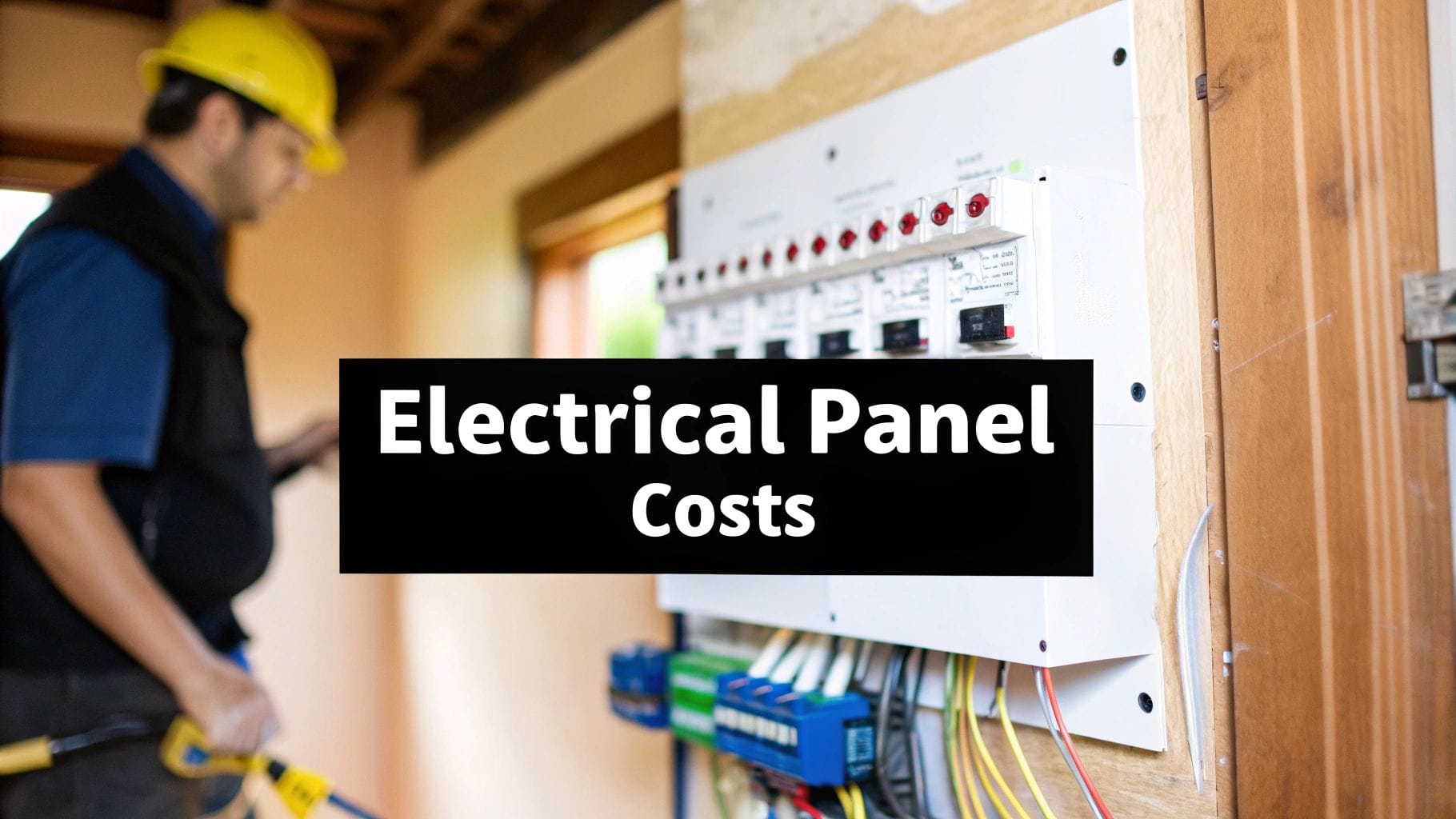
Feeling like your home's electrical system is stuck in the past? When you're planning a big home project, the first question is always about the bottom line, and understanding the average cost of electrical panel upgrade is critical. For most homeowners in Utah, this essential update usually lands somewhere between $1,200 and $2,000, but that number is shaped by your specific home's needs.
Contents
- 1 Your Quick Guide To Utah Electrical Panel Upgrade Costs
- 2 Why An Electrical Panel Upgrade Is A Smart Investment
- 3 Key Factors That Determine The Final Cost
- 4 Hidden Costs And Unexpected Project Add Ons
- 5 The Rise Of Smart Panels To Future Proof Your Home
- 6 Why You Should Always Hire A Licensed Electrician
- 7 Your Next Steps For A Safe Electrical Upgrade
Your Quick Guide To Utah Electrical Panel Upgrade Costs
Let's get straight to the numbers. Understanding the cost of a panel upgrade is the first real step toward budgeting for a safer, more capable home. While national averages are a decent starting point, what really matters are the local factors right here in Northern Utah—across Weber, Davis, and Salt Lake counties. Things like local labor rates, the age and construction of your home, and specific city code requirements are what truly shape the final price tag.
Nationally, the average for swapping an old panel for a new 200-amp model runs about $1,600. That typically covers the new panel, main breaker, proper grounding, permits, and labor to get the old one out and the new one in. But the scope of the project can swing that price dramatically. A straightforward 100-amp to 200-amp upgrade might cost $1,200 to $1,500. On the other hand, a heavy-duty 400-amp upgrade for a large home with power-hungry additions like an EV charger could push the cost well over $10,000. You can find more details on these cost factors at DIY Projects.
A Snapshot Of Utah Pricing
To give you a clearer picture, this data chart shows the typical low, average, and high-end costs you can expect for a standard panel upgrade in our area.
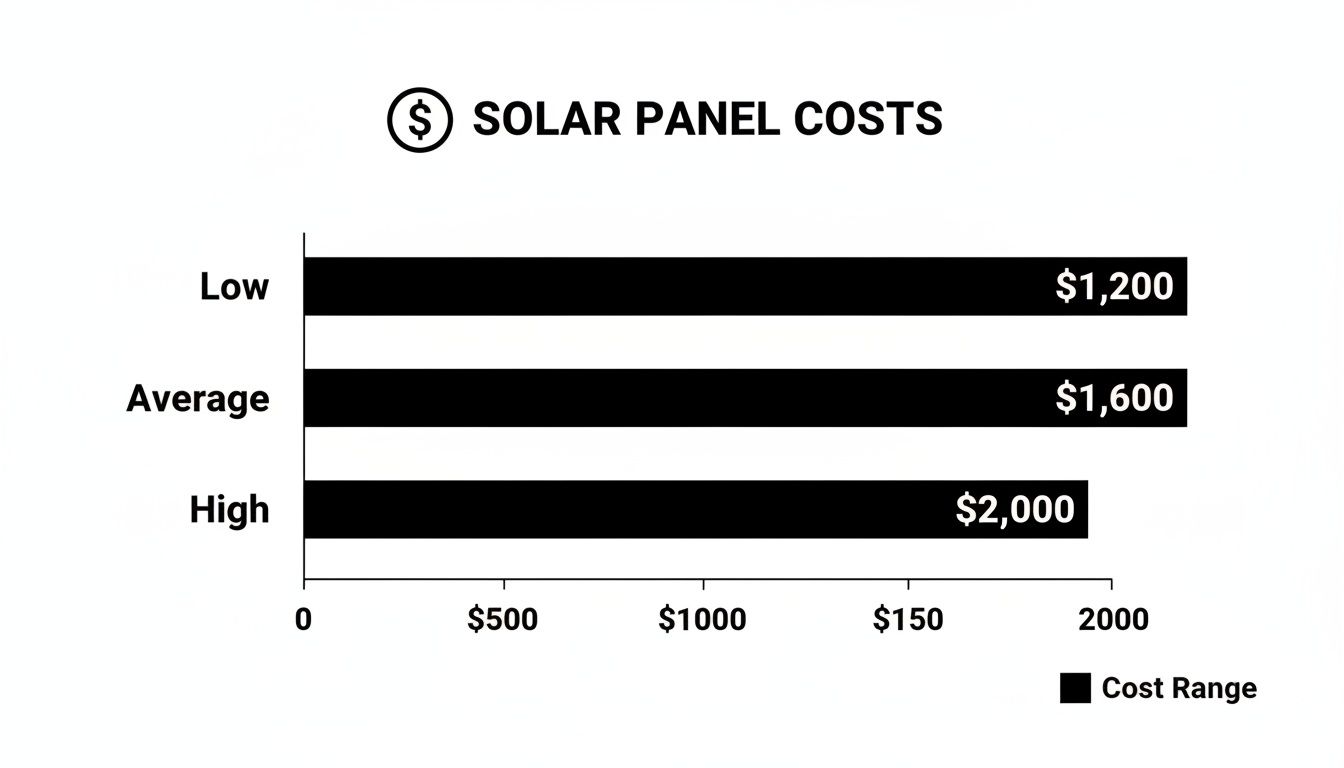
As you can see, while the average sits comfortably around $1,600, simpler jobs can be more affordable. It’s the more complex projects that will naturally command a higher price.
This next table breaks things down by amperage, giving you a quick reference for where your specific project might land.
Estimated Electrical Panel Upgrade Costs in Northern Utah
Here's a look at typical price ranges for residential panel upgrades based on amperage, including parts and standard labor.
| Amperage Upgrade | Typical Northern Utah Price Range | Best For |
|---|---|---|
| Upgrade to 150 Amps | $1,300 – $1,800 | Smaller to mid-sized homes with moderate electrical needs and no major high-power appliances. |
| Upgrade to 200 Amps | $1,600 – $2,500 | Most modern homes, supporting additions, central air, hot tubs, and future EV chargers. |
| Upgrade to 400 Amps | $2,800 – $5,000+ | Large luxury homes with extensive smart systems, multiple EV chargers, or demanding workshop equipment. |
Remember, these are ballpark figures. The only way to get a firm price is to have a licensed electrician from a trusted company like Black Rhino Electric evaluate your home's unique setup.
Why An Electrical Panel Upgrade Is A Smart Investment
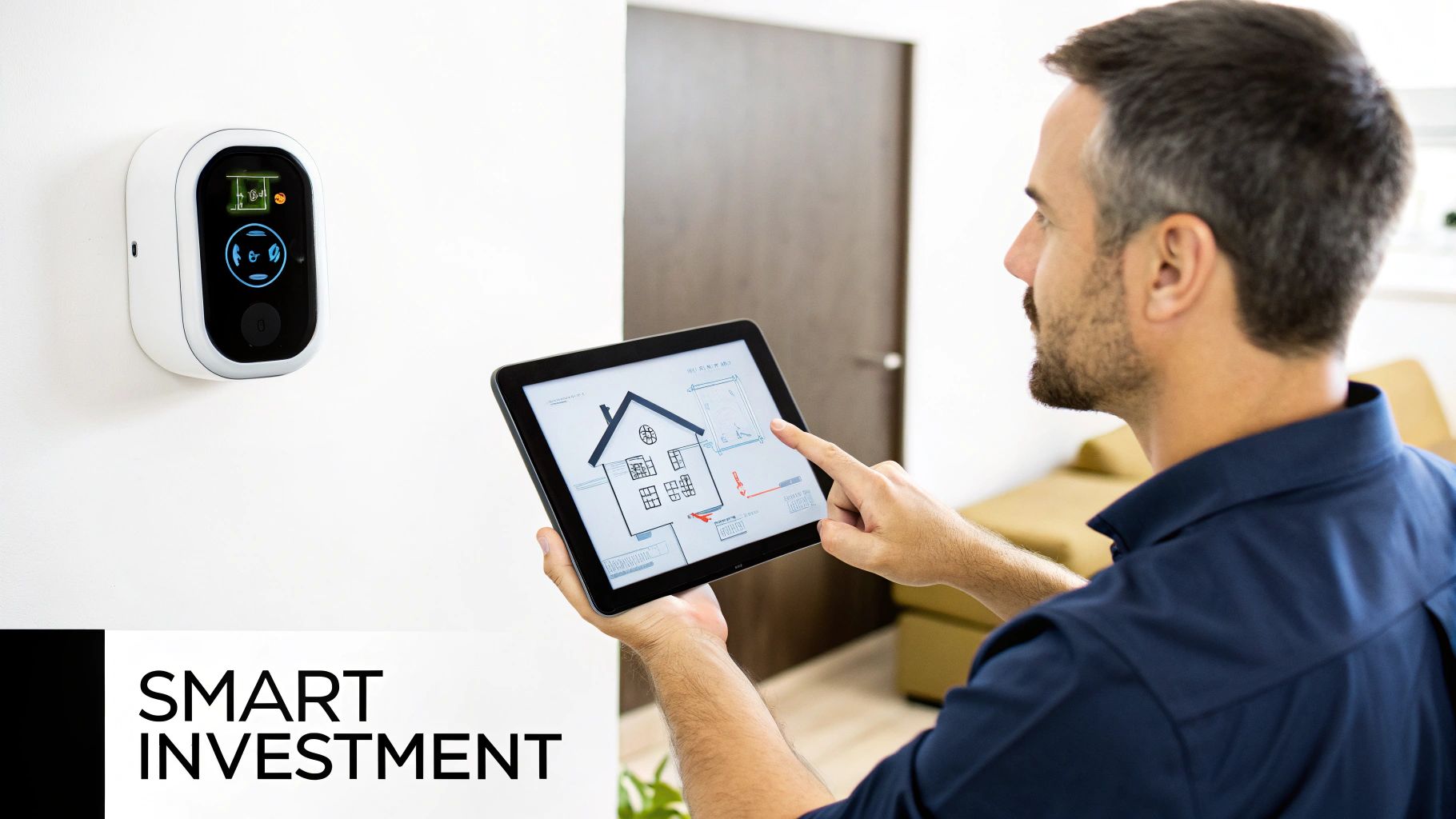
Ever stop to think about why upgrading your electrical panel is such a big deal? It’s easy to see it as just another expense, but honestly, it’s a direct investment in your home’s safety, capacity, and future. It's the difference between a system that’s constantly struggling and one that effortlessly supports the way you live today.
Think of an old electrical panel like a narrow, two-lane country road trying to handle rush-hour city traffic. It just wasn't built for the demands of modern life—from computers and smart TVs to that EV charger you’ve been looking at. Ignoring the warning signs of an overloaded system is a gamble you really don’t want to take.
Warning Signs Your Panel Is Overloaded
Your home has ways of telling you when its electrical heart is straining. Paying attention to these signals is the key to preventing bigger, more dangerous problems down the road.
Here are the common signs that your panel is due for an upgrade:
- Frequently Tripped Breakers: If you can't run the microwave and the toaster at the same time without something tripping, your panel is screaming for help. This is a classic sign of overloaded circuits.
- Flickering or Dimming Lights: Do your lights dip when a big appliance like the air conditioner kicks on? That points to a major power draw that your current system just can't handle smoothly.
- Buzzing or Crackling Sounds: Your electrical panel should be silent. Any audible noise—buzzing, humming, or crackling—is a serious red flag. It could mean loose wiring or a failing breaker, which is a fire risk.
- An Outdated Fuse Box: If your home still has an old-fashioned fuse box instead of modern circuit breakers, an upgrade isn't just a good idea—it's essential for safety and insurability.
As experienced electricians, we can't stress this enough: "An outdated or overloaded electrical panel is one of the leading causes of residential electrical fires. Upgrading is a proactive measure that significantly reduces this risk, protecting both your property and your family."
Unlocking Your Home's Full Potential
A panel upgrade isn't just about fixing problems; it's about creating opportunities. It’s the foundational step that unlocks your home’s true potential and gets it ready for whatever comes next.
Here’s the thing. With a new, higher-capacity panel, you can confidently move forward with those home improvement projects you've been dreaming about.
- Future-Proofing for New Technology: Planning to install an EV charger? A modern 200-amp panel is often a prerequisite. Plus, research shows that home EV charging is significantly cheaper than public stations, saving the average driver hundreds of dollars a year.
- Enabling Major Renovations: Adding a new home office, a workshop, or a hot tub requires more power. An upgraded panel provides the capacity needed to power these additions safely and reliably.
- Increasing Home Value: A modern, code-compliant electrical system is a huge selling point. It gives potential buyers peace of mind and can directly contribute to a higher resale value.
- Improving Insurance Eligibility: Many insurance companies offer lower premiums for homes with updated electrical systems because the risk of fire is substantially lower. Some may even refuse to cover homes with known hazardous panels, like Federal Pacific or Zinsco.
Key Factors That Determine The Final Cost
Ever look at a few quotes for the same job and wonder why the numbers are all over the map? When it comes to the cost of an electrical panel upgrade, I promise you it’s not random. Several key factors directly influence the final price, and understanding them puts you in the driver's seat.
Think of it this way: a professional quote from an authoritative source like Black Rhino Electric is a recipe with three main ingredients: the physical parts (materials), the expert skill to install them (labor), and the official approval to do the work (permits). Each one plays a critical role.
Materials: The Foundation Of Your New System
First up is the hardware itself. This includes the new panel, all the circuit breakers, wiring, and any necessary conduit. The price of these materials is tied directly to the amperage you choose.
- The Panel Box: A 150-amp panel will naturally cost less than a robust 400-amp model designed for a large home with heavy power demands like an EV charger or a hot tub.
- Circuit Breakers: Your home needs specific types of breakers to meet modern safety codes. Arc-Fault (AFCI) and Ground-Fault (GFCI) breakers are more expensive than standard ones, but they're required in areas like kitchens, bathrooms, and bedrooms to prevent fires and shocks. This isn't an upsell; it's a non-negotiable safety feature based on our expertise.
- Wiring and Conduit: The amount of new copper wiring and protective conduit needed depends on the job. A simple panel swap might need very little, but relocating a panel to a new wall will require much more.
Labor: The Value Of Expertise
The second key factor—and often the largest portion of the bill—is labor. You’re not just paying for a few hours of work; you're investing in a licensed electrician's experience, safety training, and deep knowledge of electrical codes. It's the difference between a job done and a job done right.
Labor costs can fluctuate based on complexity. An easy-to-access panel in a newer home might take just a few hours to replace. But a panel tucked away in a cramped crawlspace in an older house with outdated wiring? That’s going to require significantly more time and skill, increasing the labor cost.
A recent analysis of electrical projects showed that while basic panel replacements average between $1,300 to $1,800, labor is the dominant factor, often taking 4-8 hours for a standard single-family home. Complications like relocating the panel can add $1,500 to $4,000 to the bill purely due to the extra hours involved. For a comprehensive overview of how these costs add up, you can explore this complete 2026 pricing guide.
Permits And Inspections: The Seal Of Safety
Finally, you have permits and inspections. People sometimes see these as just administrative fees, but they are a non-negotiable part of a safe and compliant installation. Pulling a permit with your local municipality in Weber, Davis, or Salt Lake County ensures the work is done to the latest National Electrical Code (NEC) standards.
An official inspection by a city official after the work is complete is your ultimate assurance. It confirms that the installation is free of hazards, protecting your home and family from the risks of electrical fires.
Here’s what that process actually looks like:
- Applying for the Permit: Your electrician handles the paperwork and submits plans to the city.
- The Installation: The upgrade is performed according to code.
- The Final Inspection: A city inspector verifies the work, and once it passes, the project is officially closed out.
Skipping this step might save a few bucks upfront, but it can lead to massive headaches later, including failed home inspections during a sale, insurance claim denials, and, most importantly, serious safety risks. Understanding these three pillars—materials, labor, and permits—empowers you to read any contractor’s quote with real confidence.
Hidden Costs And Unexpected Project Add Ons
When you get a quote for a panel swap, that initial number is a solid starting point. But here's the honest truth, especially with older homes: the full picture sometimes doesn't reveal itself until we open things up. Think of it like a minor kitchen remodel—you pull down a cabinet and discover old plumbing or a soft spot in the wall. It’s frustrating, sure, but it has to be dealt with.
This isn’t about scaring you with worst-case scenarios. It’s about being prepared for potential "scope creep" so you can have an informed conversation with your electrician and avoid sticker shock on the final invoice. A good electrician will anticipate these possibilities, but some issues are impossible to see until the old panel is off the wall.
Let me explain. These unexpected add-ons are almost always related to safety and bringing your home's entire electrical service entrance up to current code.
Upgrading The Main Service Entrance And Meter Base
One of the most common surprises is finding out the main service cable—that thick wire running from the utility pole to your meter—is too small for the new panel's amperage. If you're upgrading to 200 amps, that original 100-amp cable simply won't cut it. This is a non-negotiable safety upgrade.
In the same vein, the meter base (the box holding your electric meter) might be old, corroded, or just not rated for the new service. The local utility company often requires an upgrade to a new meter base before they'll sign off on the increased power.
- Main Service Cable Upgrade: This involves replacing the main feeder line to your home. Expect this to add $500 to $1,500 to the project, depending on the length and complexity of the run.
- New Meter Base Installation: If required by the utility, a new meter base can cost between $400 and $850, including parts and the labor to coordinate with the power company.
It's essential to understand that these upgrades are not optional upsells. They are mandated by electrical code and your utility provider to ensure the system can safely handle the increased electrical load from your new panel.
Addressing Outdated Or Non-Compliant Wiring
Another frequent discovery, particularly in homes built before the 1980s, is wiring that just doesn't meet modern standards. When a new panel goes in, every circuit connected to it has to be brought up to code, which can uncover a few hidden issues.
Sometimes, the existing circuit wiring is physically too short to reach the new breakers in the new panel's layout. Other times, the inspection might reveal a lack of proper grounding or even hazardous aluminum wiring that needs remediation. These issues must be fixed before the city inspector will pass the job.
For homeowners thinking about the future, especially with the rise of electric vehicles, ensuring your whole system is ready is key. You can learn more about the specific requirements in our guide on EV charger installation.
The Cost Of Relocating Your Electrical Panel
Finally, what if your panel is in a spot that's no longer considered safe or compliant? Current codes prohibit panels in closets, bathrooms, or other hard-to-access areas. If your panel is tucked away in one of these spots, it will have to be moved.
Relocating a panel is a significant job. It involves extending every single circuit from the old location to the new one. The cost is heavily influenced by how far it has to move and the complexity of running all those new wires through walls, ceilings, or crawlspaces. A panel relocation can easily add $1,500 to $4,000 or more to the total project cost. By anticipating these potential add-ons, you can create a more realistic budget and ensure your project runs smoothly from start to finish.
The Rise Of Smart Panels To Future Proof Your Home
The simple breaker box, tucked away in a basement or garage, is evolving. It's becoming the intelligent heart of the modern home. We're entering an era where electrical systems do more than just manage power—they provide insight, control, and efficiency. This evolution is the smart panel, and it’s a game-changer for today's homeowners.
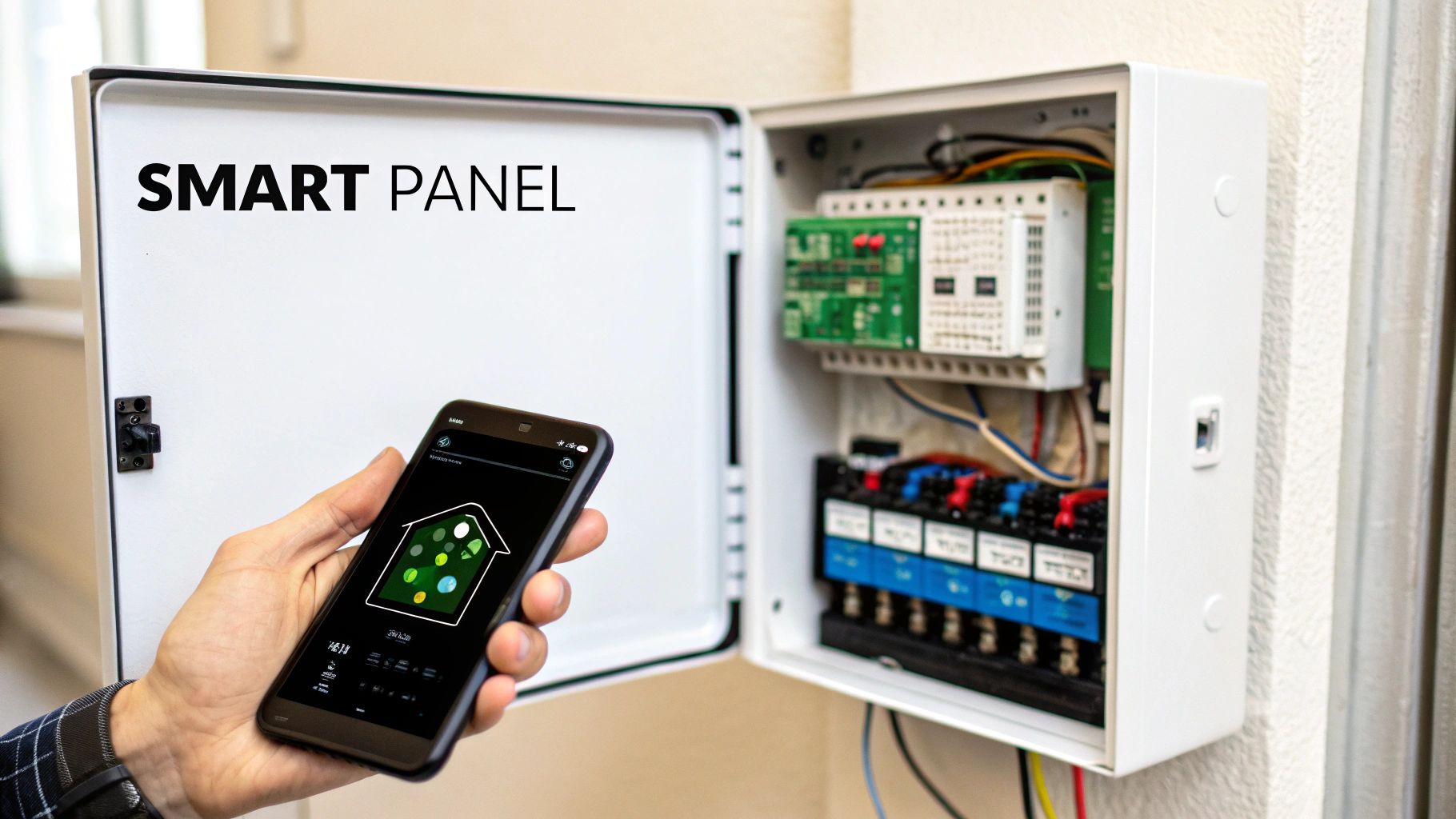
Let me explain. A smart panel does a lot more than just protect circuits. It connects to an app on your phone, giving you real-time energy monitoring, remote control over individual circuits, and seamless integration with solar panels, home batteries, and EV chargers.
What Makes A Smart Panel Different
Imagine being able to see exactly which appliances are the biggest energy hogs in your home with just a few taps on your phone. This technology allows you to pinpoint power drains, helping you make informed decisions to slash your monthly utility bills. It's the ultimate tool for anyone looking to proactively improve home energy efficiency.
A smart panel provides a level of control that was previously impossible. Here’s what that looks like in the real world:
- Real-Time Energy Monitoring: See a live view of your home's power consumption, circuit by circuit.
- Remote Circuit Control: Accidentally leave a light on? You can turn off that specific circuit from anywhere using your smartphone.
- Custom Alerts and Notifications: Get notified if a critical appliance, like your freezer, suddenly loses power.
- Energy Goal Setting: Set monthly energy goals and track your progress to reduce consumption and save money.
By providing detailed, actionable data, a smart panel empowers you to take direct control of your energy usage. It transforms your electrical system from a passive component into an active tool for managing your home and your budget.
The Cost And Long-Term Value
You know what? A smart panel upgrade does come with a higher upfront cost than a standard panel. Generally, you can expect to add between $1,000 to $2,500 to the total project cost for the smart panel hardware and specialized installation.
However, this isn't just an expense; it's a forward-thinking investment with a strong return. The global market for intelligent electrical panels is exploding, driven by the growth of smart homes and renewable energy. The market is projected to reach $8.09 billion by 2030. Many homeowners see energy bill reductions of 10-25% through better load management and energy insights.
When you factor in the long-term energy savings, the convenience of remote control, and the ability to integrate future technologies, the higher initial cost becomes much more justifiable. It is, without a doubt, the most effective way to prepare your home's electrical system for whatever comes next.
Why You Should Always Hire A Licensed Electrician
When it comes to home improvement, the DIY spirit is fantastic for painting a room or building a bookshelf. But an electrical panel upgrade is one job that absolutely, unequivocally, is not a weekend project. This isn't just about getting the job done right; it's about protecting your home, your family, and your investment from some pretty catastrophic risks.
Thinking about tackling this yourself to save a few bucks on the average cost of an electrical panel upgrade? Let’s be blunt about why this is a dangerous gamble. Improper installation can lead to a host of terrifying outcomes, from immediate electrocution hazards to hidden defects that could spark an electrical fire months or even years down the road. That isn't an exaggeration; faulty electrical work is a leading cause of residential fires.
The Critical Differences A Professional Makes
Beyond the immediate dangers, a DIY or unlicensed job creates a trail of long-term headaches. When it's time to sell your home, a professional home inspector will immediately flag a non-compliant, unpermitted panel upgrade. This can completely derail a sale, forcing you to pay a licensed pro to tear out the bad work and do it all over again—costing you way more in the end.
A licensed electrician from Black Rhino Electric brings much more than just tools to the job. They bring peace of mind, backed by years of training, tough testing, and a deep understanding of the complex National Electrical Code (NEC). We know the specific code requirements for Weber, Davis, and Salt Lake counties, making sure your project is done right the first time and passes inspection without a hitch.
Choosing a licensed and insured electrician isn’t an expense; it’s an insurance policy. It guarantees that the work is performed safely, is fully compliant with local regulations, and is backed by a professional who stands by their workmanship.
To see the stark contrast, just consider the potential outcomes.
Professional Electrician vs DIY Panel Upgrade
It's easy to focus on the upfront cost, but the real value—and risk—lies in the long-term results. This table breaks down the choice between hiring a licensed professional and trying a do-it-yourself approach for your panel upgrade.
| Factor | Licensed Electrician (Black Rhino Electric) | DIY or Unlicensed Handyman |
|---|---|---|
| Safety | Work is performed to the highest safety standards, eliminating fire and shock risks. | High risk of electrocution, arc flash, and creating fire hazards. |
| Code Compliance | Guaranteed to meet all local and national electrical codes for a passed inspection. | Almost certain to have multiple code violations, leading to failed inspections. |
| Insurance | Fully insured, protecting you and your property from any accidental damage. | You are personally liable for all damages, injuries, or fires that occur. |
| Home Resale | A professionally installed, permitted panel is a key asset when selling your home. | A non-compliant panel is a major red flag that can prevent a home sale. |
| Long-Term Reliability | Correctly installed components ensure a safe and dependable system for decades. | Improper connections and wiring lead to flickering lights, damaged appliances, and system failure. |
As you can see, the short-term savings of a DIY job are quickly wiped out by the immense risks to your safety, property, and finances.
When you’re ready to learn more about our process, you can find detailed information about our work on breakers and panels. At the end of the day, hiring a professional isn't about cutting corners; it’s about making a responsible, intelligent investment in your family’s safety and your home’s long-term value. Don't leave the heart of your home's electrical system to chance.
Your Next Steps For A Safe Electrical Upgrade
You now have a solid picture of the costs, benefits, and safety essentials for an electrical panel upgrade. Honestly, making sure your home's electrical heart is strong and up-to-date is one of the smartest investments you can make. If you want to dive even deeper, this guide on how to upgrade electrical panels is a great resource with some extra tips for the process.
For those of you here in Northern Utah, if you're ready for a professional set of eyes on your system, the team at Black Rhino Electric is here to give you a clear, no-pressure assessment.
Ready for a straightforward conversation about your project? Give Black Rhino Electric a call at 385-396-7048 or request a free quote to get an expert assessment from our team.