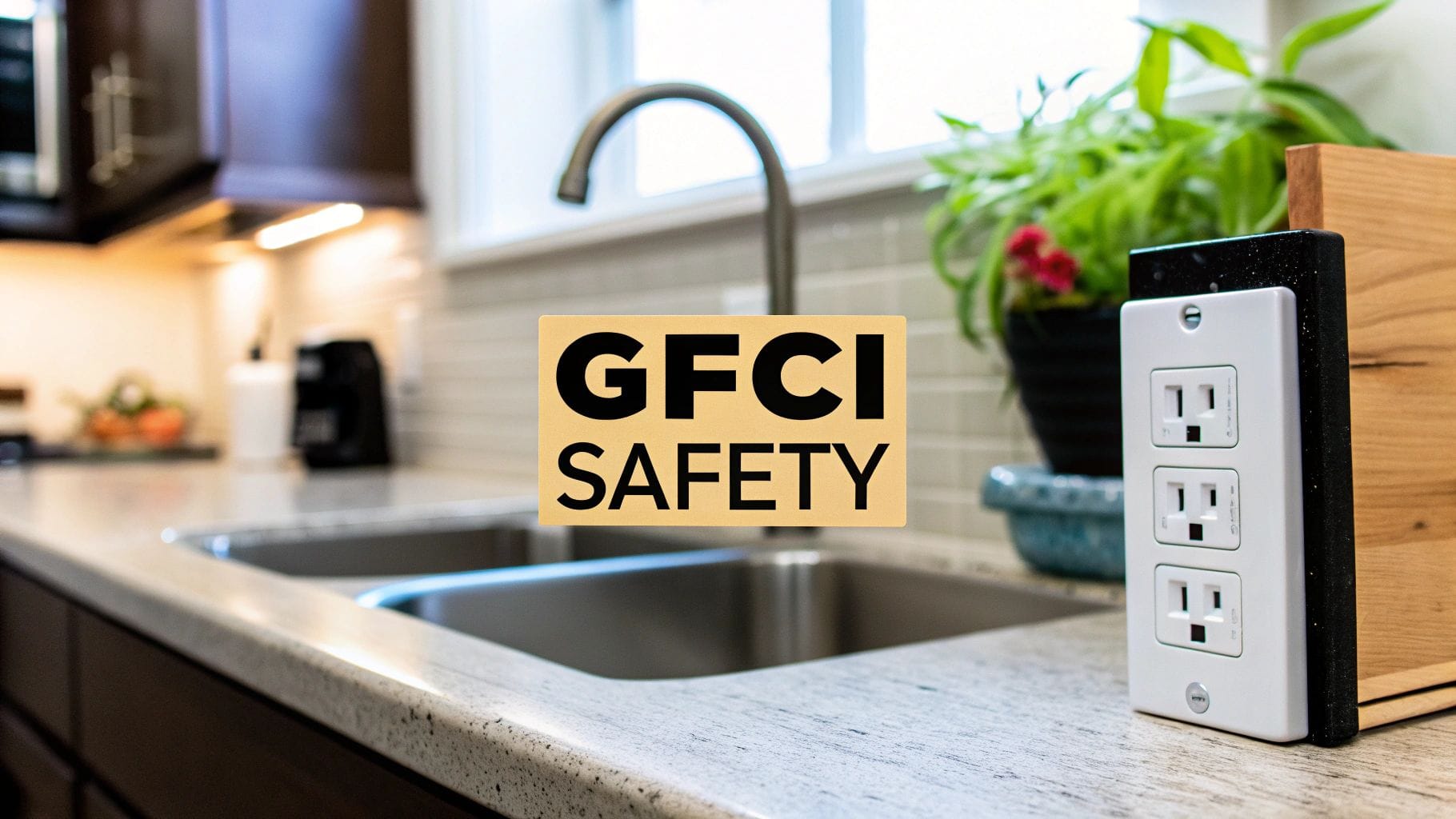
Have you ever noticed those outlets near a sink with the small ‘TEST’ and ‘RESET’ buttons and wondered what they do? Understanding what is a GFCI outlet is a crucial step toward ensuring your home is safe, especially in areas where water and electricity are a little too close for comfort. A GFCI, or Ground Fault Circuit Interrupter, is a smart, fast-acting device designed specifically to protect you from a dangerous electrical shock.
Your Essential Guide to Home Electrical Safety
Think of a GFCI outlet as a tiny, hyper-vigilant safety guard built right into your wall. Its only job is to constantly monitor the electrical current flowing through it. If it senses even a tiny imbalance—like electricity finding a shortcut through water or, worse, a person—it slams the brakes and shuts off the power in a fraction of a second. That split-second reaction is what prevents a dangerous shock from becoming a serious injury.
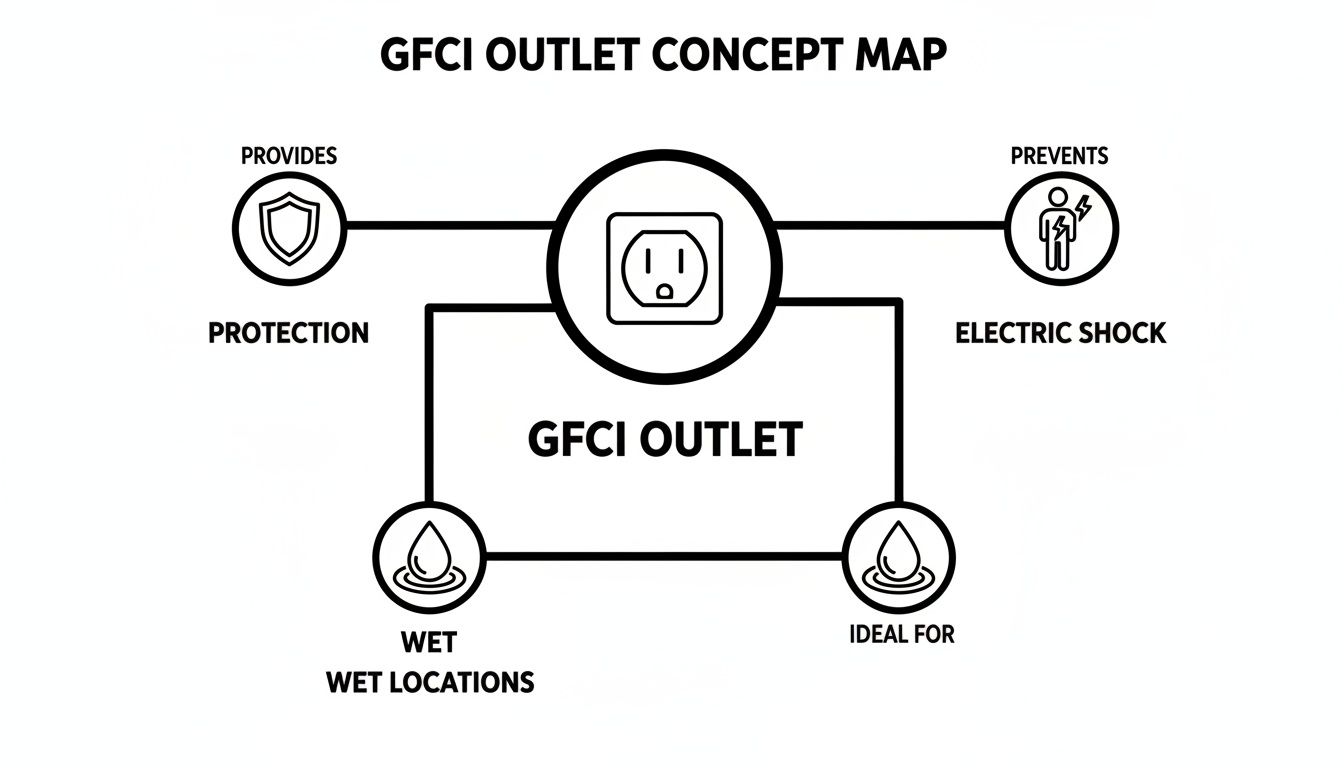
This simple concept—protection from shock in wet locations—is the core job of every GFCI. For a deeper look at the technology, you can explore this complete guide to ground fault protection.
The Real-World Impact of GFCI Technology
This isn’t just theory; the impact has been profound. The GFCI was invented back in 1961, but it wasn’t required by the National Electrical Code (NEC) until 1971, and only for certain high-risk areas.
Before GFCIs were common, the U.S. averaged 1,101 electrocutions every year between 1971 and 1980. The numbers tell a powerful story about what happened next.
As GFCI requirements expanded, consumer product electrocutions plummeted by an astounding 93%, dropping from 481 in 1968 to just 30 by 2015. You can learn more about these life-saving statistics from ESFI and see the data for yourself. These little devices have made our homes dramatically safer.
Where GFCI Protection Is Required in Your Home
So, where is this protection most critical? GFCI protection isn't just a smart upgrade; in many parts of your home, it's a legal requirement mandated by the National Electrical Code (NEC). And you know what? These rules exist for a very good reason: they target locations where moisture and electricity can create a high-risk cocktail for electrical shock.
Understanding where these outlets are required helps you spot potential safety gaps in your own home. The NEC is crystal clear that GFCI protection is mandatory anywhere water is likely to be present. For older homes built before these codes were widely adopted, this often means key areas might be dangerously unprotected.
Key Areas Mandating GFCI Outlets
Here’s a quick reference table to the areas where the National Electrical Code (NEC) says you absolutely need GFCI protection. Think of it as a safety checklist for your home.
| Location | Specific Requirement | Common Appliances or Uses |
|---|---|---|
| Bathrooms | All receptacles | Hair dryers, curling irons, electric razors |
| Kitchens | Countertop receptacles, outlets within 6 feet of a sink | Toasters, blenders, coffee makers, dishwashers |
| Garages & Sheds | All receptacles | Power tools, garage door openers, freezers |
| Outdoors | All receptacles | Holiday lights, landscape lighting, power washers |
| Basements/Crawl Spaces | All receptacles in unfinished areas | Sump pumps, dehumidifiers, workshop tools |
| Laundry Areas | Outlets within 6 feet of a sink | Washing machines, utility sinks |
This isn't just about passing an inspection; it's about layering in safety for your family where it counts the most. Let me explain a bit further.
- Bathrooms: Every single outlet in a bathroom, without exception, needs to be a GFCI. This is the #1 spot for shock hazards because of the constant presence of water from sinks, showers, and tubs.
- Kitchens: All outlets serving your countertops have to be GFCI-protected. That also includes any receptacle within six feet of a sink, which often covers the dishwasher and garbage disposal.
- Garages and Accessory Buildings: Any outlet in a garage or an unfinished shed needs GFCI protection. Concrete floors can hold moisture, and you’re often handling power tools in these spaces.
- Outdoor Areas: All outdoor receptacles—think patios, decks, and front porches—must be GFCIs. Rain, snow, and sprinklers make this a no-brainer.
- Unfinished Basements and Crawl Spaces: Outlets here require protection due to the potential for dampness and moisture from the foundation.
- Laundry Areas: Receptacles within six feet of a utility sink need to be GFCI protected to account for splashes and potential leaks.
These rules are non-negotiable for specialized projects, too. For instance, you can learn more about the specific electrical safety requirements for hot tub installations, which rely heavily on GFCI protection to keep everyone safe while they relax.
Comparing the Different Types of GFCI Protection
Did you know GFCI protection isn’t a one-size-fits-all deal? Think of it more like a toolkit, with different tools designed for specific jobs around your home. The one you probably know best is the GFCI Receptacle—that familiar outlet with the little "TEST" and "RESET" buttons. It’s a workhorse, protecting both itself and any standard outlets wired 'downstream' from it on the same circuit.
But for broader protection, you have the GFCI Circuit Breaker. This one lives right inside your electrical panel and throws a protective blanket over an entire circuit. That means every single light, switch, and outlet tied to that breaker is safeguarded. It’s a more comprehensive layer of security, handled right at the source.
Choosing the Right Protection for the Job
Then there are Portable GFCIs. These are the flexible problem-solvers you can plug into any standard outlet. They’re perfect for temporary setups, like when you’re running power tools in the driveway or working on a project in a room without built-in protection. Here’s the thing: knowing the difference between these types helps you make smarter safety decisions for your family.
This table breaks down the common types and where they shine:
| Type of GFCI | Primary Use | Pros | Cons |
|---|---|---|---|
| Receptacle | Point-of-use protection in specific areas like kitchens and bathrooms. | Localized and easy to test/reset. | Protects only itself and downstream outlets. |
| Circuit Breaker | Protects an entire circuit from the main electrical panel. | Comprehensive protection for multiple devices. | Resetting requires a trip to the panel. |
| Portable | Temporary protection for tools and appliances. | Highly flexible and can be used anywhere. | Must be remembered and plugged in each time. |
The focus on these safety devices is growing, and for good reason. To dig a little deeper, you might consider understanding the differences between RCCB, ELCB, and RCBO devices, which serve similar protective roles. And if you’re thinking about a panel-wide upgrade, you can learn more about professional breaker and panel services from an electrician.
How to Test and Reset Your GFCI Outlets Monthly
A GFCI outlet is a fantastic safety device, but what if it isn't working? That’s why a quick monthly test is so important for your family’s safety. The good news? It’s incredibly simple and takes just a few seconds.
Let me explain the process. This quick check ensures your first line of defense against electrical shock is always ready to do its job.
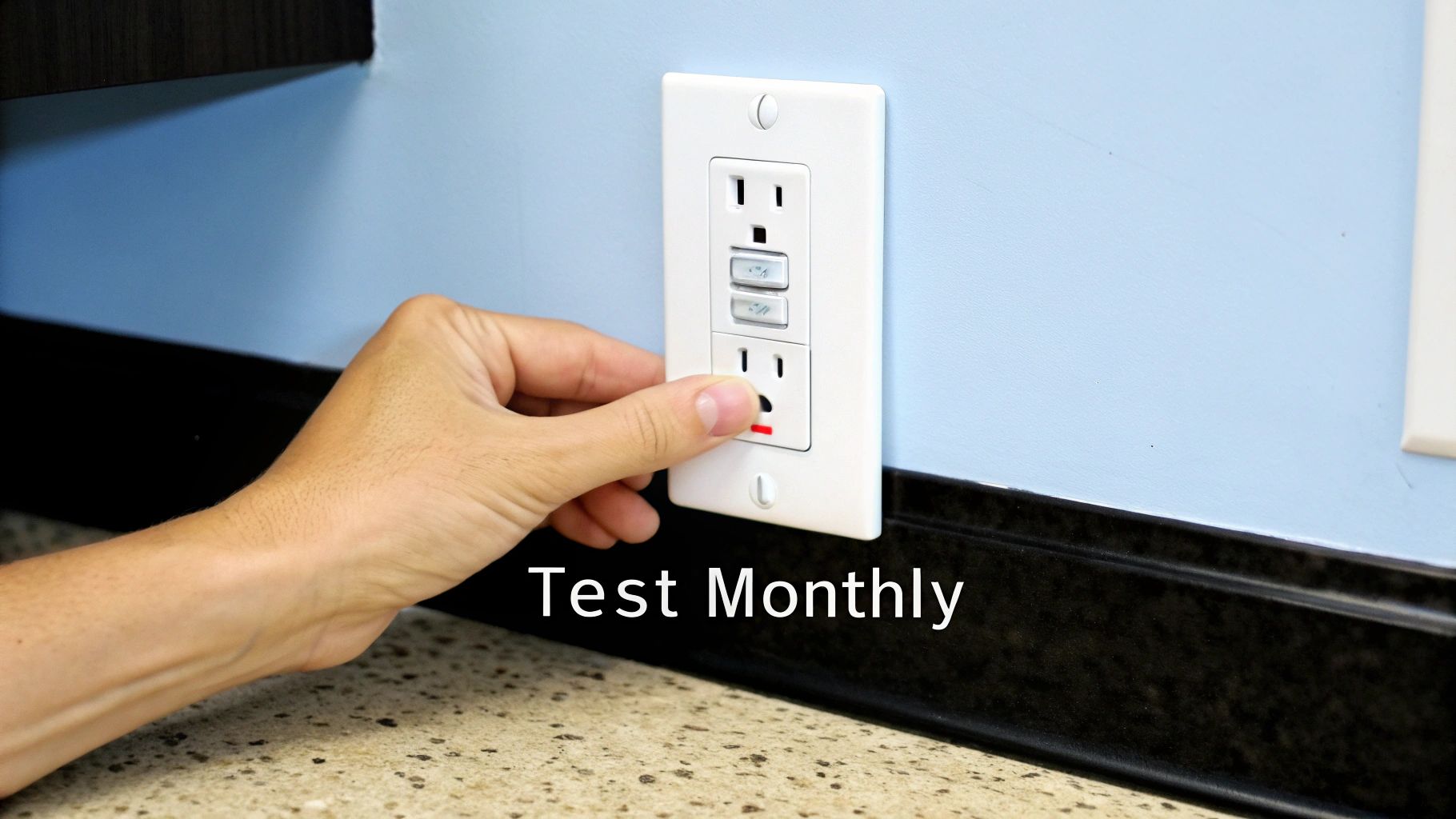
A Simple Step-by-Step Testing Guide
Follow these two easy steps to confirm your outlet is functioning correctly. It's a good idea to plug a small lamp into the outlet first so you can visually confirm the power cuts off.
- Press the "TEST" Button: Firmly press the button labeled "TEST" on the face of the outlet. You should hear a distinct click as the "RESET" button pops out. If you plugged that lamp in, it should immediately turn off, showing that the power has been cut.
- Press the "RESET" Button: To get the power back on, just press the "RESET" button. Push it in until it clicks firmly back into place. Your lamp should pop back on, and the outlet is ready for use again.
If the outlet doesn't trip when you hit the test button, or if it fails to reset and restore power, that’s a clear red flag.
A GFCI that won't reset is more than an inconvenience; it's a sign that the protective mechanism has failed. This means it can no longer protect you from a ground fault and must be replaced immediately by a qualified electrician.
Sometimes, a GFCI might trip for reasons other than a real ground fault—a situation we often call "nuisance tripping." This can happen from a little moisture, worn-out appliance cords, or even a temporary circuit overload. If the problem keeps happening, professional help is key. For more complex issues, you can learn about our electrical troubleshooting services to diagnose the root cause safely.
When You Need to Call a Professional Electrician
Pushing the test button once a month? That’s a straightforward DIY job anyone can do. But when it comes to installing, replacing, or troubleshooting a stubborn GFCI, that's a different story. Honestly, trying to untangle complex wiring on your own isn't just tricky—it's incredibly dangerous.

Clear Signs You Need an Expert
If you run into any of these red flags, it’s time to stop what you're doing and pick up the phone. These symptoms usually point to bigger problems that go beyond a single faulty outlet and need a professional to diagnose safely.
- An outlet that trips constantly with nothing plugged in.
- The reset button won't stay engaged, or the outlet has no power at all.
- There are visible signs of damage, such as cracks, scorch marks, or discoloration.
- You live in an older home and aren't sure if your outlets meet current safety codes.
Ignoring these issues puts your property and family at risk. A qualified electrician can trace the problem to its source, whether it's bad wiring somewhere down the line, an active ground fault, or just a defective device that’s seen better days. At Black Rhino Electric, our experienced electricians ensure every job is done safely and meets the latest electrical codes.
GFCI Questions We Hear All the Time
We get a lot of calls about home electrical safety, and GFCI outlets are a hot topic. It's a critical device for preventing shock, so it's smart to ask questions. Here are the clear, straightforward answers to the things homeowners ask us most.
Why Does My GFCI Outlet Keep Tripping?
First off, a GFCI that trips is doing its job. But if it's happening all the time, it’s more than just annoying—it’s a sign something's wrong. Here’s what’s usually going on:
- A Real Ground Fault: A frayed appliance cord, a bit of moisture, or a worn-out tool is leaking current where it shouldn't, and the outlet is shutting it down to protect you.
- Circuit Overload: Plugging a high-draw appliance (like a space heater) into a circuit that’s already busy can sometimes cause a trip.
- A Worn-Out Outlet: GFCIs don't last forever. After 10-15 years, they can get overly sensitive and trip for no good reason, signaling it’s time for a replacement.
- Downstream Trouble: A single GFCI often protects other standard outlets "downstream." If one of those outlets has a problem, it’s the main GFCI that will trip.
What's the Difference Between GFI and GFCI?
This is a great question! The short answer is: nothing. They are the exact same thing.
- GFI stands for Ground Fault Interrupter.
- GFCI stands for Ground Fault Circuit Interrupter.
The terms are used interchangeably to describe the same life-saving device. GFCI is just the more complete, technical term you’ll see in the electrical code, but if your outlet says GFI, you've got the same protection.
Can I Install a GFCI Outlet Myself?
While swapping an outlet might seem like a simple Saturday project, installing a GFCI is one of those jobs where small mistakes have big consequences. Getting the wires on the wrong terminals (mixing up the LINE and LOAD sides is a common one) can make the outlet seem like it's working, but it won't actually protect you.
An improperly wired GFCI will still power your hairdryer, but it might not trip when you need it to most. It creates a false sense of security, which is more dangerous than having no GFCI at all.
At Black Rhino Electric, we believe in doing things right, especially when it comes to your family's safety. We make sure every GFCI installation is up to code, giving you the protection you deserve. If you’re dealing with a faulty outlet or need to upgrade your home's electrical safety, give us a call at 385-396-7048 or request a free quote online.